LiberSystem debuts as a Rust operating system built from scratch
LiberSystem swaps Unix path thinking for typed objects and capabilities, then backs it with a tiny Rust microkernel and restartable services.
LiberSystem surfaced with a sharper answer to an old systems-programming complaint: not every resource belongs in a single filesystem tree. The project, which appeared on July 7, 2026, presents itself as a modern operating system written from scratch in Rust, distributed under the Unlicense, and built around typed objects, explicit unforgeable capabilities, and volumes instead of classic mount-point logic.
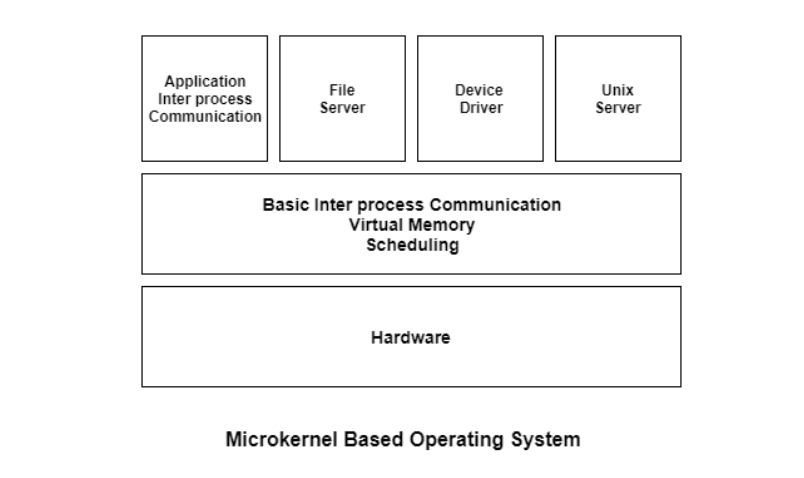
That design choice is the real story for Rust OS readers. LiberSystem says its kernel is intentionally small and memory-safe, while services and drivers run as isolated, restartable components that talk through stable typed contracts. The project also includes LSIDL, a typed interface definition language meant to generate wire codecs, clients, servers, and documentation. Its native filesystem, LiberFS, is described as copy-on-write, extent-mapped, checksummed, and snapshot-capable, which puts storage semantics on the same explicit footing as process and device access.

The repository looks early-stage but active. GitHub shows 443 commits and 8 stars, with work underway for x86_64, aarch64, and riscv64 ports. Recent file listings point to ARM64 and RISC-V build, run, and test support, alongside a TODO for scheduler and syscall work. That makes LiberSystem feel less like a finished desktop competitor and more like a serious experiment in how far a Rust-first kernel can push isolation, restartability, and typed boundaries.
Placed against the current Rust OS landscape, LiberSystem sits in a recognizable line of work without copying any one predecessor. Redox OS, created in 2015, remains the older Rust microkernel project in the space, with a Unix-like general-purpose goal. Asterinas has taken a different path, advertising a framekernel approach that supports over 210 Linux system calls and a minimized memory-safety TCB at about 14.0% of the codebase. Google’s KataOS, announced in October 2022, showed that Rust-heavy secure embedded systems built on seL4 are not hypothetical. seL4’s capability model also gives LiberSystem a familiar lineage, since capability invocation is the only way to operate on system objects there.
What sets LiberSystem apart is not that it is written in Rust, but that it uses Rust to question the Unix assumption that a path should be the universal interface. For hobbyist systems programmers, that makes it useful as more than a novelty kernel: it is a live example of what changes when authority, isolation, and component boundaries are designed first, and files come later, if at all.
This article was produced by Prism’s automated news system from verified source data, official records, and press releases, then run through automated quality and moderation checks before publishing. The system is built and supervised by the people who set the standards it runs under. Read our full AI policy.
Did this article answer your question?