Rust developer builds minimal version-control system, Krav, for learning
Krav strips version control down to linear commits, metadata, and restore paths, giving Rust learners a compact systems project with gzip, xz, and zstd compression.
Krav has landed as a deliberately small version-control system in Rust, built to teach the mechanics of storing history rather than to compete with Git. The project was posted to The Rust Programming Language Forum on June 23, 2026, where its author described it as a learning project that is still in very early development.
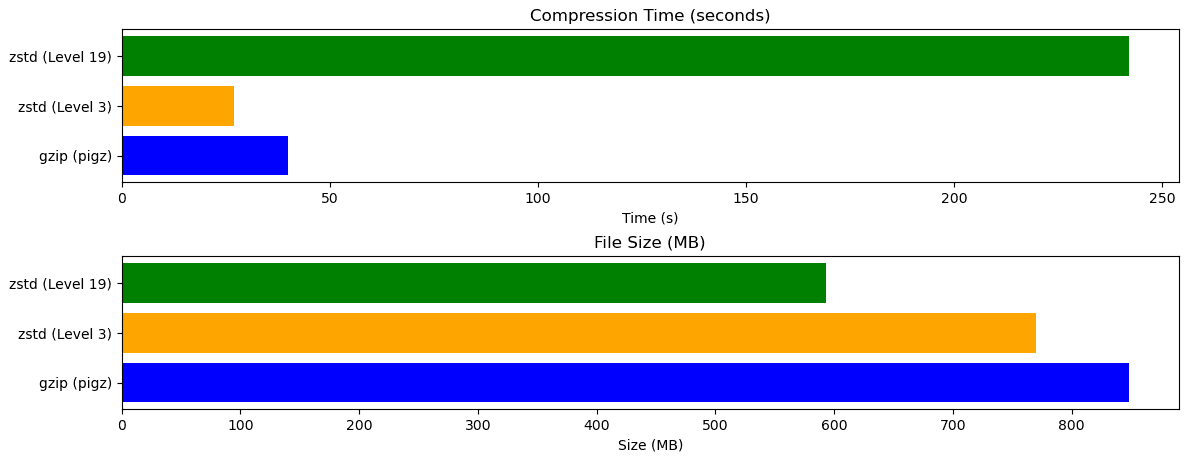
The design is straightforward on purpose. Krav’s feature list starts with a linear commit model, then adds commit metadata such as a message and timestamp, optional compression with gzip, xz, and zstd, and finally commit logging and restoration. That mix makes the project a useful teardown of the core systems problems behind version control: how to record a state change, how to store it compactly, and how to rebuild it later without losing track of what happened.

That simplicity also gives hobby Rust developers a few concrete lessons to borrow. Krav keeps the history model linear, which avoids the extra complexity of branching and merging while the basics are still taking shape. It separates metadata from the data path, treats compression as an option instead of a requirement, and makes restoration an explicit part of the design rather than an afterthought. Those choices are practical in a language like Rust, where file I/O, state transitions, and data layout can be made precise without burying the logic in ad hoc code.
The author has made the project public from the start, inviting contributions, bug reports, issues, and feature requests. That matters because the forum’s announcements category is where project updates and community news are shared, not just private experiments tucked away on a personal branch. Krav is being presented as something the Rust community can inspect, critique, and improve.
It also arrives in a Rust ecosystem that already has serious version-control work. Gitoxide is a long-running pure-Rust implementation of Git with 11.6k GitHub stars and 15,586 commits, while RevTool describes itself as a lightweight, approachable, educational VCS built from scratch in Rust. Krav fits that same recognizable pattern: a small tool that re-creates familiar infrastructure so the builder can learn how it works under the hood.
By keeping the problem small, Krav makes the path from commit to compression to restore easy to follow. That is what gives the project its value, and what makes it such a clean Rust systems exercise.
This article was produced by Prism’s automated news system from verified source data, official records, and press releases, then run through automated quality and moderation checks before publishing. The system is built and supervised by the people who set the standards it runs under. Read our full AI policy.
Did this article answer your question?