Rust developers add Wasm 3.0 support and explore Arc concurrency
Rust’s week 30 check-in lands on the pressure points: Wasm 3.0 parsing, Arc memory ordering, GPU performance, and parser internals all show where the ecosystem is headed.
Rust’s most interesting hobby projects are often the ones that lean straight into a constraint: binary formats that keep changing, atomics that only work if you respect ordering, or GPU code that gets fast only after it gets awkward. The week 30 check-in on the Rust Programming Language Forum, posted July 20, 2026, is full of exactly that kind of work, and it reads less like a brag sheet than a map of where Rust developers are spending real effort.
Wasm 3.0 support is now a parser problem
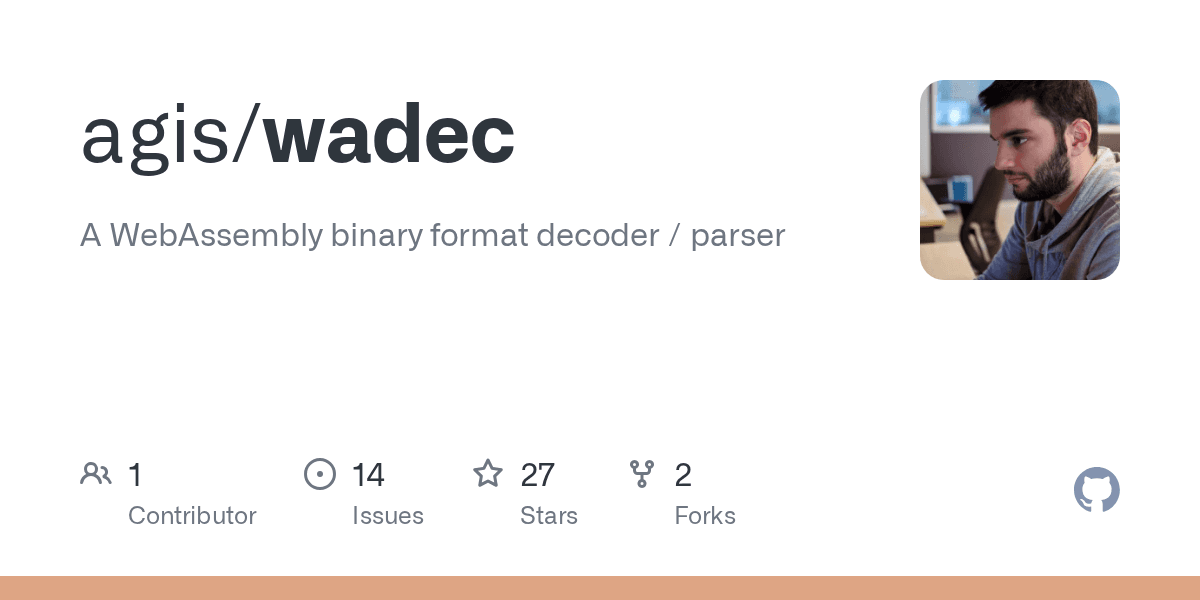
One contributor has added support for version 3.0 of the WebAssembly specification to a parser, with follow-up quality-of-life work planned so the library is easier to use for people working with Wasm modules at the binary level. That lands against a very specific standards backdrop: the WebAssembly draft specification is dated September 16, 2025, and the WebAssembly Community Group announced Wasm 3.0 as the new live standard on September 17, 2025.
That matters because Rust has become a natural place to build the tooling around binary protocols, not just the application code that consumes them. A June 5, 2026 guide on Rust and WebAssembly framed Rust as the practical language for browser, WASI, and edge use cases, and it pointed to the Wasm 3.0 era as one shaped by native GC, memory64 with 16 GB memory, and WASI Preview 2 with networking. In other words, parser work like this is not peripheral maintenance, it is the layer that lets Rust developers keep up with a moving target.
Arc, acquire/release, and the discipline of shared ownership
Another contributor is implementing `pstd::Arc` specifically to understand acquire/release ordering. That is the kind of project that looks small from the outside and teaches the hard part of concurrent systems from the inside, because reference counting only stays correct when memory ordering and thread coordination are treated with care.
Rust’s ownership model gives you a strong foundation, but it does not make atomics disappear, and this check-in is a reminder that `Arc` remains one of the most instructive places to study the boundary between safe abstraction and raw concurrency rules. If you are writing systems code that has to survive contention, the lesson is in the ordering itself, not just in the API surface.
GPU physics work keeps blending performance with structure
A different participant is improving a GPU-based physics simulation, and the update list is practical rather than flashy: collisions now work, parameters can be configured through environment variables, the structure is cleaner, and performance is much better than before. That combination is telling, because GPU work in Rust is rarely just about chasing throughput. It also forces clear boundaries between simulation logic, configuration, and the code that has to stay readable when the math gets dense.
The wider Rust GPU conversation makes that context even sharper. RustWeek 2026 in Utrecht, the Netherlands, included a dedicated GPU-shader talk by Sebastian Sydow on June 11, 2026, and another talk on the same day argued that Rust’s semantics still do not map cleanly onto GPUs because concepts like address spaces and convergence are still missing. A separate June 5, 2026 Rust and WebAssembly guide also noted that `wgpu` runs across Vulkan, Metal, DirectX 12, and WebGPU in browsers, which shows how broad the performance stack has become for Rust developers who need one codebase to reach multiple back ends.
Data layout and parsing are still core Rust playgrounds
The check-in also includes a custom vector structure that supports both stack and heap storage, with contiguous representations for spans and values. That is the kind of experiment that makes immediate sense to anyone who has cared about cache behavior, allocation strategy, or the shape of data in memory, because in Rust, layout is part of the design, not an afterthought.
Parser work shows the same instinct. One contributor added a bottom-up parser to their LL parser generator, `lexigram`, and the LR side now includes a custom trait-based listener interface, support for `+` and `*` repetitions, lists of token-separated items, syntax-based token interception, and the ability to parse nearly endless live streams. That is a very Rust sort of toolchain story: start with a generator, push on the grammar machinery, and keep moving closer to the problem until the parser can handle the messy edge cases that real input throws at it.
The pattern across the thread
Taken together, these projects show Rust being used where the work is most tactile: binary tooling, atomics, GPU simulation, memory layout, parser generation, and stream parsing. The forum thread does not read like a celebration of polished releases, and that is the point. It shows a community in mid-build, with developers iterating on the exact layers that decide whether a system handles a new standard, a thread race, or a live stream without breaking.
That is what makes the week 30 check-in useful. The sharpest Rust energy right now is not in slogans about rewrites, it is in the quieter engineering fights over ordering, layout, parsing, and performance, where the language’s safety model has to earn its keep one constraint at a time.
This article was produced by Prism’s automated news system from verified source data, official records, and press releases, then run through automated quality and moderation checks before publishing. The system is built and supervised by the people who set the standards it runs under. Read our full AI policy.
Did this article answer your question?