Canonical joins Rust Foundation as Gold Member, boosts Ubuntu Rust push
Canonical put real money behind Rust, joining the Foundation as a Gold Member while Ubuntu keeps moving Rust into the base stack.
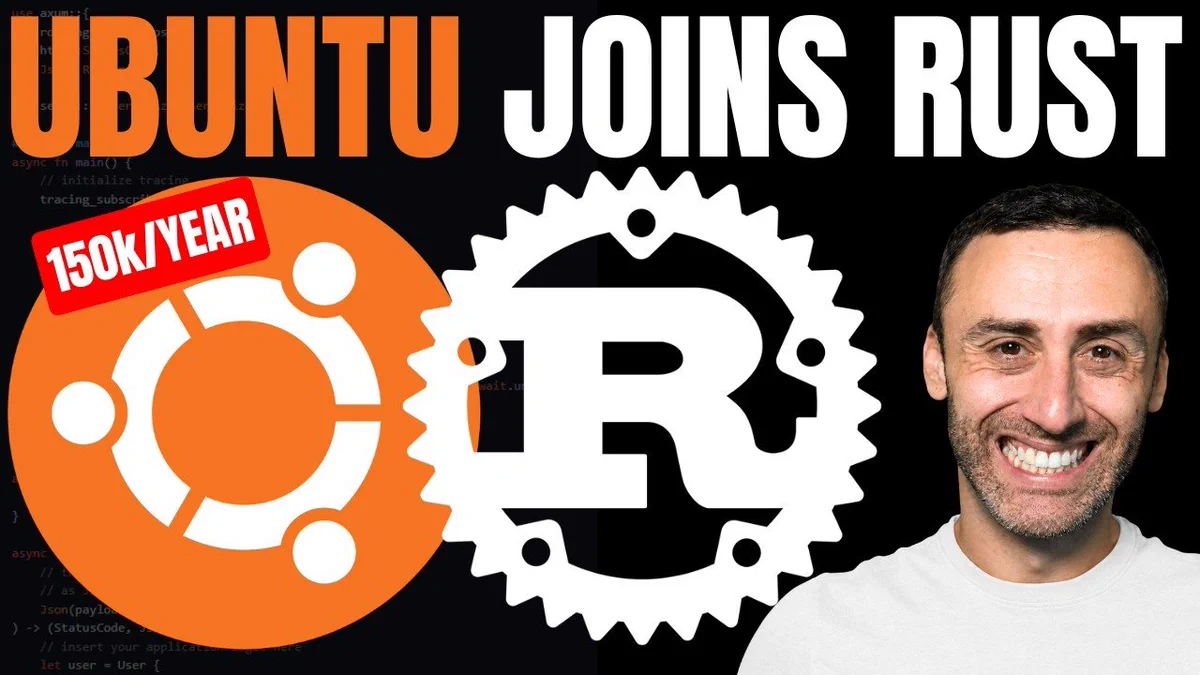
Canonical joined the Rust Foundation as a Gold Member in Amsterdam on March 23, 2026, putting the Ubuntu maker inside Rust’s funding and governance circle. The announcement came during Open Source SecurityCon at KubeCon Europe 2026 and tied Canonical’s Rust work to the language’s long-term health, not just to a sponsor badge.
For Rust-in-production on Ubuntu, that matters because the Rust Foundation says members support Rust’s governance, infrastructure, and long-term health. Canonical’s VP of Engineering, Jon Seager, took part in the announcement discussion alongside Rust Foundation CEO Rebecca Rumbul, and Canonical said on X that it is making significant contributions to Rust while supporting the growing use of Rust in production systems.

The money behind the move was described as a $150,000-a-year commitment. That only turns into something real for Ubuntu users if it reaches the places engineers actually touch: package availability, toolchain cadence, and the support story for teams shipping Rust on an Ubuntu base. Canonical has already shown where it wants to push by shipping Rust Coreutils, uutils, in place of GNU Coreutils on Ubuntu 25.10.
The timing points straight at Canonical’s release roadmap. The announcement landed just weeks before Ubuntu 26.04 LTS was set to ship with the latest Rust upgrades, which makes the Foundation membership look less like symbolic alignment and more like a bet on Rust as part of Ubuntu’s production stack. If Canonical keeps moving in that direction, the next questions are practical ones: how much of Ubuntu’s core distribution keeps shifting toward Rust, how quickly the toolchain lands for enterprise users, and whether Canonical’s support posture starts treating Rust as a default part of Linux infrastructure rather than an add-on.
This article was produced by Prism’s automated news system from verified source data, official records, and press releases, then run through automated quality and moderation checks before publishing. The system is built and supervised by the people who set the standards it runs under. Read our full AI policy.
Did this article answer your question?