Rust engine optimizes AI code context, adds gzip index persistence
Rust is positioning itself as the control plane for AI coding context, and Entroly tests the idea with a 5,300-line core, gzip index persistence, and 415 tests.
The new bottleneck in AI coding
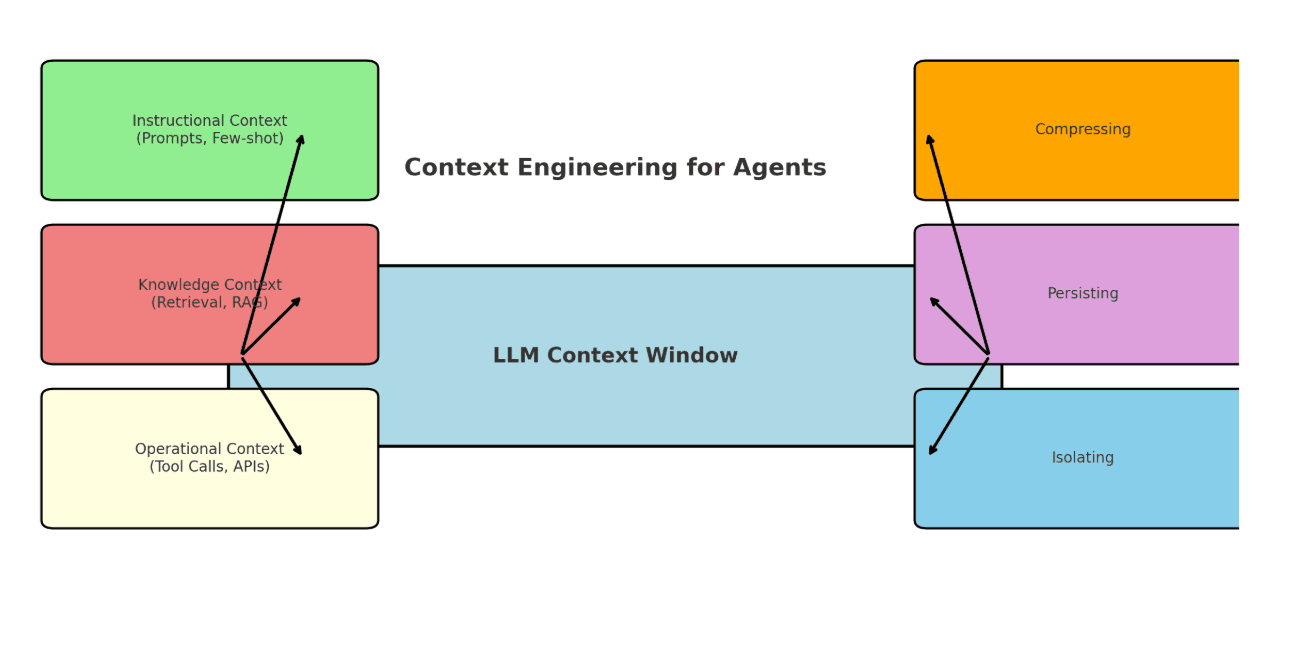
If your agent keeps missing the file that matters, Entroly’s answer is not a bigger model. It is a Rust layer that tries to put the right slice of the codebase in front of the model fast enough to matter in a real workflow.
That is the practical promise at the center of the release: compress and rank source context so AI tools can see more useful code with fewer tokens. Entroly’s framing is blunt about the problem it is trying to solve, current coding assistants often only see a tiny fraction of the repository, and that makes context window limits feel less like an abstract model constraint and more like a daily productivity tax.
What the Rust core is doing
Under the hood, Entroly leans on a single Rust crate, `entroly-core`, at roughly 5,300 lines of code. That core is exposed to Python through PyO3 and packaged with maturin, which is a conventional Rust-for-Python stack even if the use case is unusual.
The reason for the split is obvious once you look at the workload. The Rust side handles the latency-sensitive pieces: fragment scoring and selection, SimHash-based near-duplicate detection, entropy-gated semantic caching, submodular knapsack optimization with a `(1-1/e)` approximation guarantee, and index persistence. The project’s Rust README also lists Shannon entropy scoring, TF-IDF query analysis, a SAST scanner with 30+ rules, an LSH index, and a PRISM reinforcement-learning optimizer. This is not just prompt trimming. It is a full context-ranking pipeline built to decide what earns a spot in the window.
PyO3 matters here because it is designed to bind Rust to the Python interpreter, and its `Python<'py>` token models the GIL. That gives the Python-facing layer a way to talk to a high-performance core without turning the whole system into Python-bound glue.
Why v0.18.0 is more than a cleanup release
The v0.18.0 release adds gzip-compressed index persistence, and that change points to the product’s real shape. Entroly is not only generating context, it is maintaining local state that has to survive across sessions, and it now stores that state in a compressed format instead of a plain JSON blob.
There was also a serious indexing bug to fix. A file named `index.json.gz` had previously been written as plain JSON, and the new loader now checks the first bytes of the file to decide whether it is gzip or legacy JSON. That kind of compatibility handling is the difference between a tool that is pleasant in a demo and a tool you can trust to keep working after an upgrade.
Security on disk got attention too. The persisted index is permission-locked to `0o600` on Unix because it contains ingested source code. In other words, the project is treating index files as sensitive developer data, not disposable cache.

The release also ships with 415 Rust unit tests, which is a meaningful signal in a system that is trying to sit between source code, embeddings, and agent output. If the context layer fails, every downstream assistant gets worse. The test count suggests the maintainer knows that the Rust core is the product, not just an implementation detail.
The pitch is about cost, latency, and usable codebase size
Entroly’s marketing is aggressive, but the shape of the claim is clear. On PyPI, version 0.16.0 was described as a token-saving proxy and context compression engine for AI coding agents, with a claim of up to 80% lower LLM API cost. The project site later pushed that further, saying token bills can be cut by 70% to 95%.
That range matters because the daily pain point is not just spend. Smaller prompts can also mean lower latency, less wasted context, and a larger effective codebase size before the window fills up. If the engine consistently filters out near-duplicates, low-value fragments, and irrelevant files, then a repository that felt too large for an assistant becomes more manageable without forcing the developer to babysit every prompt.
The distribution story supports that positioning. PyPI says Entroly supports 38 agents and can be installed via pip, Homebrew, or npm, while the project site now says 65+ agents. The dashboard is meant to make the payoff visible, showing token savings per request, cumulative dollar savings, and monthly profit projections. It also opens locally on port 9378, which reinforces the same message: this is built to live inside a developer’s workflow, not off to the side as a research toy.
Is this a real product category yet?
That is the part worth watching. Entroly is presenting itself as an open-source context engine for AI coding tools, and the Rust layer gives that claim a lot of technical credibility. The compiled core, local state handling, deterministic selection logic, and Python integration all point to a tool that is trying to become infrastructure.
At the same time, the broad claims around agent count and token savings show how early this category still is. One surface says 38 agents, another says 65+, and the savings numbers shift from 80% to 70% to 95% depending on where you look. That does not make the product unserious, but it does mean the market is still defining what “context optimization” should mean in practice.
For Rust developers, the useful takeaway is straightforward. Entroly is making a case that Rust is becoming part of the AI tooling layer not just because it is fast, but because context-window pain is now a systems problem. When the right file gets included, the wrong duplicate gets dropped, and the index survives the next run intact, the assistant feels less like a guess machine and more like a tool you can actually use on a real codebase.
This article was produced by Prism’s automated news system from verified source data, official records, and press releases, then run through automated quality and moderation checks before publishing. The system is built and supervised by the people who set the standards it runs under. Read our full AI policy.
Did this article answer your question?