Rust Foundation adds AI Security Engineer to fight vulnerability noise
Rust Foundation added an AI Security Engineer in Residence to cut triage noise and surface real vulnerabilities faster across crates.io.

The Rust Foundation has put a new security role directly in the path between AI-generated reports and the maintainers who have to live with them. Funded through Alpha-Omega and announced on June 16, the AI Security Engineer in Residence is meant to help the Rust ecosystem find real flaws faster, before false positives and low-quality reports eat the time of crate authors and release managers.
The move grows out of the Foundation’s Security Initiative, which began in 2022 and already includes a full-time Security Engineer and a security-focused Software Engineer. Those staffers work with the crates.io Team, the Infrastructure Team, the Security Response Working Group, and the Secure Code Working Group, which means the new role is being dropped into an existing operational network rather than added as a standalone experiment.

The timing is no accident. The Linux Foundation said on March 17, 2026 that it was directing $12.5 million in open-source security grant funding from Anthropic, AWS, GitHub, Google, Google DeepMind, Microsoft, and OpenAI, with Alpha-Omega and OpenSSF managing the money. That broader push was built around a new reality: AI has made vulnerability discovery faster at the same moment it has made plausible-looking noise easier to generate. For Rust maintainers, that translates into more reports to sort, more time lost to triage, and more risk that the signal gets buried.
Over the next year, the engineer in residence is expected to do the part that maintainers rarely have time to do well. The Foundation says the role will use human-led and AI-assisted methods to review Rust itself and the crates the ecosystem relies on most, looking for exploitable issues before they reach maintainers. It will also help separate false alarms from meaningful reports, assess severity in context, support fixes, coordinate disclosure and release, and publish advisories through RustSec when that is the right path.
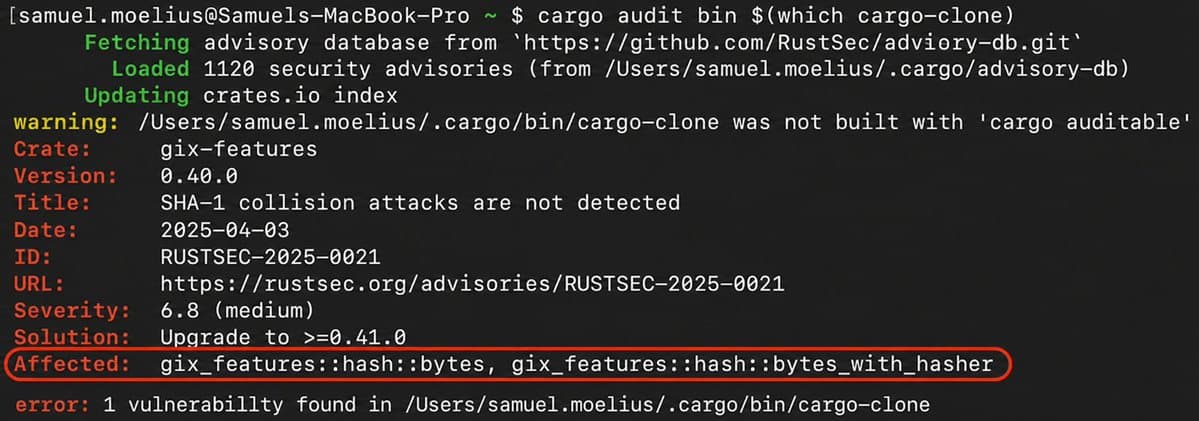
That operational focus matters because RustSec is not an abstract policy layer. Maintained by the Rust Secure Code Working Group, it is the advisory database for crates published through crates.io, and June 2026 has already shown how much work lands there. The database has listed issues in pyo3, tokio-postgres, postgres-protocol, and vibeio-http, along with malicious crates such as onering and logflux.
The Foundation is treating the new hire as a pressure-release valve, not a substitute for maintainers. In a Rust ecosystem built on rigor, trusted publishing, and careful supply-chain habits, that may be the most practical security upgrade of all.
This article was produced by Prism’s automated news system from verified source data, official records, and press releases, then run through automated quality and moderation checks before publishing. The system is built and supervised by the people who set the standards it runs under. Read our full AI policy.
Did this article answer your question?