Rust-powered NUR CMS brings headless content management into focus
NUR CMS pairs an Axum and SQLx Rust backend with a Vue 3 admin panel, aiming to make headless content management feel fast, typed, and self-hostable.
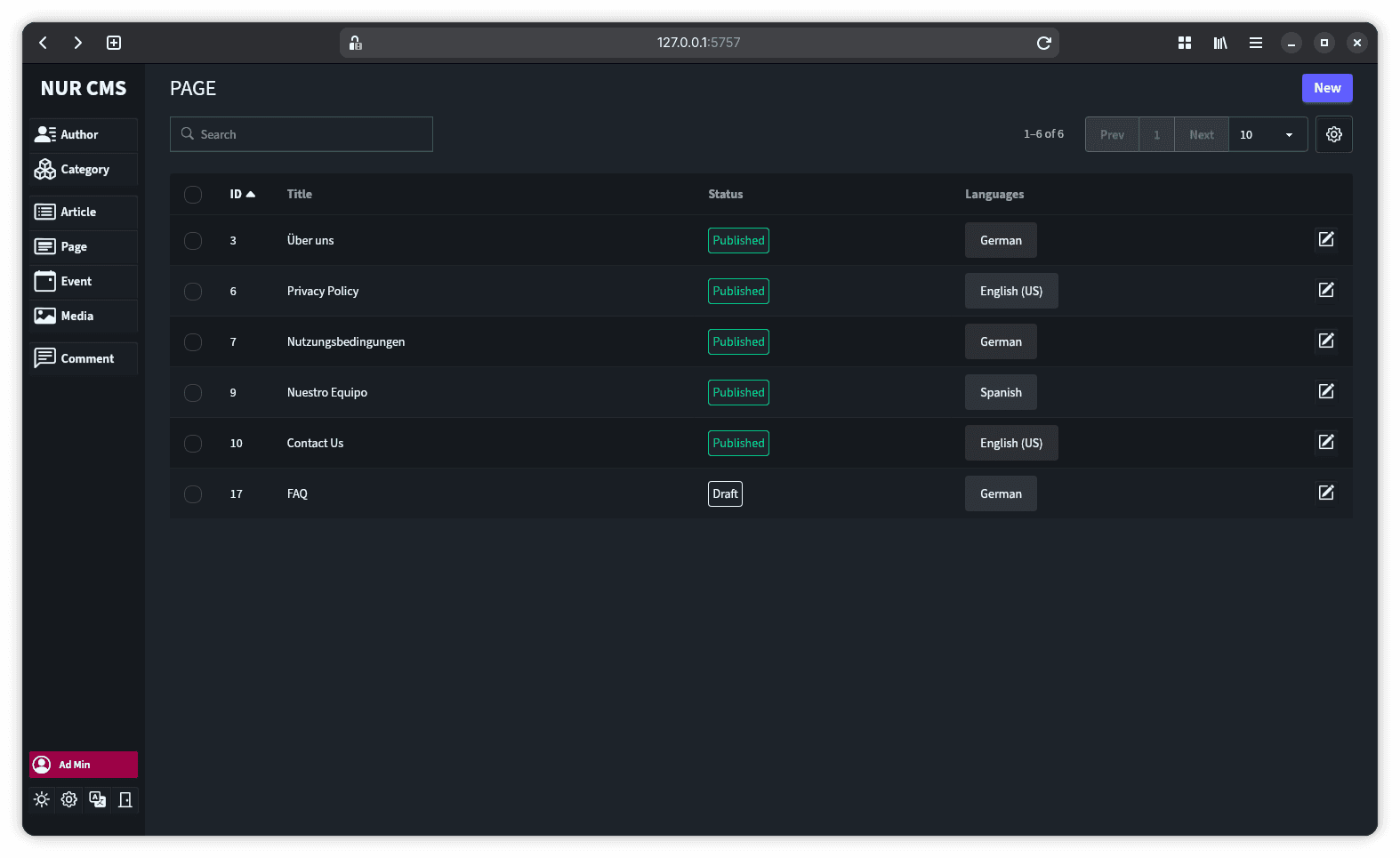
NUR CMS landed in The Rust Programming Language Forum on June 21, 2026 as a Rust headless CMS, and its GitHub repository lays out an unusually direct attempt to bring Rust into content management. The project pairs an Axum backend with SQLx and PostgreSQL for storage, then hands the editor side to a Vue 3 admin panel built with TypeScript, Tailwind CSS and DaisyUI. In a category long dominated by Node and PHP stacks, that combination turns Rust from infrastructure language into the engine of a full publishing workflow.
The README frames the system as a simple and fast headless content management system built with Rust and Vue.js, but the details matter more than the slogan. NUR CMS supports Markdown content editing, image upload and processing for AVIF, WebP, JPG and PNG, and multi-language content through internationalization. It can deliver content in Markdown, HTML, or AST, with the AST exposed as JSON structure, and it also supports RESTful delivery with Server-Sent Events. That mix points to a CMS meant to feed both traditional pages and more dynamic front ends without forcing extra translation layers in the middle.

For self-hosters, the configuration model is straightforward: environment variables or command-line arguments. Authentication is built in, and two-factor setup is available, but the project also exposes a ` disable-two-factor` switch for scripting or seeding workflows. That is the kind of operator detail that suggests someone thought through setup scripts, bootstrapping, and repeatable environments, not just the admin login screen.
The project’s governance is equally clear. NUR CMS is open source, but it is not currently a community project, feature requests are not welcome, and only minor pull requests may be accepted under certain circumstances. That gives it the feel of a tightly scoped independent product rather than a broad platform with an open roadmap, which may appeal to Rust developers looking for a compact codebase but limits the kind of collective momentum larger CMS ecosystems rely on.
Timing helps explain why the project is drawing attention. Future Market Insights projects the headless CMS software market will grow from USD 1,193.9 million in 2026 to USD 9,159.4 million by 2036, a 22.6 percent CAGR. Against better-known names such as Strapi, Directus, Payload, KeystoneJS, Ghost, Sanity and Contentful, NUR CMS is not trying to win on market share. It is making a narrower claim: that Rust can carry the backend of a content system with the same confidence it brings to APIs and tooling, while Vue handles the admin layer and the whole stack stays typed, self-hostable and fast enough to make the workflow feel native from the first post on the forum.
This article was produced by Prism’s automated news system from verified source data, official records, and press releases, then run through automated quality and moderation checks before publishing. The system is built and supervised by the people who set the standards it runs under. Read our full AI policy.
Know something we missed? Have a correction or additional information?
Submit a Tip