Rust Project Selects 13 GSoC Proposals, Spotlighting GPU, WebAssembly, and Tooling
Thirteen Rust proposals won GSoC slots, with GPU offloading, WebAssembly linking, and Miri debugging pointing to the ecosystem’s next practical bets.
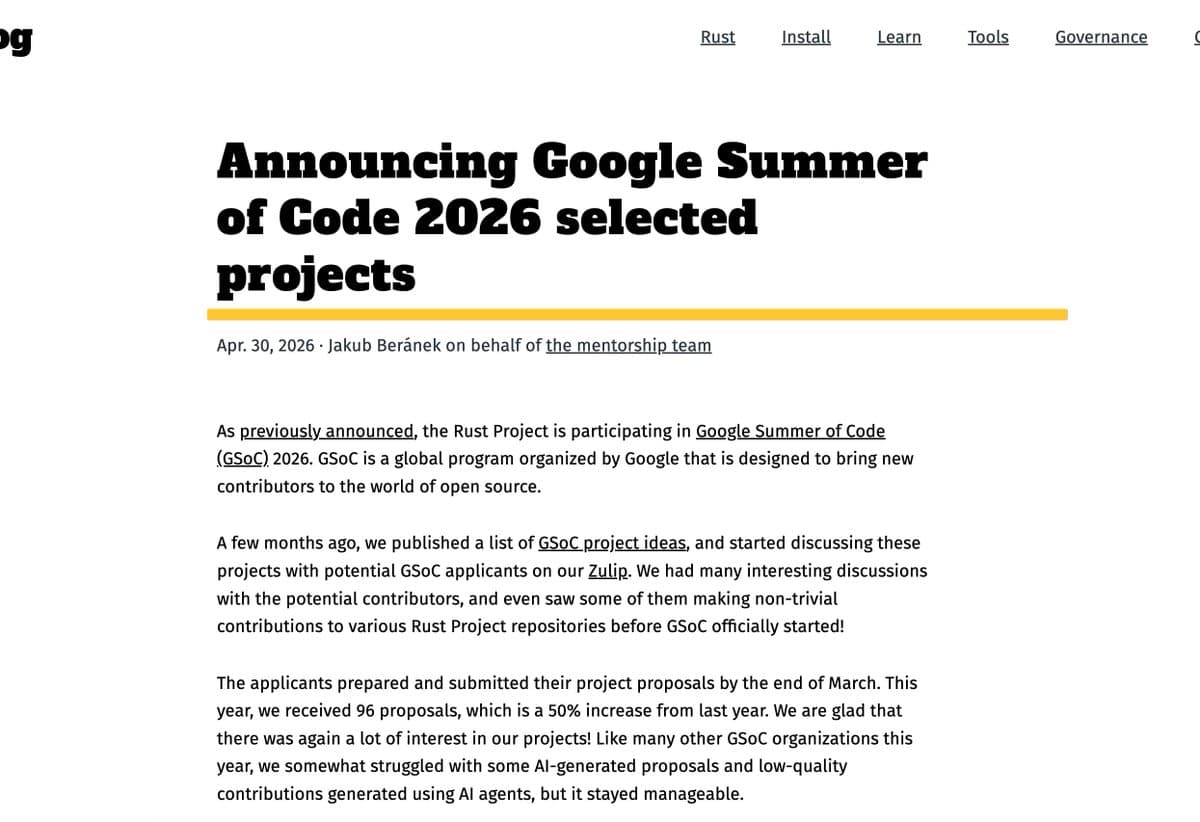
Thirteen Rust Project proposals won Google Summer of Code 2026 slots, and the accepted slate reads like a roadmap for where the ecosystem wants more leverage: safe GPU offloading, WebAssembly linking for the Wild project, a debugger for Miri, and CI work around autodiff and offload. For a community that lives on compilers, tooling, and execution environments, the list points straight at the parts of Rust that can change what developers actually ship next year.
The project received 96 proposals, a 50% jump from last year, even as the mentorship team dealt with AI-generated submissions and low-quality contributions from AI agents. The volume was still manageable, but selection was not a popularity contest. Mentors weighed prior interactions, existing contributions, proposal quality, each project’s importance to the broader Rust community, and whether there was enough mentor bandwidth to support the work through the summer.

That filter matters because the accepted projects land in places Rust users feel quickly. GPU offloading work speaks to developers trying to move compute-heavy code into accelerators without losing Rust’s safety story. WebAssembly linking support in Wild, the linker project, points to sharper deployment paths for code headed to browsers and other sandboxed environments. A debugger for Miri targets one of the project’s most distinctive tools, giving contributors a better way to inspect undefined behavior and interpreter-level execution. The ideas list for 2026 also included rust-analyzer work and rustup XDG path support, more evidence that the project is still aiming at day-to-day developer friction, not just headline features.
Some of the accepted work also reflects a tighter reality behind the scenes. The Rust Project said it had to cancel some projects after several mentors lost funding for Rust work in the weeks before selection. That gives the slate a practical edge: the projects that survived were not just interesting, they were the ones the mentorship network could actually carry. The project also noted that some applicants had already made non-trivial contributions to Rust repositories before GSoC formally began, which suggests these summer projects may turn into code sooner rather than later.
Rust is taking part in GSoC for the third straight year, after 2024 and 2025. Across the full 2026 program, Google selected 1,141 contributors from 15,245 applicants in 131 countries, with 184 mentoring organizations reviewing 23,371 proposals. Rust’s own count has moved from 9 accepted projects in 2024 to 19 in 2025, then 13 this year, a smaller slate than last summer but still big enough to hint at where the community sees its next real gains. Coding begins May 25 after the May 1 to May 24 community bonding period.
This article was produced by Prism’s automated news system from verified source data, official records, and press releases, then run through automated quality and moderation checks before publishing. The system is built and supervised by the people who set the standards it runs under. Read our full AI policy.
Did this article answer your question?