Rust tools gain momentum, from scripting to chat and previews
Rust’s most useful energy is moving into tools you can touch now: a hot-reloadable scripting layer, a modern IRC client, and cross-platform utilities.
Rust’s most interesting momentum right now is happening in the tools that sit closest to daily work. This Week in Rust 654 turns that into a weekend map: if you want something to install, try, or learn from immediately, the strongest signals are in scripting, desktop utilities, and explanation-heavy learning posts.
Start with the tools that fit into real workflows
The tooling section in this issue is not about abstractions sitting far from users. It points to Roto, xa11y, Halloy 2026.7, and a native markdown previewer for AI-generated docs built with Rust and WebView, which is a pretty clean snapshot of where the ecosystem is leaning: closer to the desk, closer to the app, closer to the edge where Rust becomes useful outside the compiler conversation.
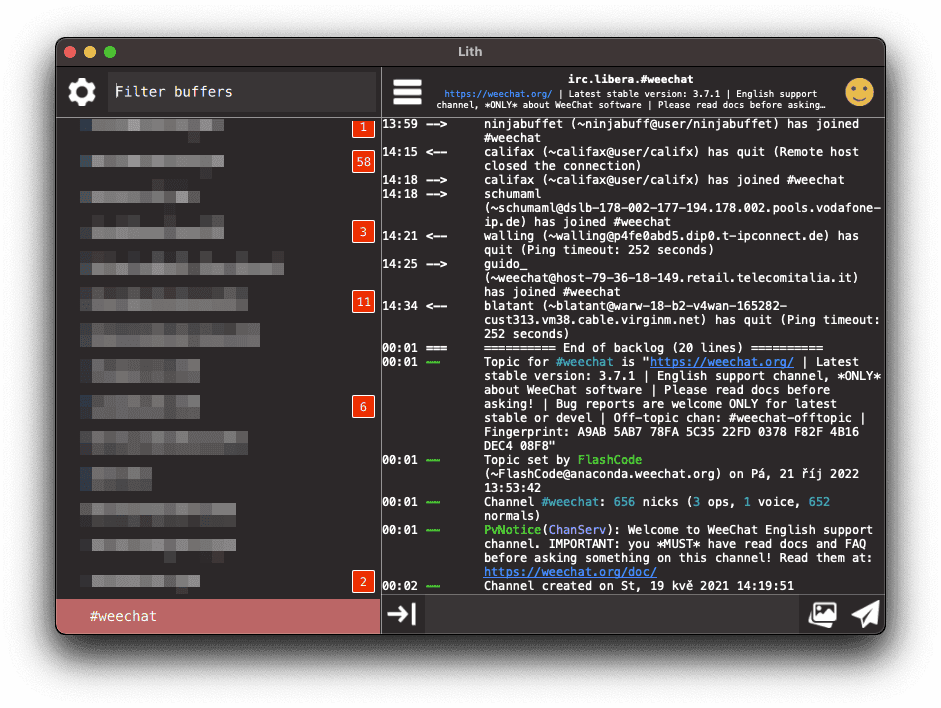
Halloy is the easiest immediate install if you want a direct payoff. It is an open-source IRC client for Mac, Windows, and Linux, written in Rust with the iced GUI library, and the 2026.7 release emphasizes IRCv3 support, including reply, redact, metadata, and bot mode. That makes it feel less like a nostalgia project and more like a serious cross-platform chat client that understands how modern IRC networks actually behave.
xa11y points in a different but equally practical direction. It is a cross-platform accessibility client library with a unified API for reading and interacting with accessibility trees on macOS, Windows, and Linux, which matters because it lowers the friction for building automation, inspection, and accessibility-aware tooling without rewriting the same platform logic three times. In a week that also highlights a native markdown previewer for AI-generated docs, the pattern is hard to miss: Rust is increasingly the language people reach for when they need one codebase to meet real desktop constraints.
Roto is the scripting story worth trying first
If one project in this issue captures the “install it and feel the difference” mood, it is Roto. The language’s one-year anniversary is not framed as a victory lap so much as a proof-of-direction: Roto was introduced as a statically typed, JIT-compiled, hot-reloadable embedded scripting language for Rust applications, with machine code generated at runtime through the Cranelift compiler backend. That combination is exactly what makes embedded scripting interesting in Rust, because it promises fast iteration without giving up the stronger integration story Rust developers usually want.
The anniversary update shows how much the language has matured in a short span. It has added while and for loops, f-strings, more operators such as %, enums, compound assignment operators, global const bindings, generic parameters on types, and a List type. Those are not cosmetic additions, they are the kinds of features that turn a promising prototype into something you can imagine wiring into a real application.
The fact that Roto was first announced for use with NLnet Labs’ Rotonda BGP engine gives the project another layer of meaning. It is not just scripting for scripting’s sake, it is scripting aimed at the moment where Rust code needs to be configurable, inspectable, and hot-reloadable without sacrificing type discipline. That is the sort of tooling shift that tells you where the ecosystem is heading: toward systems that are still native and fast, but much less rigid once they get into the hands of operators and developers.
The previewer story is about making Rust useful around AI-generated documentation
The native markdown previewer for AI-generated docs is a smaller headline, but it belongs in the same bucket because it solves a specific friction point in modern developer workflows. Documentation now often arrives as generated markdown first, then gets edited, previewed, and cleaned up before anyone wants to publish or ship it. A Rust and WebView-based previewer fits that workflow neatly, especially for teams that want a lightweight native desktop experience instead of shuffling between browser tabs and ad hoc renderers.
That matters because it shows Rust being used as the glue for practical developer-facing apps, not only as the core of performance-critical services. Even when the headline sounds modest, the implication is bigger: Rust is gaining traction as a language for making the surrounding workflow smoother, not just for making the backend faster.
The learning material is broad, and that is part of the story
The issue does not stop at tools. Its learning and theory sections point to posts on inheritance in Rust, cooperative scheduling in async Rust, closures, ZK-snark proof systems, generics and monomorphization, and a causal-monad research write-up. That spread is useful because it reflects a community that is still teaching itself from multiple angles at once, not only chasing the next crate release.
There is a real distinction between the kinds of learning being surfaced here. Some pieces are about language design and ownership-adjacent concepts like inheritance and closures, others go deeper into async runtime behavior and the mechanics of generics and monomorphization, and still others push into advanced cryptographic and theoretical territory like ZK-snark proof systems and causal monads. Taken together, they show a healthy pipeline: newcomers can still find approachable explanatory work, while experienced Rust developers can keep digging into the parts of the language and ecosystem that shape performance and design.
The format itself is part of the momentum
This Week in Rust 654 is also a reminder that the newsletter is doing community infrastructure work, not just editorial curation. It explicitly invites suggestions and votes from readers and asks project owners for PRs, which makes the digest feel like a maintained public square rather than a one-way broadcast. That community-maintained shape matters in Rust, where ecosystem attention can spread quickly across many small projects instead of clustering around a single platform.
The broader context reinforces that reading. A 2026 Rust Foundation Maintainers Fund announcement fits neatly beside this issue’s emphasis on tooling, maintenance, and contributor-facing work, because the projects getting attention here are the ones that keep a language healthy between major compiler headlines. Rust’s growth is being carried by the people building the chat clients, accessibility layers, embedded scripting systems, and documentation tools that make the language easier to live with every day.
The answer to where Rust hobbyists should spend the weekend is hiding in plain sight: start with the tools that shorten the path from idea to running code. In this issue, the center of gravity is not the loudest debate, but the most usable infrastructure, and that is exactly where Rust’s momentum feels strongest right now.
This article was produced by Prism’s automated news system from verified source data, official records, and press releases, then run through automated quality and moderation checks before publishing. The system is built and supervised by the people who set the standards it runs under. Read our full AI policy.
Did this article answer your question?