Weave uses semantic merges to cut Rust Git conflicts
AI-assisted edits were turning Git conflicts into a daily tax. Weave answered with entity-level merges and a 31-for-31 benchmark against Mergiraf and Git.
The ugliest part of AI-assisted coding was not the generated patch itself. It was the merge conflict that came after, when two agents touched the same file and Git’s line-by-line logic treated harmless overlap like a real fight.
Weave, from Ataraxy Labs, tried to remove that friction by moving the merge decision up a level. Instead of comparing only text lines, it parsed the base, ours, and theirs versions of a file into semantic entities such as functions, classes, and JSON keys, then matched those entities by identity with tree-sitter before merging them one by one. The project described itself as an entity-level semantic merge driver for Git, and Ataraxy Labs placed it inside a broader stack for agent-native software development alongside sem, inspect, and opensessions.

That design choice mattered because the conflict problem was not limited to plain merges. Git’s merge machinery also underpinned rebase and cherry-pick workflows, so a false conflict could derail more than one kind of branch surgery. Weave’s own documentation took that one step further, saying the merge driver was reactive, and that a CRDT-based shared map of “who’s editing what” was meant to help agents avoid colliding on the same function before the conflict happened at all.
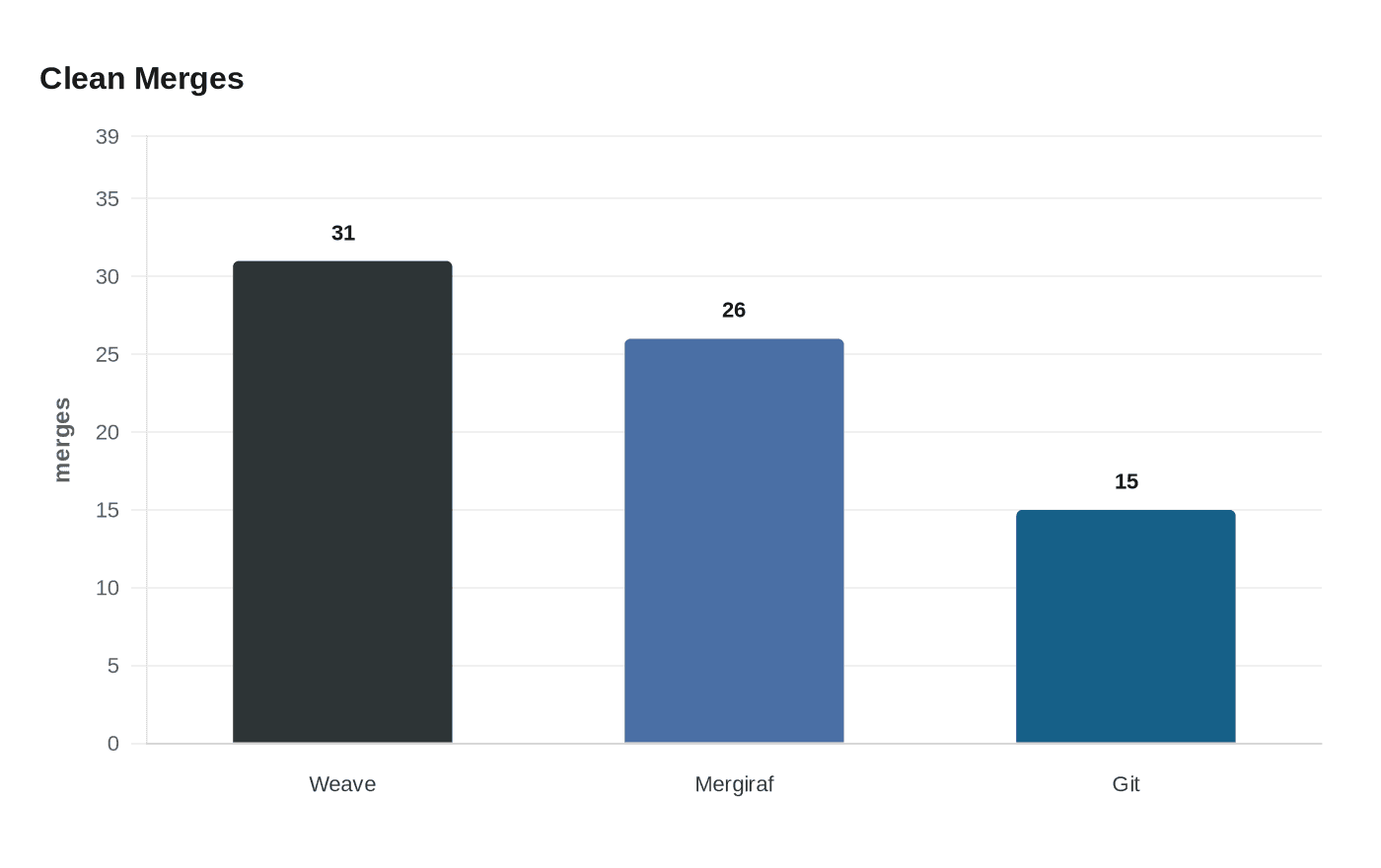
The clearest argument for the project was not the architecture but the benchmark table. Weave reported 31 clean merges out of 31, while Mergiraf reached 26 out of 31 and Git managed 15 out of 31. The full suite ran in 11 milliseconds, and individual merges took about 65 to 374 microseconds. The test set was also concrete, not synthetic hand-waving: 1,319 file merges drawn from 500 merge commits in git/git, plus scenarios across Python, TypeScript, Rust, Go, Java, and C.
That still did not make Weave a universal answer to every conflicted repository. It did, however, make the project feel like more than a polished demo. Mergiraf had already staked out the same false-conflict problem with syntax-aware merging for programming languages and file formats, but Weave pushed the idea toward multi-agent development, where generated edits pile up fast and line-based heuristics start to look brittle. For Rust teams living with AI-generated diffs, that is the real test: whether semantic merging becomes a workflow improvement they can trust, or just another smart tool waiting for the first ugly edge case.
Know something we missed? Have a correction or additional information?
Submit a Tip