rhai-console brings a Rails-style shell to Rust apps
rhai-console turns a Rust app into a live shell for inspection and fixes, borrowing Rails-style ergonomics without ad hoc debug endpoints.
Why this crate exists
rhai-console is aimed at a very specific operational problem: giving a Rust application a built-in shell for live inspection and scripted fixes. The crate describes itself as an operational REPL and script runner for embedding Rhai in Rust applications, and that framing matters because the goal is not just “add scripting.” It is to let you work inside the app’s own context, with the same state and services the running program already has.

The inspiration is easy to recognize. The README points to the Rails Console and Django Shell, both of which have long made runtime debugging and maintenance feel native instead of bolted on. In Rust, that same workflow usually gets rebuilt piecemeal with admin endpoints, one-off binaries, or bespoke internal tools, and that is exactly the sort of friction this crate tries to remove.
How the console is wired
The setup pattern is deliberately light. You expose application state, register a few modules, and then the crate gives you a CLI with an interactive REPL plus a script runner. The README shows the intended shape clearly: build a `Console::new(services)` chain, register modules such as `products` and `orders`, and then call `.run()`.
That simplicity is the point. Instead of scattering maintenance logic across a bunch of endpoints or helper binaries, you define the surface area once and let the console present it consistently. The README also says available modules are listed automatically from registrations, which makes the resulting shell feel discoverable rather than hidden behind tribal knowledge.
What it can do once it is running
The interactive shell is not a toy prompt. The README says it supports multi-line input and history, so it is usable for real commands instead of one-liners only. It can also run `.rhai` scripts from disk, which makes it useful for repeatable maintenance jobs, quick audits, or scripted corrections.
There are a few details that make it practical in day-to-day debugging. Extra positional arguments are injected into scripts as an `args` array, runtime errors include backtraces pointing into the source, and the `reg!` macro wraps calls with position capture, error mapping, and serde result conversion. That combination makes the console feel less like a loose REPL and more like a controlled interface to application internals.
For Rust teams, that matters. You are not just opening a door into the process; you are defining the doorway in terms of typed service calls, named modules, and explicit conversions. That is a lot safer and a lot easier to reason about than throwing a generic debug route into production and hoping nobody discovers it.
Why Rhai fits this job
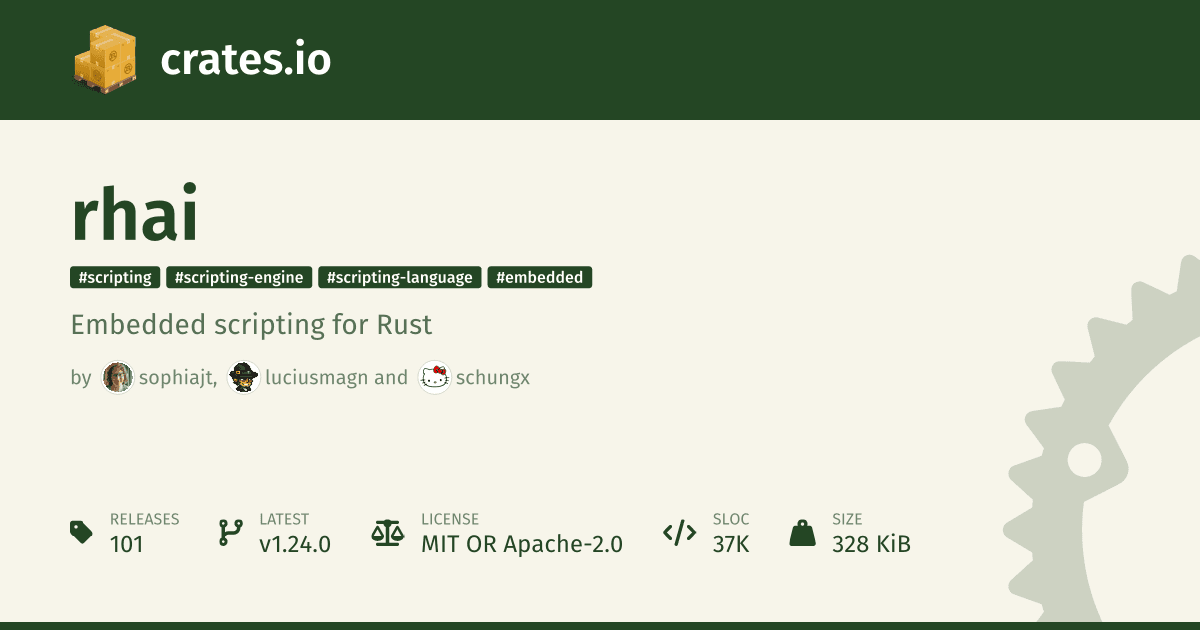
The choice of Rhai is doing a lot of the heavy lifting here. Rhai’s official docs describe it as a tiny, simple, fast embedded scripting language for Rust, with a low dependency footprint and a sandboxed design. The engine supports passing Rust values into scripts through an external `Scope`, and its evaluation model is built for embedding, including `eval_with_scope` and the ability to compile a script to an AST and reuse it later.
That is exactly the sort of runtime you want for an operational shell. Rhai gives you scriptability without asking you to hand over the whole process, and its “don’t panic” design goal fits the attitude you want in maintenance tooling. In a Rust app, that combination is attractive because the shell can stay narrow, explicit, and relatively easy to audit.
The example app makes the use case concrete
The companion project, `careyi3/rhai-ops`, shows the idea in a real stack. It is a Rocket + Diesel + React products-and-orders CRUD app, not just a tiny demo, and the README says `docker compose exec` into the container drops you into a Rhai prompt that hits the same service layer as the HTTP API. That is the part that makes the pitch click: the console is not a shadow system, it is the actual application, just opened through a different door.
The example also shows that the same binary can execute a Rhai file and exit, which is useful when you want repeatability instead of an interactive session. Its README demonstrates live output from the database, including `product_count`, `active_product_count`, `order_count`, and `revenue_cents`. Those are the kinds of numbers you want when you are checking whether the app is healthy, whether a data fix worked, or whether a scripted operation touched the right rows.
Why this is more interesting than another admin endpoint
A lot of internal tooling starts with good intentions and ends in clutter. One endpoint for inventory repair, another for billing checks, a third for ad hoc data inspection, and suddenly you have a maintenance surface that is hard to document and harder to secure. rhai-console takes the opposite approach: register the modules you actually want exposed, then operate through a single scripted shell.
That is also where the Rails and Django comparisons earn their keep. Rails’ `bin/rails console` loads the full application environment into an interactive IRB-style shell so you can interact with, debug, and explore the whole app. Django’s shell gives you access to models and settings for testing, experimentation, and interacting with application data. rhai-console is trying to bring that same operator-friendly workflow into Rust, but with an explicit embedding model and Rhai as the scripting layer.
What stage it is in
This is still an early crate, not a mature platform. The repository shows a single release, v0.0.1, released on May 16, 2026, and the public project currently shows 0 stars and 0 forks. That does not make it less interesting, but it does make the signal clear: this is an early attempt at a pattern Rust applications will probably want more of, not an established standard everyone is already using.
That early-stage feel is part of the appeal. You can still see the shape of the idea before it gets buried under layers of abstraction: a Rust app, a Rhai engine, a clean module registry, and a shell that lets you inspect live state without inventing a custom admin UI for every maintenance task. For anyone who has ever wished a Rust service had a Rails-style console, rhai-console is a direct answer to that itch, and a pretty practical one at that.
Know something we missed? Have a correction or additional information?
Submit a Tip