Bristol Channel Cutter 28 proves its bluewater self-sufficiency in hard weather
Pixie turns the Bristol Channel Cutter 28 into a hard-weather ownership case: simple enough to manage, rugged enough to trust, and honest about the refits it will demand.
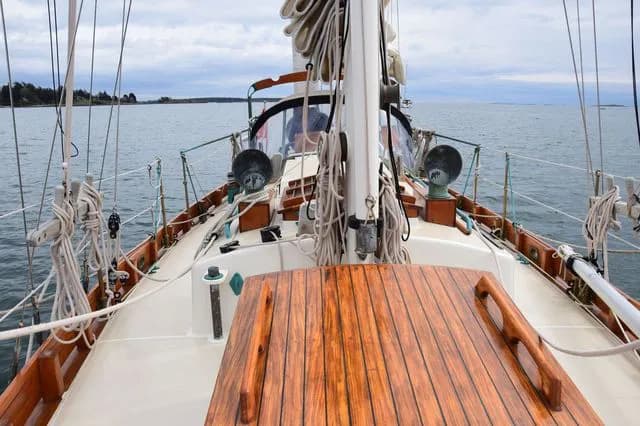
Pixie has been through gales and knockdowns, and that record still makes a hard case for the Bristol Channel Cutter 28. The ownership trail behind her shows why the design keeps finding sailors willing to take on the work.
What the Bristol Channel Cutter 28 actually is
Lyle Hess drew the Bristol Channel Cutter as a character boat cruiser, and the first one was built in 1976. Sam L. Morse Company in Costa Mesa, California, carried the design through most of the production run; the total is variously listed at 127 or 128 boats, and production stretched into the 2000s.
The look comes from the traditional Bristol pilot cutters of the late 19th and early 20th centuries, and the layout stays faithful to that lineage. The boat is a cutter-rigged, heavy-displacement cruiser with a long keel and transom-hung rudder, built around the same priorities that made older working sailboats trusted in ugly water: steadiness, balance, and a structure that favors control over speed.
Why the numbers matter on deck
The published dimensions are part of the story. The Bristol Channel Cutter measures about 28.08 feet overall, with a beam of 10.08 feet, displacement of 14,000 pounds, ballast of 4,600 pounds, and draft of 4.83 feet. Standard sail area is about 673 square feet, spread across the cutter rig with a main, jib, and staysail, plus storm jib and storm trysail in the cataloged inventory.
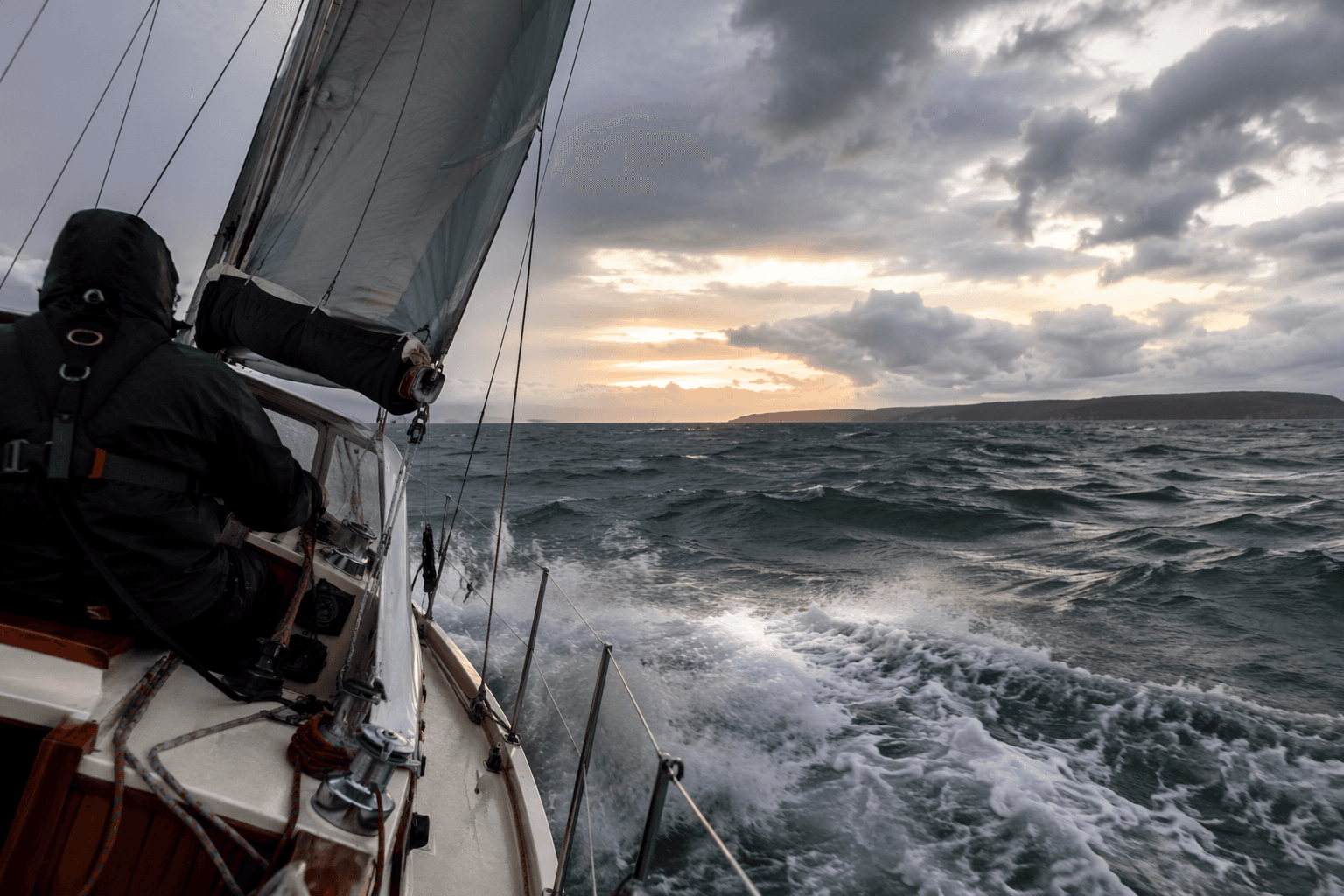
Those numbers explain the handling tradeoff that owners have to accept. The boat’s relatively narrow beam gives it an initial heel under sail, which can feel busy at first, but the weighted keel settles the motion once the boat is loaded up and moving.
What makes it a self-sufficiency platform
The Bristol Channel Cutter’s appeal is not only that it looks the part. Its offshore setup is built around self-reliance, especially the cutter rig and the windvane. Practical Sailor’s July 8, 2026 review of Pixie’s bluewater fit-out highlighted that setup. The rig gives you options when conditions shift, and the self-steering gear reduces dependence on shore-side electronics or a commercial autopilot that can be expensive to buy, install, and keep alive.
This is the kind of boat sailors take offshore with a small crew or by themselves. The type can be sailed easily by minimal crew or singlehanded, and Pixie’s record backs that up. Jens had already sailed the boat from Florida to Norway and back, then through the Panama Canal to Victoria, British Columbia, before Bill and Cathy Norrie took over in 2014 and renamed her Pixie as the project became a longer-term plan.
What a DIY owner should expect to maintain
The good news for a hands-on owner is that the Bristol Channel Cutter’s strengths come from visible, understandable gear. The sail plan is straightforward for a cutter, the long keel and transom-hung rudder belong to a classic heavy-displacement offshore formula, and the self-steering setup is part of the boat’s identity rather than an aftermarket afterthought. The boat also has an active worldwide community and boat list, which gives owners a place to compare notes instead of starting from scratch.
The work is in the age, not the concept. Any Bristol Channel Cutter you are serious about buying or refitting should be treated as an older bluewater boat with the usual demand for close inspection, incremental upgrades, and a realistic budget for replacing tired gear before it becomes a problem offshore. The ownership question is whether the systems on the specific boat in front of you are complete, serviced, and ready to do the quiet jobs that make offshore life possible.
A practical checklist for that kind of ownership stays simple:
- Confirm the cutter sail inventory matches the boat’s weather range, especially the storm sails.
- Make sure the windvane is present and usable, since it is central to the boat’s self-sufficient identity.
- Inspect the rig with the assumption that a 1976-origin design has lived through multiple ownership eras and may carry deferred work.
- Pay attention to how the boat feels once loaded, because the hull’s narrow beam and heavy ballast are part of the way it settles down at sea.
Why sailors keep coming back to it
Jens trusted the boat enough to take her from Florida to Norway and back, then through the Panama Canal to Victoria, and Bill Norrie later singlehanded her for nearly 90 days from Christchurch, New Zealand, to Victoria on the last leg of a yearlong circumnavigation.
This article was produced by Prism’s automated news system from verified source data, official records, and press releases, then run through automated quality and moderation checks before publishing. The system is built and supervised by the people who set the standards it runs under. Read our full AI policy.
Did this article answer your question?