Stitching old rope instead of splicing, when twine works best
Stitching can save a usable line fast, but Samson’s rope guidance sets the boundary: use it for the right load and line, not as a lazy stand-in for a real splice.
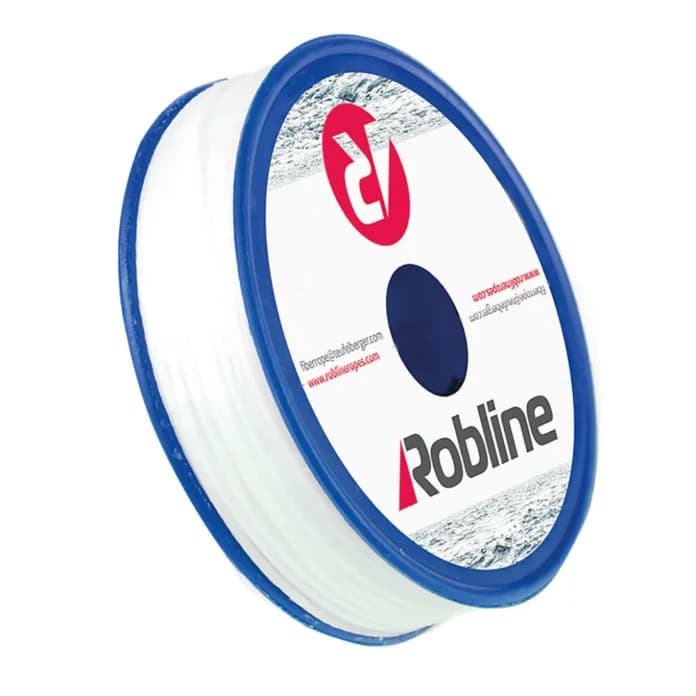
Offshore with tired line, a limited tool roll, and a termination that only needs to get you home, stitching with twine can be the boat-ready answer, but only inside a narrow set of conditions. Samson Rope still calls splicing the preferred termination method, so stitching is a careful exception, not an automatic choice.
When stitching earns its place
Stitching makes sense when the job is practical, not heroic. If you need to shorten a line, secure the cover and core together, form a low-profile termination, or salvage a section of rope that is too worn for a long rework but still useful, twine can be the faster route back to service. On real boats, the repair is often happening in bad light, with salt on your hands, not in a calm loft with every fid and needle on the bench.
The real advantage is speed and adaptability. A stitched finish can be easier to learn than a full splice, especially when the rope has an unusual construction or you are trying to keep a workable piece of running rigging in play for a temporary offshore fix. It is a legitimate method when the load is modest, the rope still has life left in it, and the goal is a practical termination rather than a permanent structural solution.
Where the splice still wins
Samson Rope’s guidance leaves no ambiguity about the hierarchy: splicing is the preferred rope termination method. A splice is built to carry the rope’s load as a structural termination, while stitching is a finishing and securing method that may be useful in a narrower range of uses. If the line is doing serious work, or if the repair is meant to become a permanent running-rigging solution, the splice remains the safer default.
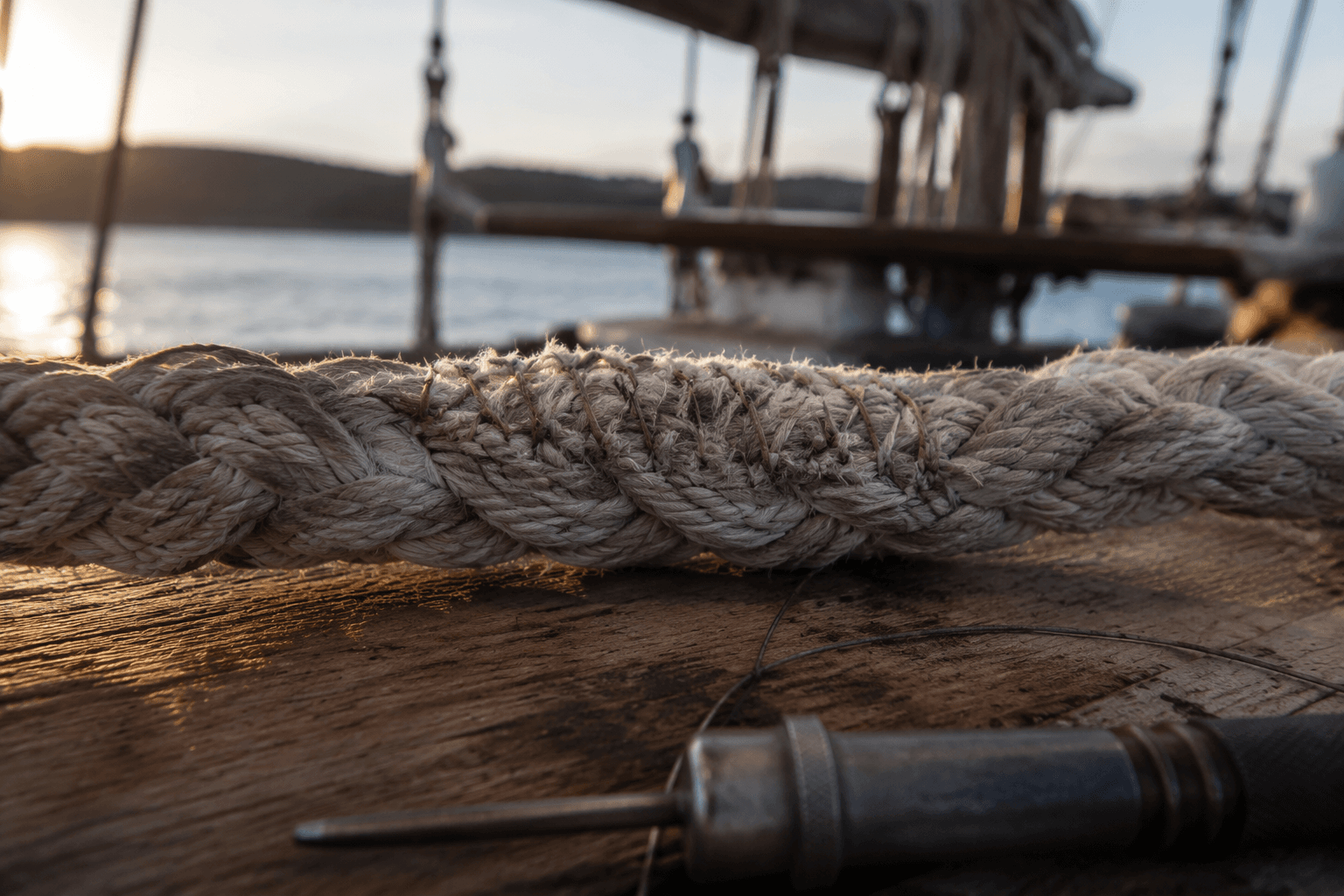
Rope in service is exposed to tension, bending, friction, temperature, and chemical exposure, all of which gradually degrade it. Once a line has seen that kind of life, stitching is not a magic reset button; it can only be part of the decision, alongside inspection and a realistic judgment about whether the rope should be retired instead of patched.
Twine choice is not a detail
If you do stitch, the twine has to match the job. Braided nylon twine is generally preferred for lock stitching, and polyester twine or twisted twine in polyester or nylon can also be used. The twine should be at least half the strand diameter and no larger than the strand diameter.
Stitching that is too fine looks neat but can be underbuilt for the rope it is trying to secure, while twine that is too heavy can be awkward and messy without adding useful control. On high-tech line, the material conversation matters even more. Samson’s AmSteel-Blue, for example, is a 12-strand single braid made from 100% Dyneema fiber.
Whipping, lock stitching, and the old-school side of ropework
Animated Knots by Grog describes sailmaker’s whipping as a secure way to prevent rope ends from fraying, with the twine threaded between the strands before wrapping. Small Boats Monthly’s December 2019 coverage of quick whippings describes the common whipping as multiple turns of whipping twine with the ends pulled underneath the turns.
Whipping keeps the end from unraveling, while lock stitching holds a termination together so it does not creep apart under use. Practical Sailor has also carried related coverage of whipping twines, hand-stitching, and stitching techniques.
The practical rule before you copy the method
The rope, the load, and the use case all have to line up. A short-term offshore fix on useful old rope, with the right twine and a clear understanding that it is not a substitute for a proper splice, is one thing; a permanent answer for loaded running rigging is another.
When the line is still sound enough, the load is sensible, and the repair is meant to buy time rather than rewrite the rig, twine can be the right tool. When the rope is badly degraded, the load is serious, or the fix needs to become part of the boat’s long-term system, the splice still owns the job.
This article was produced by Prism’s automated news system from verified source data, official records, and press releases, then run through automated quality and moderation checks before publishing. The system is built and supervised by the people who set the standards it runs under. Read our full AI policy.
Did this article answer your question?