Build cruising confidence with diesel repair and maintenance classes
Diesel know-how turns a stalled passage into a solvable problem, and the best classes teach you how to keep the boat moving without waiting on a marina or mechanic.
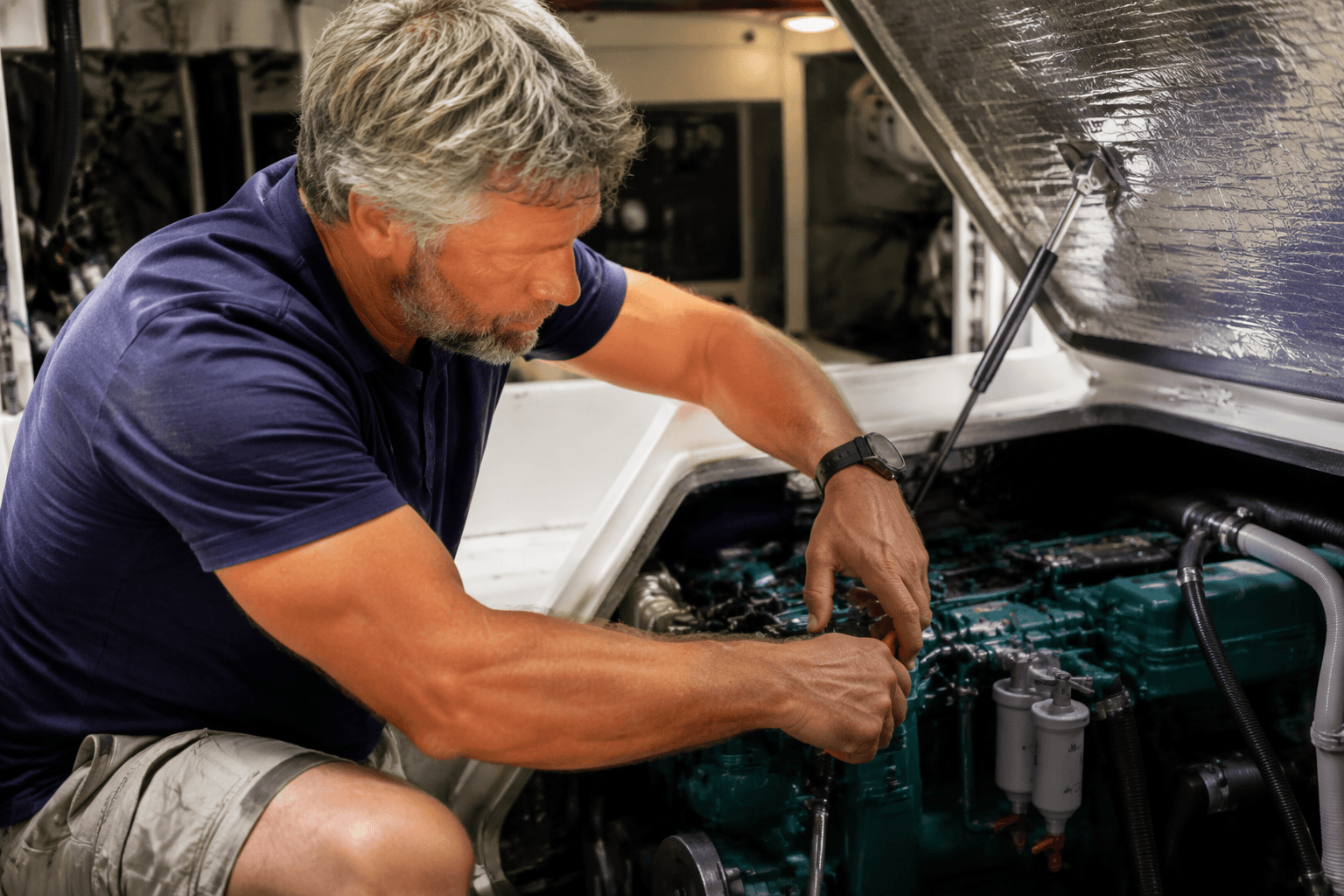
When the engine coughs at the wrong time, cruising stops being an attitude and becomes a troubleshooting exercise. The sharpest route to confidence is not a bigger spares bin, but the ability to diagnose, service, and repair the systems that make the boat self-sufficient.
Learn the skills that keep the cruise alive
Boat Galley pointed readers toward sailing schools, community boating programs, and community colleges that teach diesel or outboard repair, because a crew that can solve its own problems is less dependent on outside help when plans change offshore or at anchor.
The practical goal is not to become a professional mechanic. It is to know enough to recognize the difference between a nuisance and a failure, then act before the boat starts making decisions for you.
Start with the systems that strand you
If you are choosing what to learn first, begin with the jobs that most often take a boat out of the conversation: the diesel, the fuel system, and the charging system. A crew that can identify a fuel-starvation problem or trace a charging fault has already reduced dependence on a dockside mechanic, because those are the kinds of failures that turn a normal stop into a long delay.
A marine maintenance class teaches habits that pay off before anything breaks. Preventive maintenance procedures turn guesswork into routine, and routine is what keeps a cruise moving when weather windows are short and anchorage options are limited. The point is not to memorize every bolt on board, but to know which systems deserve inspection before departure and which symptoms need immediate attention.
What a serious diesel class actually covers
Fletcher Technical Community College’s Marine Diesel Engine Technician program prepares students to diagnose, service and repair marine diesel engines, and the curriculum includes overhaul of engines and component systems, repair of marine transmission and hydraulic systems, welding, rigging, technical manuals, and preventive maintenance procedures.
A class that touches only on oil changes will not help much when you need to understand transmission behavior, hydraulic issues, or how to read a technical manual well enough to follow a repair under pressure.
The welding and rigging pieces matter more than they might first appear. Cruising boats live with vibration, wear, and improvised fixes, and a sailor who can handle basic structural or gear-related repairs is less likely to be stranded by a broken bracket or a failed fitting. Even if you never become the person fabricating parts from scratch, understanding those systems makes every conversation with a yard or mechanic more productive.
Community college pathways are part of the cruising toolbox
Danville Community College offers Diesel Repair & Maintenance, Southwest Virginia Community College offers a Diesel Repair program, and Mississippi Gulf Coast Community College has a Maritime Multi-Craft Technology program. Waubonsee Community College’s WIOA training listings also include a Light Duty Diesel Repair Certificate that was established in 2015.
Mechanical training is available outside the sailing world’s usual channels. A cruiser does not need a marina seminar alone to build competence; a diesel class at a community college can deliver the same kind of hands-on confidence, often with structured instruction and real shop time. That path is especially useful if you want a broad foundation rather than a one-off lesson on a single boat system.
Repetition and vocabulary matter. The same problems on your own boat become less intimidating when you have worked through engine theory, repair steps, and preventive routines in a classroom or shop setting.
Online training fills the gaps between dockside classes
Not every cruiser lives near a school with a diesel lab, and that is where online training fits into the plan. NauticEd offers a Marine Diesel Engine Maintenance course, and American Sailing offers a Preparing For Long-Term Cruising course. Formal learning can happen both in person and online, which is helpful when you are trying to build skills around work schedules, travel, or a boat that is already in service.
Online courses will not replace hands-on wrench time, but they can help you arrive at the dock with context. If you already understand the logic of a diesel system before you open the engine box, you are better prepared to make the most of a local class or a weekend spent maintaining your own boat.
Build the skill set before you need it
The smartest cruising education plan is the one you make before the serious passage, not after something has failed. If you start with diesel basics, add preventive maintenance, and then branch into transmission, hydraulic, and outboard knowledge, you are building a boat that is easier to trust and easier to keep moving.
This article was produced by Prism’s automated news system from verified source data, official records, and press releases, then run through automated quality and moderation checks before publishing. The system is built and supervised by the people who set the standards it runs under. Read our full AI policy.
Did this article answer your question?