Choosing Sail Repairs, When Tape, Stitching, or Glue Works Best
A torn sail is a judgment call: tape can save a passage, glue can outlast weak cloth, and stitching still matters in load paths and reef points.
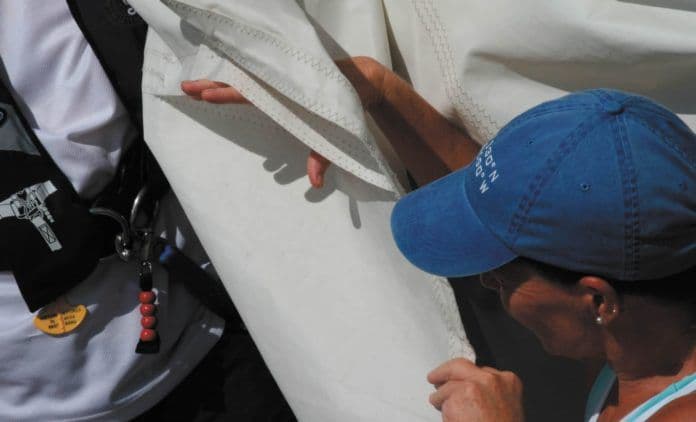
Tape, stitching, and glue each solve a different kind of sail failure
A sail tear is never just a tear. A stray cotter pin can shred cloth, a seam can open, or a luff or sun cover can start to fail while the boat is already in use, and the right fix depends on how fast you need the sail back and how much load that area will ever see. In Drew Frye’s April 13 comparison for Practical Sailor, the message is clear: the best repair is the one that matches the cloth, the damage, and the time you actually have before the next departure.
The practical rule is simple enough to carry onboard. If the damage is low-stress and non-structural, tape may be enough. If the cloth is too tired to hold thread well, a glued patch can make more sense than stitching. If the repair lands in a high-load area, stitching and reinforcement still matter, and sometimes the only honest answer is that the sail will not hold long enough to make the trip safely.
What the testing shows about real-world repairs
Practical Sailor did not treat this like a bench-top fantasy. The test work used lightly used 6-ounce polyester sailcloth that was laundered and scrubbed with TSP before testing. The team cut 2-inch-wide coupons, used sewn seams as controls, and pulled the samples to failure. Tape samples were left to rest overnight before strength testing, while adhesives cured for a week in hot, humid conditions.
That matters because sail repair is all about time and environment. The same article also tested 6-by-8-inch flags that had spent three months in the sun and then gone through a dozen laundry cycles, including three hours of tumble drying with tennis balls to increase flexing. The result is a better picture of what happens after a repair has lived with UV, movement, and repeated bending, not just fresh-on-the-dock optimism.
The stat that stands out is hard to ignore: in earlier Practical Sailor work, polyester tape, carbon/Kevlar-reinforced tape, and plain film all failed in roughly the 55 to 75 pounds per inch range. Even more useful for sailors, those tapes were also reported to creep under sustained loads around 8 to 10 pounds per inch, depending on temperature. That is the kind of detail that separates a patch that gets you home from one that quietly slides apart when the load stays on all afternoon.
When tape is the right call
Tape belongs in the emergency category first. West Marine sells Bainbridge Dacron Sail Repair Tape as an emergency repair product and says it is much tougher, stronger, and stickier than spinnaker repair tape. Sailrite makes the same point more directly, saying its Dacron adhesive repair tape is for emergency repairs and should only be used on Dacron. Sailrite also says its ripstop nylon tape is a high-strength adhesive-backed tape for fast, easy patches without sewing or heating.
That is the sweet spot for tape: punctures, short tears, and repairs in low-stress areas, especially when the tear runs parallel to the warp. Practical Sailor’s earlier guidance says tape should be used only for non-structural repairs in low-stress areas, and the tape itself becomes much more believable when the load path is small and the job is temporary. On a sail that just needs to stay usable through a passage or a weekend, that is often enough.
Tape also makes sense when access is poor and speed matters. If the sail is still on the boat, the wind is building, and you need a clean stopgap now, a proper adhesive-backed patch can be the difference between carrying on and striking sail early. But tape is not a magic substitute for structure. Once you get into reefs, corners, and load-bearing edges, the clock starts working against you.
When glue beats tape
Glue earns its place when the cloth is still worth saving but stitching would chew up weakened fibers or when a repair needs more tenacity than a simple peel-and-stick patch can give. Practical Sailor’s earlier repair coverage said double-sided sailmaker’s tape can hold small patches in place, but contact cement has a more tenacious grip, and 3M Fast Cure 5200 can be used to bond a patch in place, especially when stitches are added in high-stress areas such as reef points.
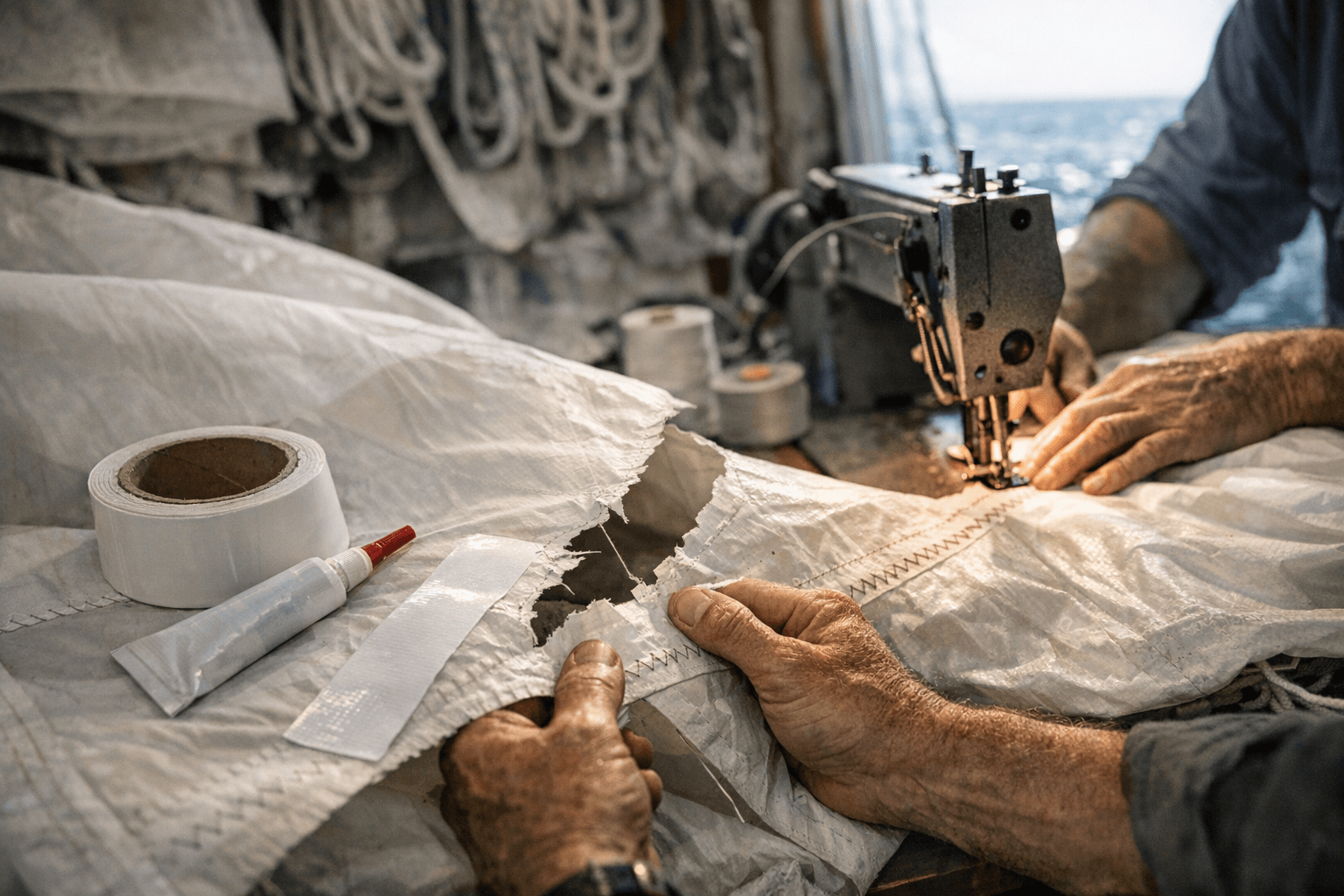
The earlier Practical Sailor tests also give glue-based repairs some real-world context. West System G-Flex remained strong, though somewhat stiff, in sail and canvas repairs. Dr. Sails was praised for flexibility and fast cure, but it also showed longevity problems in some uses, including failing after about one year in the sun and peeling within six months on furling laminate sails in one long-term test. Practical Sailor also reported that polyurethane failed after about one year in UV exposure.
That is the core tradeoff. Glue can outlast tape when the fabric itself is already the weak point, but not all adhesives age the same way. If the sail will live in sunlight, flex constantly, or stay out for a long stretch, UV resistance and long-term bond behavior matter as much as the first 24 hours after the repair.
Match the repair to the sailcloth
This is where many repairs go wrong. Polyester has long been the workhorse sail fabric because it is durable, relatively easy to sew, and relatively easy to repair. Laminate sails are a different animal. They use Mylar films and non-stretch fibers such as carbon and Kevlar, which means their failure modes differ and adhesives and tapes become more relevant than thread in many cases.
Quantum Sails breaks the repair logic down by cloth. A window patch replaces a torn or damaged area with new cloth of the same type and is more common on Dacron and nylon spinnaker cloth than on laminate cloth. Band-aid patches use adhesive-backed cloth on both sides of a sail and are often the preferred method for repairing laminate sails. Quantum also says laminate sail repair should use adhesives instead of sewing.
That distinction matters onboard. Dacron, nylon, ripstop, and laminate do not all want the same fix, and the patch material should match the sail material. Product makers reflect that reality too, with Dacron repair tape for Dacron only, nylon and ripstop repair tapes for nylon or spinnaker cloth, and specialty clear tapes for Mylar or sail windows.
Know when stitching still belongs in the repair
Stitching has not disappeared, it just has a narrower lane. Quantum Sails says patches larger than roughly 5 by 7 inches should be sewn with an X pattern after being band-aid patched. That advice lines up with Practical Sailor’s earlier warning that structural areas may need adhesive-backed patches supplemented with stitching and webbing.
Reef points are the obvious example. They see load, shock, and repeated flex, which is why a repair that looks fine at the dock can fail under way. If the damage sits in a high-stress area, stitching can be the difference between a patch that holds shape and one that starts to peel or creep.
Build the kit before you need it
Quantum Sails advises offshore sailors to practice sail repairs in calm conditions before needing them offshore, and that is the part too many cruising boats skip. The kit should match the boat, the length of the offshore passage, and whether the sailing is cruising or racing. A weekend coastal kit does not need to look like a transoceanic one, and a laminate-heavy inventory should not be packed like an old-school Dacron cruiser’s bag.
The best onboard repair kit is the one you can actually use under pressure. That means carrying the right tape for the right cloth, knowing when glue will buy more time than thread, and understanding when neither option will keep the sail reliable long enough to finish the trip. The smartest repair is not the fanciest one. It is the one that respects load, cloth, UV, and time.
This article was produced by Prism’s automated news system from verified source data, official records, and press releases, then run through automated quality and moderation checks before publishing. The system is built and supervised by the people who set the standards it runs under. Read our full AI policy.
Did this article answer your question?