Cockpit downhaul helps singlehanders tame hanked-on headsails safely
A cockpit downhaul gives a solo sailor control over a hanked-on headsail before the deck turns into a wrestling match. It is a small, inexpensive rig that can cut risk fast.
Why the downhaul matters
A big jib or genoa can go from useful to unruly fast, especially when you are alone or the wind starts building. The real problem is not just muscle, it is timing: once the sail is loaded up, it becomes harder to see around, harder to lower cleanly, and far more likely to get away from you at exactly the wrong moment. That is where a cockpit downhaul earns its keep. It turns headsail handling into a controlled operation instead of a forward-deck scramble.
For hanked-on headsails, that matters even more because these sails are still valued for being simple and dependable. The tradeoff is that they demand good handling systems. A downhaul is one inexpensive way to get that control without converting the boat to a furler, and for older boats that still rely on straightforward gear, that is a meaningful upgrade rather than a cosmetic one.
A foredeck hand you can reach from aft
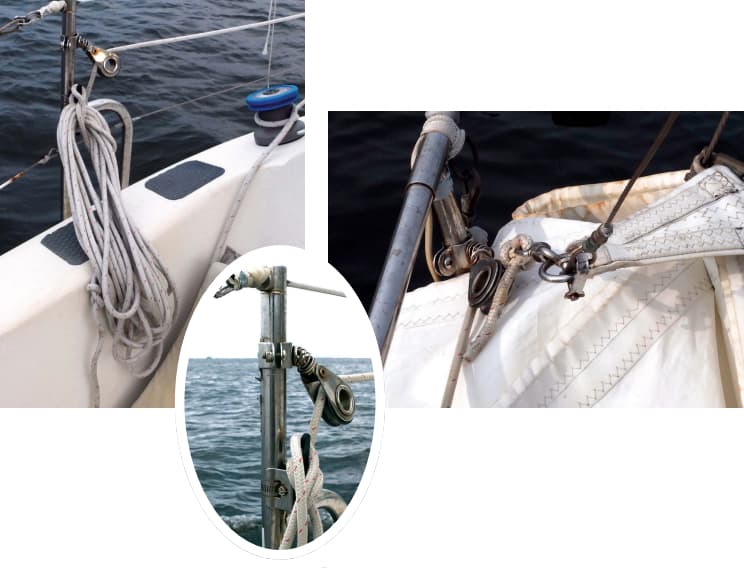
The setup described here is easy to understand because it does one job well. The downhaul runs from the cockpit, leads forward through stanchion blocks, and reaches the bow, where it clips to the head of the sail with a snap shackle. That routing gives the sailor an aft-side control line that can tame the sail before it becomes a problem.
Think of it as a singlehander’s foredeck crew. Instead of going forward to wrestle the sail at the exact wrong moment, you already have a way to manage it from the cockpit. That is the key shift: the sailor stays where the boat is easier to steer and balance, while the sail is brought down under control.
The right time to use it
The best rhythm is simple: drop the headsail first, then come in under main alone. That sequence keeps the boat under control while you are still moving, and it avoids trying to manage a full foretriangle in rising wind. For mooring, anchoring, and squall management, that approach is far safer than waiting until the jib or genoa is fully loaded and then trying to sort it out all at once.
This is especially important when sailing solo or short-handed. With fewer hands on deck, every extra trip forward adds risk and every uncontrolled flogging moment adds workload. A downhaul gives you a way to reduce both at the same time, which is why it reads less like a convenience and more like seamanship.
What changes on the boat
The biggest practical gain is control at the moment the sail needs to come down. A larger genoa that gets out of hand can block sightlines, demand attention, and become vulnerable to sudden damage if a squall hits before you have it settled. With the downhaul in place, the sail can be brought down from aft instead of being wrestled forward as conditions worsen.
That changes the whole handling sequence on older boats with hanked-on gear. You are not trying to redesign the rig or chase a modern furling conversion. You are adding one modest control line that makes the existing setup safer, calmer, and more manageable when the weather stops cooperating.
How to think about the hardware
The beauty of the arrangement is its restraint. It is not a complicated project, and it does not rely on replacing the boat’s whole foretriangle system. The important pieces are the cockpit lead, the stanchion blocks, and the snap shackle at the bow, all working together so the sail can be controlled from the place where the sailor has the best overall command of the boat.
That simplicity is exactly why it fits older cruising boats so well. Hank-on sails are already part of a reliable, old-school system; the downhaul just gives that system a smarter way to be handled. It is a practical improvement for sailors who value straightforward gear but want a much calmer answer when the sail needs to come down fast.
Where the safety margin really shows up
The safety benefit is not abstract. It shows up when the wind builds, when a mooring approach gets tight, or when a sudden squall makes a clean headsail drop more urgent than planned. In those moments, the downhaul reduces deck chaos and physical overload, which is exactly what a singlehander needs most. It keeps the boat under control while the sail is being handled, instead of turning the front of the boat into a place you have to visit under pressure.
That is why this small tweak punches above its weight. It does not just save effort, it reduces the chance that the sail will become an emergency. For sailors still using hanked-on headsails, that is a direct upgrade in confidence: the same dependable sail, but with a much better way to bring it home.
This article was produced by Prism’s automated news system from verified source data, official records, and press releases, then run through automated quality and moderation checks before publishing. The system is built and supervised by the people who set the standards it runs under. Read our full AI policy.
Did this article answer your question?