Diesel runaway on Avocet shows why sailors must know their engines
Avocet’s runaway Perkins shows how fast a diesel can turn dangerous, and how the right shutdown steps and fuel-system knowledge can save the day.
When a diesel runs away, seconds matter
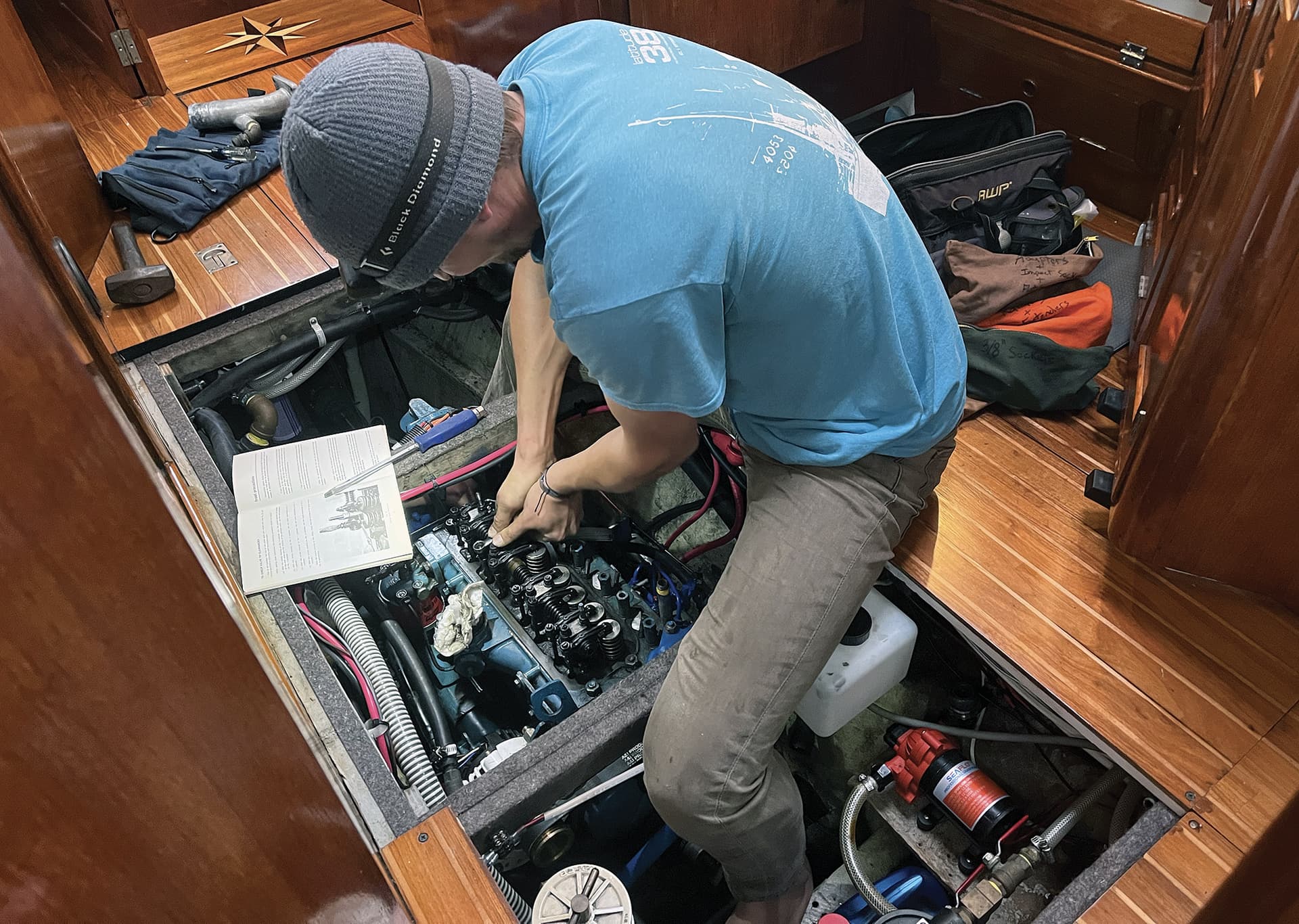
Avocet’s scare started like any routine departure: clear water, a working Perkins 4.108, and a run out of Monterey Harbor toward Morro Bay. Then, just beyond the breakwater, the engine suddenly roared and kept climbing in RPM instead of settling down. That is the kind of moment that turns a normal passage into a cockpit-to-engine-room emergency, and it is exactly why sailors who run older auxiliary diesels need to know the machine well before trouble starts.
On Chris and Marissa Neely’s 1979 Cheoy Lee 41, the runaway was frightening but stoppable. The crew split tasks immediately, with one person on the helm and the other below trying to diagnose what the engine was doing. That quick division of labor matters, because a runaway is not just a loud engine problem. It is a rare but dangerous failure that can lead to severe damage, injury, fire, or worse if the fuel source is not cut fast.
What a diesel runaway really is
A runaway happens when a diesel keeps feeding itself fuel, or otherwise keeps increasing power, even though the throttle has not asked for it. On older auxiliary engines, that can come from several different faults, and the tricky part is that the symptoms can look similar at first: rising RPM, loud exhaust, oil or fuel contamination, and a crew that suddenly realizes the normal controls are not doing what they should.
In Avocet’s case, the story pointed directly at the fuel system, but the broader lesson is that a runaway can be triggered by overfilled crankcase oil, a failed oil seal in a turbocharged engine, incorrectly assembled throttle linkages, or injection pump failure. If you own an older diesel, the point is not to memorize every exotic cause. It is to understand that the engine can be pulling you into a failure path long before the sound becomes obvious from the cockpit.
Why the injection pump sits at the center of the problem
The injection pump is the heart of the diesel’s fuel timing. It meters fuel to the injectors at the right pressure and in the right sequence, which is why a fault there can turn into a full crisis so quickly. When the system is working properly, the pump delivers precise amounts of fuel only when commanded. When it fails, the engine can start to behave as if the throttle no longer exists.

SAIL’s account of the Avocet incident adds a crucial Perkins-specific detail: two of the most frequently reported causes of a Perkins runaway are the lift pump or the injection pump. That gives owners of Perkins-powered boats a much sharper troubleshooting map. If the engine is overspeeding, the fuel delivery path is not a vague suspect. It is one of the first places to look, and that means the lift pump, the injection pump, and the shutdown path should all be understood before you leave the dock.
How Avocet’s crew stopped the runaway
The important part of the story is not only what went wrong, but how it ended. Chris manually actuated the stop solenoid on the high-pressure fuel pump and starved the engine of fuel, which stopped the runaway. That is the kind of detail every owner of an older diesel should know cold, because the normal throttle lever may not be enough in a runaway event.
If you have never traced your shutdown system, do it at the dock, not underway. Know where the stop solenoid lives, what it does, and how it interrupts fuel. Know whether your engine depends on an electric stop circuit, a mechanical cable, or some combination of both. In an emergency, the difference between “I think it’s over here” and “I know exactly where the stop point is” can decide whether the incident ends as a repair or escalates into a disaster.
The onboard checks that turn panic into diagnosis
A runaway is a time to act, not to guess. The Avocet incident shows why the basics matter: manuals, access, and calm diagnostic steps are not optional extras on an older cruising boat. Once the engine is overspeeding, you need a clear mental sequence for what to inspect and what to isolate.
Start with the simplest question: is the engine being fed fuel when it should not be? From there, check the shutdown path, then look at the components that can overfeed the engine or let it inhale oil. On a Perkins, the lift pump and injection pump belong near the top of that list. If the engine is turbocharged, oil seals become part of the suspect list. If the throttle linkage has been worked on recently, assembly errors deserve attention too.
A practical dockside habit helps here:

- Know the normal shutdown procedure for your exact engine.
- Find the stop solenoid before you need it.
- Trace the fuel path from lift pump to injection pump.
- Inspect throttle linkages for binding or misassembly.
- Check crankcase oil level so you know what overfill looks like.
- Keep the manual aboard and reachable, not buried in a locker.
Why engine identification matters more than people think
There is another small but useful detail in the Perkins 4.108 workshop manual: the engine number is stamped on the block near the fuel injection pump, on the top edge of the facing on the cylinder block to which the pump is secured. That sounds minor until you need the right parts, the right diagram, or the right workshop procedure in a hurry.
For older auxiliaries, knowing exactly which engine is in the boat is part of emergency preparedness. The model badge on the cover is not enough. If the fuel system is the likely failure point, then the engine number, the pump location, and the service manual all belong in the same conversation. The Avocet story makes that plain: the same area of the engine that identifies it is also tied directly to the component most likely to matter when a runaway starts.
A cruising problem, not just a mechanical one
Avocet’s runaway did not stay a purely engine-room story. The couple’s later departure from Morro Bay, after fixing the diesel engine and pushing through horrendous weather, shows how a single mechanical failure can reshape a passage plan. That is the real-world cost of not knowing the auxiliary well enough. One bad start can delay a departure, complicate a weather window, and force a crew to make decisions under pressure.
The video account of the event makes the emotional part clear too: it was scary, but it was stoppable. That is the diagnostic lesson to carry forward. On an older diesel, the difference between chaos and control is often not luck. It is knowing where the shutdown path is, understanding how the fuel system fails, and being ready to act before the runaway has time to become something worse.
This article was produced by Prism’s automated news system from verified source data, official records, and press releases, then run through automated quality and moderation checks before publishing. The system is built and supervised by the people who set the standards it runs under. Read our full AI policy.
Did this article answer your question?