DIY repower swaps Volvo diesel for Beta 20 saildrive
Natasha’s repower shows when a saildrive beats a shaft-drive swap: tighter fit, less alignment drama, smoother power, and a cleaner 30-footer setup.
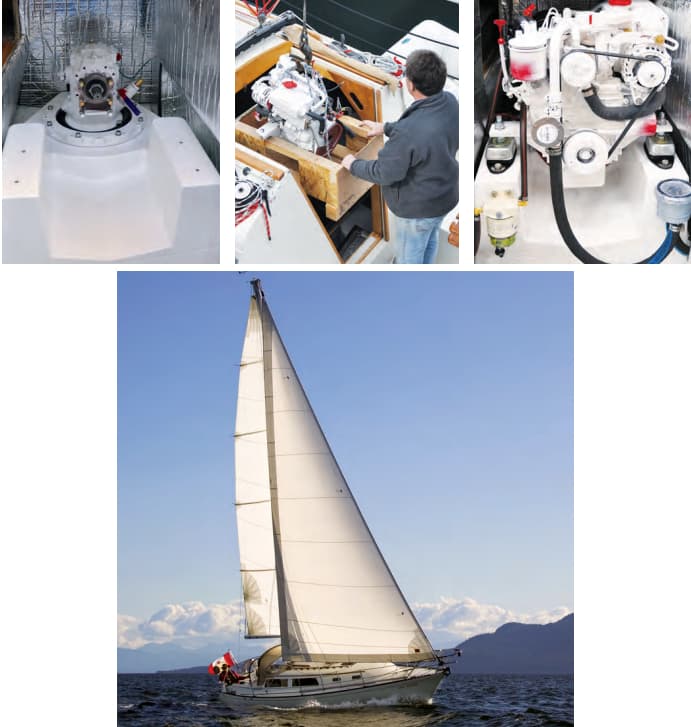
Natashas old Volvo MD7A had reached the point where Bert Vermeer no longer trusted all 13 horsepower, especially after overheating on British Columbia passages where currents run hard and summer light-air leaves little margin. Rather than bolt in another conventional inboard and inherit the same shaft-line headaches, he rebuilt the 1978 Islander Bahama 30 around a Beta 20 and a SeaProp 60 saildrive. For owners of aging 28 to 35 foot cruisers, that is the real question: when does a repower become a smarter redesign instead of just an expensive engine swap?
Start with the hull, not the horsepower
The first lesson from Natasha is that fit determines everything. Vermeer measured carefully and built cardboard mock-ups before ordering, because the engine space under the cockpit sole was tight enough that the Beta would fit only just. That is the kind of planning that saves a project from turning into a yard-only job, especially on a compact cruiser where every inch of clearance matters.
The boat itself explains why the layout was worth rethinking. The Bahama 30 is widely identified as a Robert Finch design first built in 1973, and Good Old Boat’s sail data lists it at 30.0 feet LOA, 10.0 feet beam, 8,230 pounds displacement, 3,130 pounds ballast, and a 5.0 foot maximum draft. On a boat that size, the auxiliary is not just a machine in a box. It is part of the hull structure, the interior layout, and the way the whole boat lives under power.
What the saildrive changes under the boat
The appeal of the SeaProp 60 saildrive was not mystery, it was simplification. Twin Disc says the SeaProp60 is designed for sailboats with engines up to 56 kW, or 75 hp, at 3600 rpm, and explains that saildrives can be quieter, smoother, and more efficient than conventional shaft installations because the thrust line stays parallel to the waterline instead of being pushed downward through a shaft angle. That matters on a small cruiser where vibration and noise are not abstract comfort issues, they are part of how confidence erodes over time.
Twin Disc also notes that saildrives eliminate the propeller shaft, stuffing box, coupling, cutless bearing, stern tube, strut, and shaft alignment procedures. That is a major structural change, not a minor upgrade. Instead of engine beds, shaft alignment work, stuffing box maintenance, and a separate strut, the system uses a more integrated fiberglass structure that supports the engine and the drive while sealing the hull opening. For a do-it-yourself owner, that is both the attraction and the tradeoff. You cut out some of the most fussy mechanical work, but you are committing to a different kind of installation.
Why the Beta 20 fit this boat
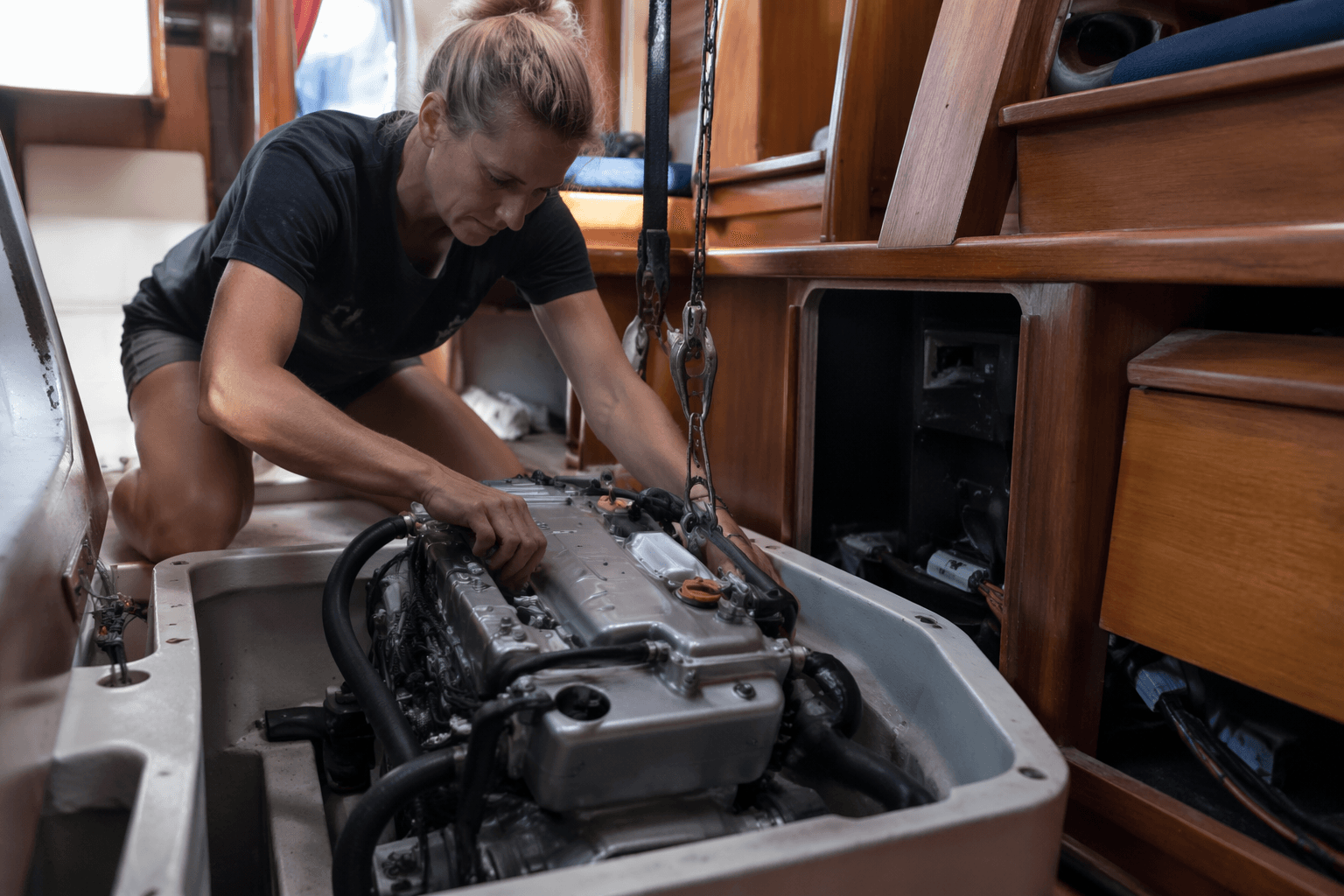
The engine package Vermeer chose was a Beta 20 saildrive setup, and the numbers show why it suited a 30 footer. Beta Marine lists the Beta 20 saildrive as a 3-cylinder, 719 cc engine rated at 20 hp at 3,600 rpm, with an engine weight of 95 kg and a combined engine-and-saildrive weight of 145 kg. The unit uses the SeaProp 60SD as standard, and Beta Marine says that drive can be configured with either 2.15:1 or 2.38:1 reduction ratios and can accept clockwise or anti-clockwise output rotation.
That flexibility matters when you are trying to match a modern package to an older hull. On Natasha, the point was not to chase the biggest possible engine. It was to replace an aging auxiliary with a system sized for the boat, easier to live with, and less dependent on old-school alignment rituals that can make a small repower spiral.
The work that made the conversion possible
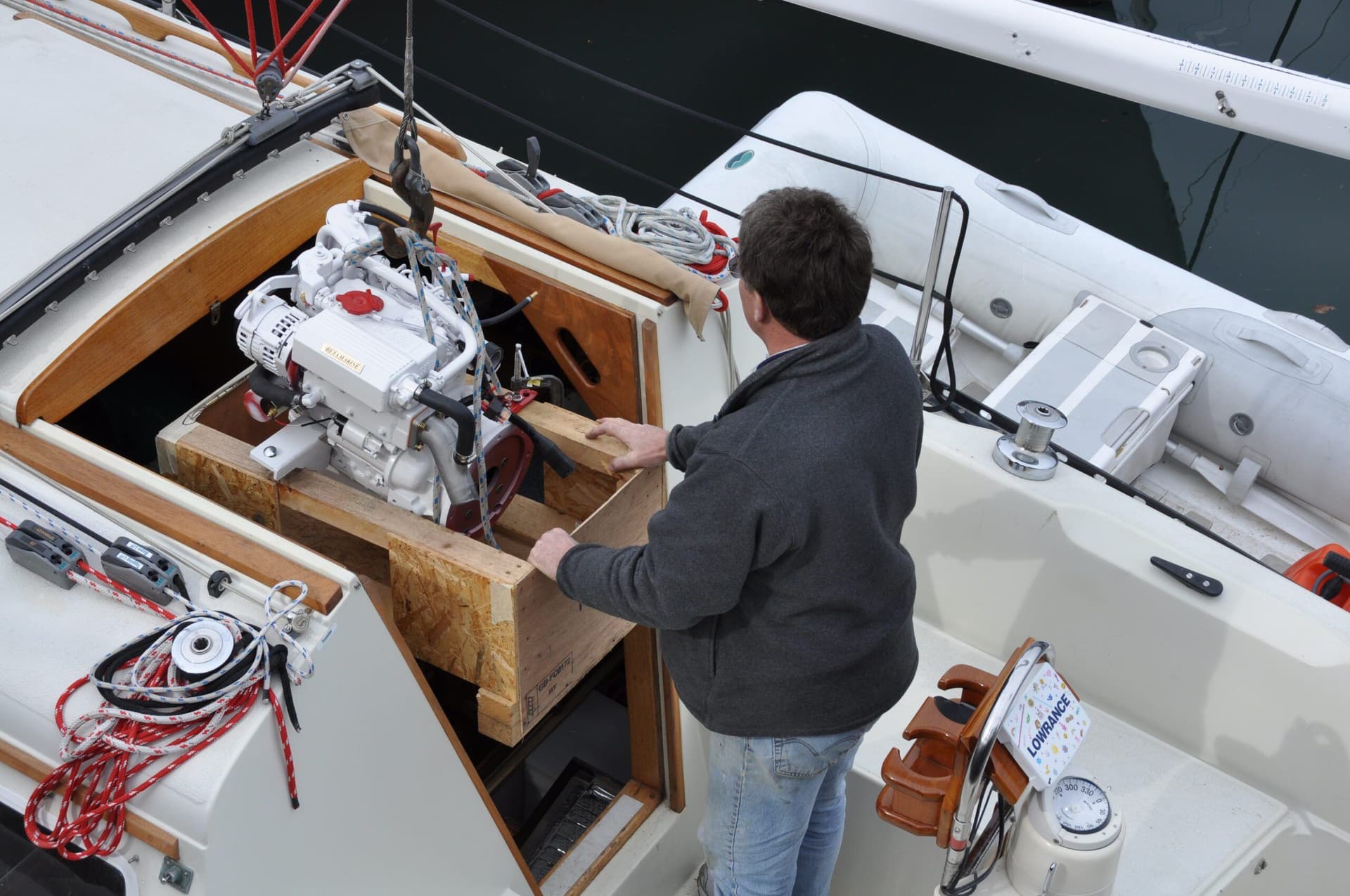
Once the engine and saildrive were ordered from Gartside Marine and the boat was hauled, the job turned into a sequence that many owners will recognize. Vermeer removed the old Volvo with help from the mainsheet and boom, stripped out accessories that were no longer needed, cut away the old engine beds, and cleaned up the wiring in the compartment. That combination of lifting, cutting, and tidying is where a repower either stays manageable or balloons into a long refit.
The important detail is that he was not simply swapping one lump of iron for another. He was clearing the space for a new propulsion architecture. If you are considering the same move, budget your labor around the whole compartment, not just the engine itself. The real installed cost is shaped by hauling the boat, removing old support structure, fitting the new underbody arrangement, and dealing with the cleanup that follows.
When a saildrive beats a shaft-drive replacement
Natasha points to a practical decision rule for aging cruisers in the 28 to 35 foot range. A saildrive starts to look better when the existing shaft drive would need alignment work, stern tube and strut attention, stuffing box service, and enough under-bilge compromise that you are rebuilding half the propulsion system anyway. It also makes sense when the compartment is tight and mock-ups show the new package barely fits, because that usually means the old arrangement has already used up most of the available space and patience.
The conversion is not automatically the cheapest path. It is the better path when the old setup is part of the problem, not just the engine. If you are trying to turn an unreliable auxiliary into something quieter, smoother, and easier to maintain, the saildrive can be a cleaner answer than pouring more money into a tired shaft line.
The Pacific Northwest test
British Columbia is a hard place to fake confidence in an auxiliary. Canadian tide and current tables are the official source for predicted slack water times and maximum current velocities, which is a reminder that propulsion reliability is not a luxury when currents are setting hard and the wind is not helping. Vermeer’s choice was shaped by that reality as much as by the hardware itself.
His later report of 1,300 hours over 11 years on the Beta 20 and SeaProp60 combination gives the conversion real-world weight. For Natasha, the repower was not just about replacing a worn-out Volvo MD7A. It was about building a propulsion system that fit the boat, fit the cruising ground, and made the old fear of the engine room a little less relevant every time the dock lines came off.
This article was produced by Prism’s automated news system from verified source data, official records, and press releases, then run through automated quality and moderation checks before publishing. The system is built and supervised by the people who set the standards it runs under. Read our full AI policy.
Know something we missed? Have a correction or additional information?
Submit a Tip