DIY roller-bearing rudder upgrade restores steering on a 1964 Cal 40
When the helm starts tightening and developing hard spots, a roller-bearing rudder conversion can be the right fix, and Tom Egan shows how on a 1964 Cal 40.
On Tom Egan’s 1964 Cal 40, Misirlou, a spade rudder with worn nylon bushings was converted to precision roller bearings, a project with enough fabrication and alignment work to scare off a lot of owners, but not enough to stop a careful DIY sailor with the right tools.
When the upgrade earns its keep
This is not the kind of job you do because the boat still feels fine and you want to chase a little extra polish. Egan’s steering had been getting progressively tighter and developing hard spots, the sort of change that creeps up slowly enough to normalize until it becomes impossible to ignore.
That distinction is especially important on older spade-rudder sailboats. Many of them were built with plain bushings or simple fitted tubes instead of true manufactured bearings, so the steering can still move for years while the fit gets worse and worse. On a boat that will see offshore miles, heavy-weather loads, or tight docking, that extra drag shows up when the rudder is asked to work hard.
Why Misirlou is the right kind of platform for this work
Introduced in 1963, the Cal 40 was one of the first production offshore racers to pair a separate fin keel with a spade rudder, and the design quickly proved it was not a stunt. The first boat went to George Griffith. Hull #2, Conquistador, won the 1964 Southern Ocean Racing Circuit, and the class eventually totaled about 160 boats, a real commercial success for Jensen Marine.
Cal 40s stayed active for decades, including 14 Transpac entries in 2005 listed by Cal40.com.
What the conversion actually took
The conversion moved the rudder from nylon bushings to precision roller bearings, and the work folded in modern fabrication methods that a few years ago would have sounded extravagant for a classic fiberglass boat.
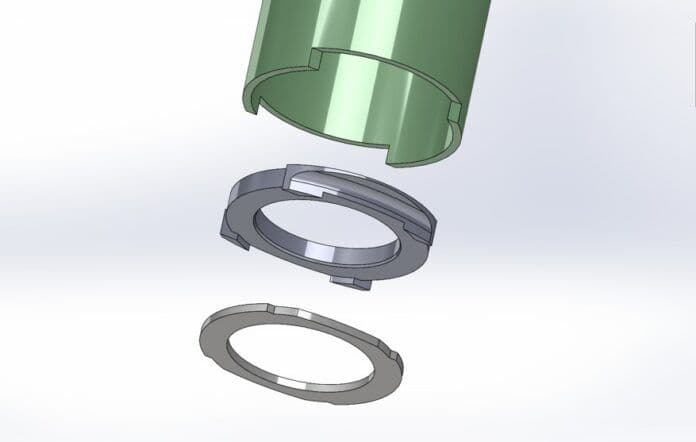
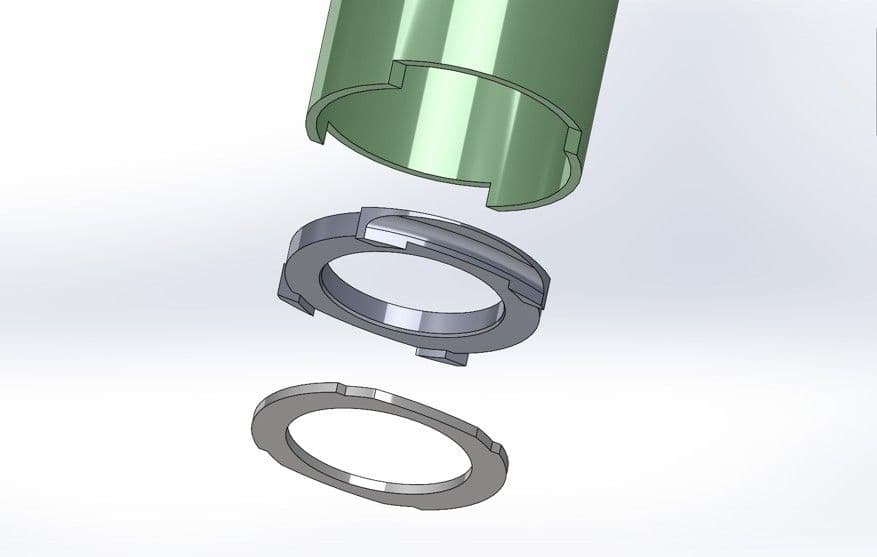
The project used CAD modeling to sort out the geometry before parts were cut. It also used a modified tube end, a 3D-printed fairing piece, and a modified PET-P thrust washer, which shows the real shape of modern DIY boatwork: old fiberglass, new plastics, and enough measuring to keep the whole thing centered. A serious rudder rebuild is not just about swapping one part for another. It is about controlling the relationship between stock, tube, bearing, and hull opening so the rudder spins freely without introducing play.
Where the alignment risk lives
The hard part of a roller-bearing conversion is not buying the bearing. It is making sure the whole assembly wants to live in the same line. Jefa says converting from plain bearings to roller bearings can help prevent a rudder from binding under heavy load, and self-aligning bearings are a practical answer when exact retrofit alignment is difficult. That is the real decision point for a DIY sailor: if the geometry is straightforward, the job is manageable; if the stock, tube, or hull shape is too far out of true, the project can become a fight.
Jefa says retrofit installations may use a sleeve bonded to the rudder stock, which is another clue about the level of precision involved. PYI Inc. sells Jefa rudder bearings as captive roller bearings in aluminum housings, available in self-aligning versions and sized from 30 mm to 260 mm for production and custom applications. You need the right size, the right housing, and enough confidence in your measurements to know the rudder will sit square once the boat is back in the slings.
The maintenance tradeoff after the upgrade
A better helm does not mean zero upkeep. Rudder bearings generally need only a hose-down after haulout to remove salt crystals, while rudder stocks should be inspected annually for electrolysis. PYI says the rollers in a Jefa rudder bearing should not be greased unless the manufacturer recommends it, with grease reserved only for the ball-and-housing interface on some self-aligning units.
You gain lower friction, better response, and a rudder that is less likely to bind when loaded up, especially offshore or during close-quarters maneuvering. In exchange, you accept a bearing system that wants clean installation, careful inspection, and respect for the manufacturer’s maintenance rules.
When to stop and bring in a pro
The line between competent DIY and too much risk shows up fast on this kind of work. If the boat’s rudder tube, stock, or hull opening is so worn that you cannot hold alignment through the whole assembly, that is a yard problem. If you are unsure whether the modified sleeve, thrust washer, or fairing piece is truly concentric, stop before you commit to glass and bonding. A rudder that is slightly off now can become a binding problem later, and binding under load is exactly what this upgrade is supposed to solve.
A 2006 YACHT workshop piece argued that play in rudder bearings makes steering uncomfortable and often signals advanced wear, and that modern self-aligning needle bearings are a better long-term answer for free-hanging spade rudders.
This article was produced by Prism’s automated news system from verified source data, official records, and press releases, then run through automated quality and moderation checks before publishing. The system is built and supervised by the people who set the standards it runs under. Read our full AI policy.
Did this article answer your question?