How Herb McLeod built a trailer-sailer for remote inland cruising
Herb McLeod’s Omakayas is proof that a stripped-down trailer-sailer can buy access, not just convenience, opening shallow, remote water to a boat built around restraint.
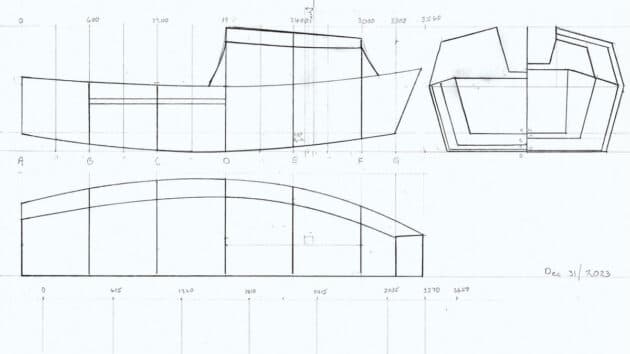
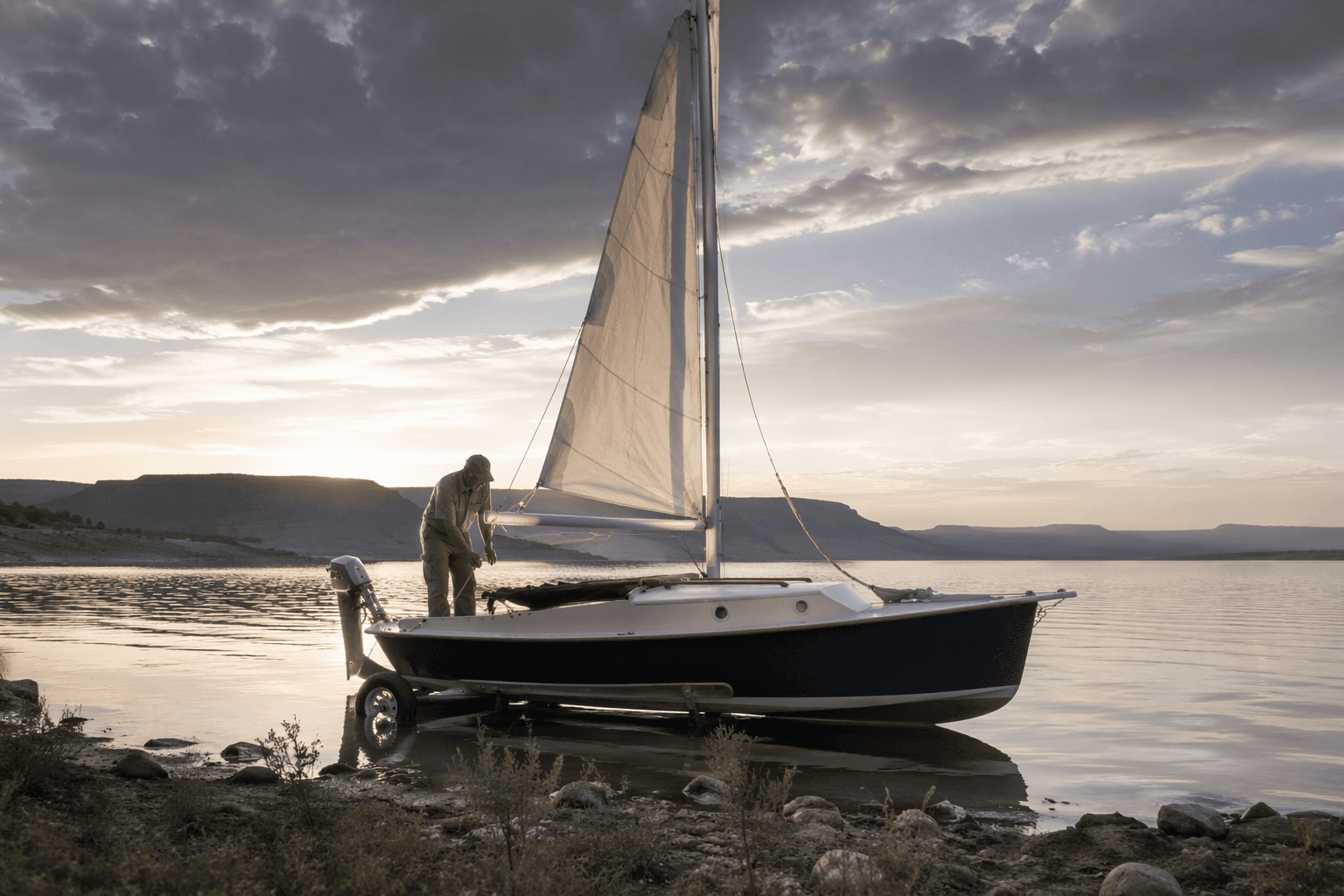
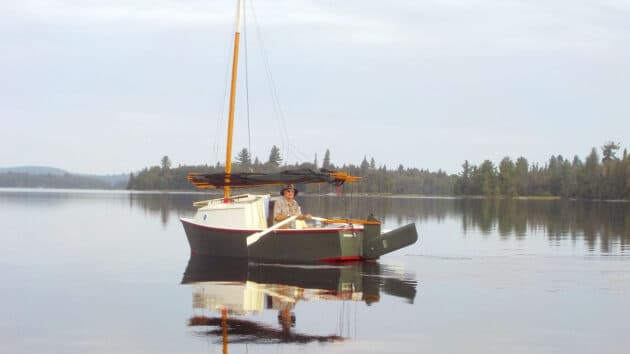
Herb McLeod built Omakayas for one job: reach the Canadian wilderness reservoirs that a conventional keelboat would never touch, then come home on a trailer. The result is a flat-bottomed, 3.6-meter trailer-sailer that treats portability, shallow draft, and single-handed handling as the real performance figures.
A boat built around the route, not the marina
The first design choice was the mission. McLeod did not start with a berth, a galley, or the usual comforts that inflate small cruising boats into floating cottages. He started with remote inland cruising, where road transport matters as much as sail area and where launch sites, shorelines, and water depth can be limiting factors long before wind conditions become the issue.
That is why the flat bottom matters. It keeps draft shallow, makes launching and recovery simpler, and fits the kind of water Omakayas was meant to explore. On reservoirs and isolated lakes, the boat has to slide into skinny water and get back out without a crane or a deep ramp.
What a true trailer-sailer has to do well
A trailer-sailer is more than a small yacht on wheels. It is a keelboat sized to carry crew for a weekend cruise, but still light and compact enough to be launched, rigged, and recovered single-handed. It is also meant to be hauled behind a car, which means every pound, every fitting, and every inch of hull shape has to justify itself.
That definition explains the tradeoffs McLeod embraced. Low displacement helps the boat move easily on the trailer and keeps the whole package within reach of ordinary overland travel. Shallow draft opens shallow water. Easy launching reduces the friction that often keeps boats from getting used.
What gets left out when access comes first
The minimalist look of Omakayas is not an aesthetic choice so much as a statement of priorities. When a boat is built for remote inland cruising, heavy ballast, marina-style comfort, and complex systems become liabilities because they add weight, depth, maintenance, and launch difficulty. A light, flat-bottomed hull signals that the builder is willing to give up some conventional cruising furniture in exchange for freedom of movement.
If your sailing ground is reached by road and launched from rough or shallow access points, luxury features become dead weight because they do not help the boat travel, launch, or survive in thin water.
Why the trailer-sailer tradition still matters
Omakayas sits inside a long tradition of homebuilt trailer yachts and trailerable cruisers. That tradition has been especially strong in Australia and New Zealand, where trailer yacht classes became popular and where the practical benefits of towing a boat behind a car fit the way many sailors actually travel to water.
The trailer yacht emerged as a modern interpretation of the popular Hartley homebuilt trailer yacht, which was built in huge numbers, especially in Australia and New Zealand. McLeod is working in the same line: keep the boat small enough to move, simple enough to maintain, and light enough to launch without a full dockside operation.
Trailerable cruising is not limited to a day on a ramp or a weekend on a sheltered lake; the Roberts 19 made a Canadian-to-Australia trailer-sailer voyage.
The design tradeoff at the heart of the project
Every serious minimalist trailer-sailer is a balancing act. Make it too heavy, and you lose the trailer advantage. Add too much draft, and shallow water disappears from the map. Chase too much interior comfort, and you end up with a boat that is harder to tow, harder to rig, and less likely to get used for the kind of travel it was meant to do.
McLeod’s 3.6-meter Omakayas lands on the side of access. It is a boat built for the places that invite exploration but punish bulk: long drives, narrow launch sites, and inland waters where a deep keel would be a liability. The flat-bottomed hull is not a shortcut. It is the design answer to a very specific sailing problem.
A blueprint for builders and modifiers
If you are thinking about your own trailer-sailer, Omakayas points to a clear sequence of decisions:
1. Start with the water you actually want to reach.
2. Measure the road, the ramp, and the launch logistics before you worry about cabin features.
3. Keep the hull light enough to trailer with confidence.
4. Protect shallow draft and simple recovery as non-negotiable design goals.
5. Add only the systems you can live with in remote places.
This article was produced by Prism’s automated news system from verified source data, official records, and press releases, then run through automated quality and moderation checks before publishing. The system is built and supervised by the people who set the standards it runs under. Read our full AI policy.
Did this article answer your question?