How to reinforce canvas holes for longer-lasting marine gear
A small hole can become a long tear if it is left unsupported. The right reinforcement turns a load point into a durable pass-through instead of a future failure.
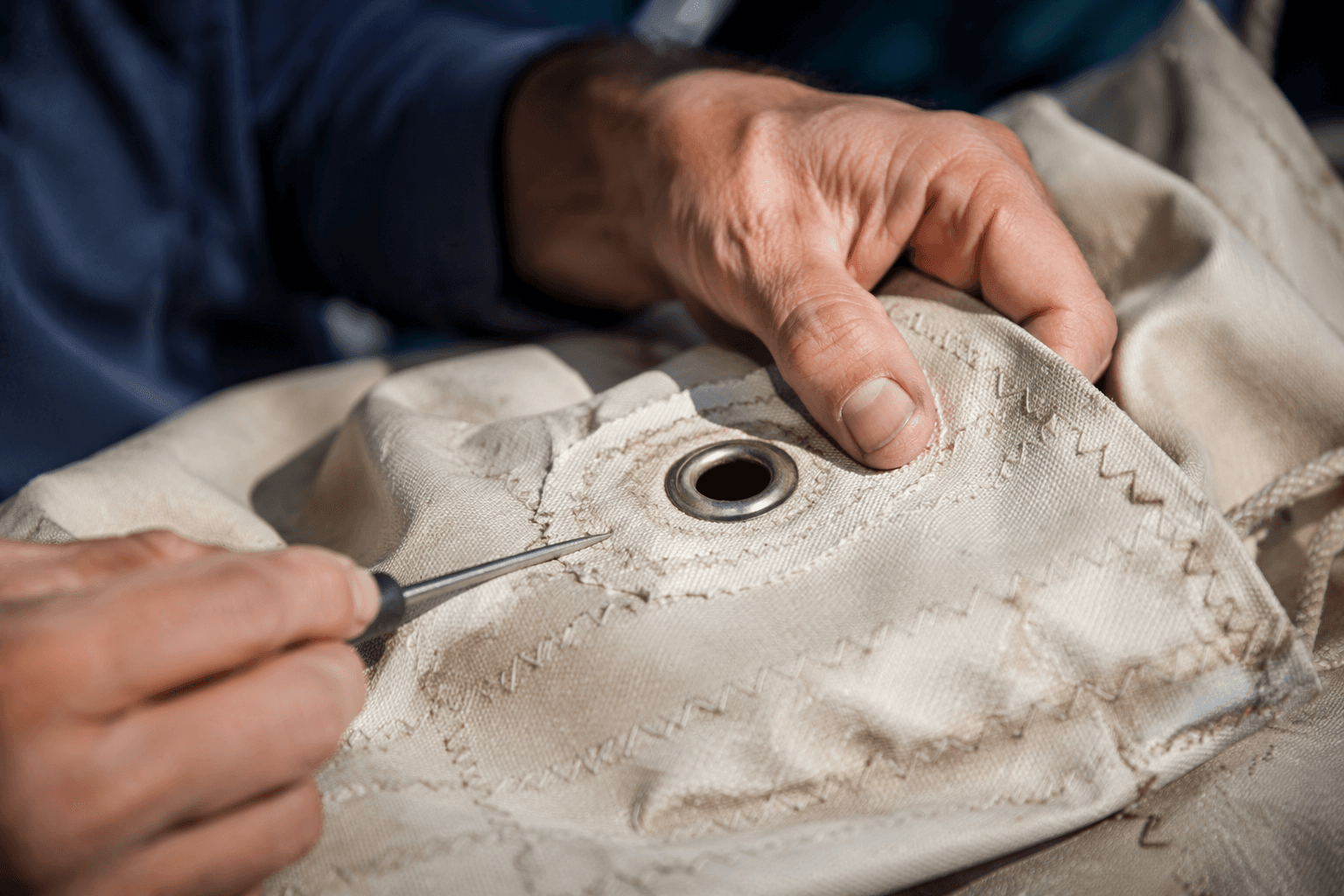
On dinghy chaps, awnings, boat covers, biminis, dodgers, weather cloths, and enclosures, a hole that carries a line, clears a fitting, or sits where the fabric flexes and chafes can leave you with fraying, tearing, or a damaged edge that opens up again after a few outings. The smarter repair is to reinforce the opening so the load gets spread out and the fabric stays dimensionally stable.
Start with the job the hole has to do
The first decision is not how pretty the patch will look, but what kind of stress the opening sees. A hole may serve as a pass-through, a tie-off point, or a clearance opening around hardware. If the fabric around it is carrying repeated motion or pressure, the repair has to be structural, not cosmetic.
Hole reinforcement is a common marine-canvas task rather than a specialty fix. The same logic applies on sail-adjacent canvas and residential awnings: if the opening has to stay intact under load, it needs reinforcement before the tear starts migrating.
Match the fix to the fabric and the wear
Marine canvas is often worth saving because it represents a large investment of time and money, even when you made it yourself. Sunbrella marine-grade fabric, for example, is built for boat covers, biminis, dodgers, weather cloths, awnings, and enclosures, and it is marketed for resistance to UV rays, mildew, and water. That durability helps, but it does not make the fabric immune to repeated flexing, sun, and chafe.
The condition of the surrounding canvas should guide the repair. If the fabric is still sound and the hole is the main problem, reinforcement makes sense. If the area is frayed, worn thin, or breaking down in multiple spots, Sailrite canvas specialists say that Sunbrella older than 10 years may be better replaced than repaired when wear is significant.
Choose reinforcement that can carry the load
For load-bearing openings, Sailrite’s method uses Shelter-Rite vinyl on both sides of the canvas, sandwiching the fabric to create a stronger opening. That matters because Shelter-Rite is tough, waterproof, flexible, and resistant to tear propagation, which is exactly what you want where a grommet, line, or edge keeps working the same spot.
The chafe side of a hole should be backed with a chafe-resistant material such as Shelter-Rite vinyl or Sur Last. If appearance matters, the visible side can be finished with matching fabric, while the side taking the abuse gets the harder-working material.
How the reinforcement is built
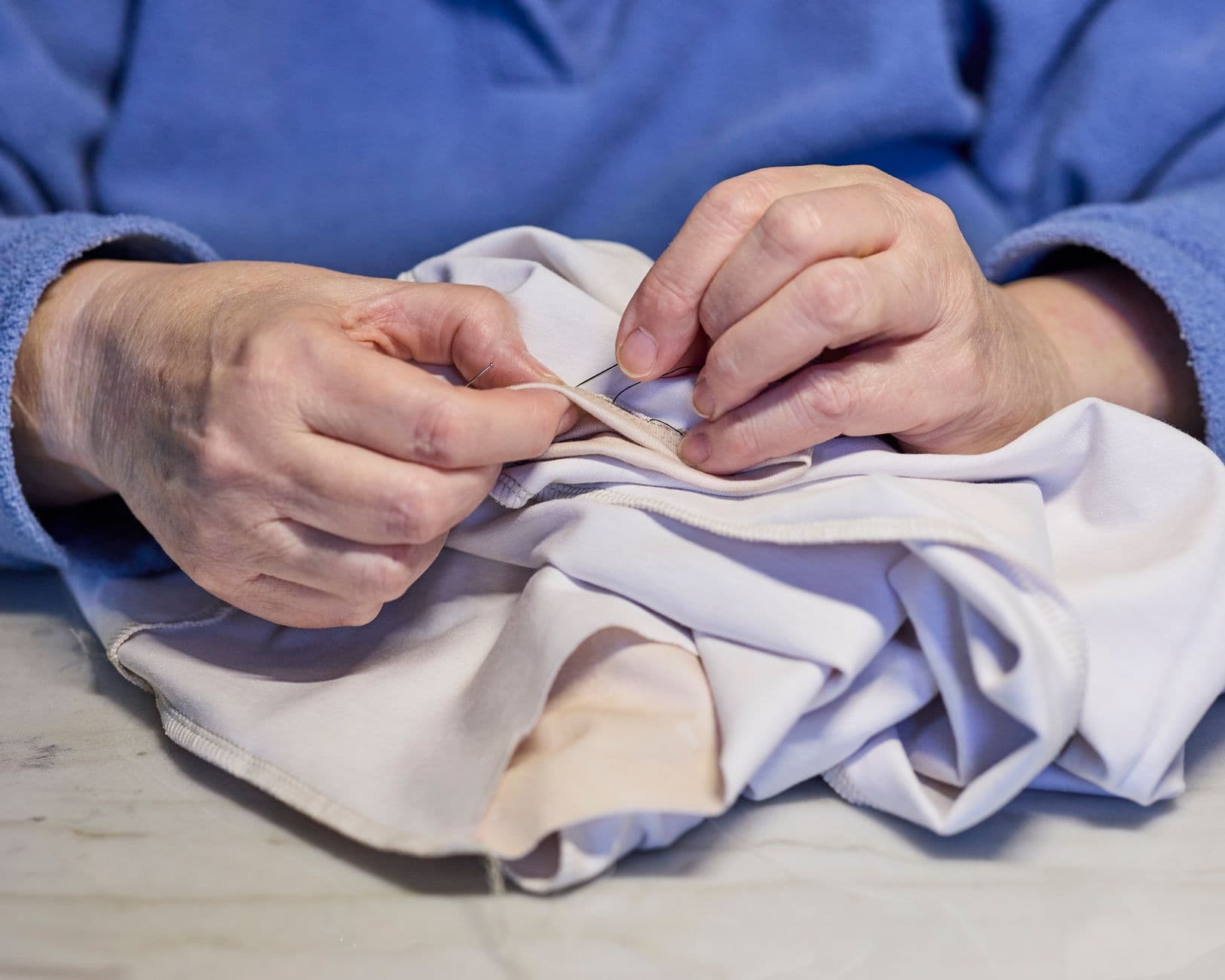
Sailrite’s repair logic is straightforward: measure and trace the opening carefully, shape the patch so it matches the hole cleanly, then use basting tape and stitching to lock everything in place. The important detail is that the sewing does two jobs at once. It secures the perimeter of the patch, and it also stabilizes the hole itself so the fabric does not keep raveling at the edge.
That stitching detail is what separates a durable repair from a quick cover-up. A patch that only hides the damage may look finished on the dock, but it does not stop the fabric from working loose under repeated use. When the repair follows the shape of the opening and is stitched around both the outer perimeter and the hole itself, the load gets distributed across more material instead of concentrating at one weak spot.
When sewing is the best answer, and when it is not
Sewn repairs are the gold standard for torn Sunbrella boat canvas when you have access, room, and a machine that can handle the material. Sewing gives you a repair that becomes part of the structure rather than sitting on top of it. For a hole that has to remain open, clean-edged, and stable, that is usually the strongest route.
Still, not every repair setup allows for full sewing. Adhesives and tapes can help when geometry, access, or the condition of the surrounding fabric makes stitching impractical. That is where products such as Tear-Aid or Trivantage’s SunPatch come in as useful tools for some kinds of marine, awning, and outdoor fabric damage. SunPatch is marketed as repositionable and heat-activated, which makes it a practical option for quicker fixes, but it is best treated as a helper for simpler tears or hard-to-reach spots rather than a substitute for a true load-bearing reinforcement.
If chafe caused the hole, fix the chafe side first
The cause of the damage matters as much as the size of the opening. If the hole came from chafing, the chafe side should be patched with a chafe-resistant material like Shelter-Rite vinyl or Sur Last. That advice keeps the failure from repeating itself in the same place, which is the real danger with holes in working canvas.
The tougher material belongs on the side that is actually doing the work.
This article was produced by Prism’s automated news system from verified source data, official records, and press releases, then run through automated quality and moderation checks before publishing. The system is built and supervised by the people who set the standards it runs under. Read our full AI policy.
Did this article answer your question?