Owner turns damaged Lagoon 450 bulkhead into structural rebuild
A used 2013 Lagoon 450 became a bulkhead rebuild the moment hidden damage surfaced. The case shows when cosmetic cracks on an ex-charter cat mean structural trouble.
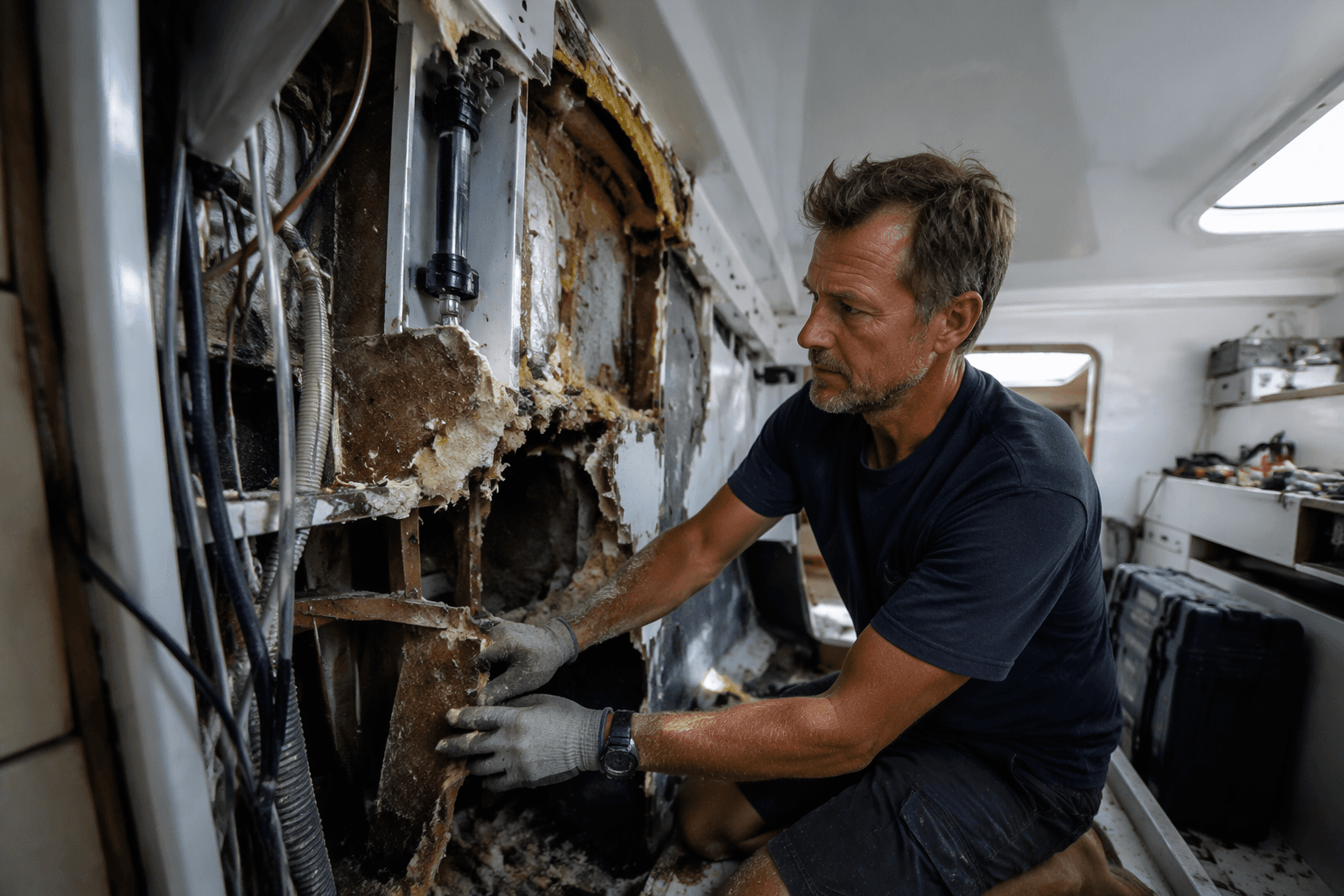
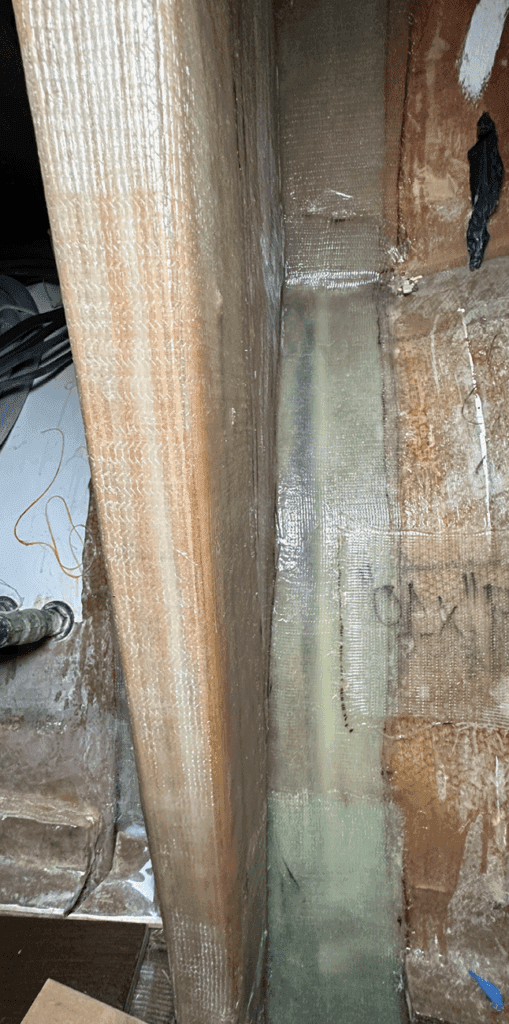
A routine purchase turned into a structural investigation the moment the owner of a 2013 Lagoon 450 found damage in the forward bulkhead and other key parts of the boat. That is the kind of discovery that changes a used catamaran from a cleanup project into a rebuild, because on a multihull the bulkheads are part of the load-bearing structure, not just the furniture.
When a bargain cat becomes a structural case study
Practical Sailor’s project story follows the owner after he bought the Lagoon 450 in 2021 and then uncovered damage that reached beyond the visible interior. The repair was treated as a structural rebuild rather than a cosmetic fix, which is the right mindset when the problem involves the bulkhead, the parts tied to it, and the structure that carries rig loads through the boat.
That matters because catamarans concentrate enormous force into relatively small areas. When a bulkhead is compromised, the consequences can spread into load paths, stiffness, and the hull-deck interface, which means a crack in a familiar place can point to a much larger problem underneath. Practical Sailor’s broader bulkhead coverage makes the same point from another angle: bulkhead work belongs in the structural category, even when the damage first looks like an interior issue.
What the damage signaled on the Lagoon 450
The important clue in this story is not just that the forward bulkhead was damaged, but that other structural components were involved too. Once a cat’s main structure is affected, the repair is no longer about making the cabin look tidy again. It becomes about restoring the way the boat carries load from the rig into the hulls and deck.
Related coverage around David Shih’s Lagoon 450 repair story shows how far the problem can go. In one of the Sailing Parlay Revival episodes, he said the boat had catastrophic failures on both sides of the primary bulkhead, with later fractures in subsequent bulkheads and cracking in the tabbing on almost all remaining bulkheads. Another update described the rebuild as the point where the cabins could finally go back together after the primary bulkheads were rebuilt, and the episode noted that some areas could not be taken apart without being destroyed.
That sequence is the real warning for owners of aging production cats. If the bulkhead tabbing is cracked, if the primary structure is distorting, or if damage is showing up in multiple adjoining areas, you are looking at a structural chain reaction, not a single bad panel.
The inspection order that saves time and money
The most useful lesson for a DIY sailor is to diagnose before demolition. Before any fiberglass comes out, you need to understand what the bulkhead was carrying, how the surrounding structure is tied together, and how to restore strength without creating new stress concentrations. On a used charter cat, that means treating the survey as the start of the job, not the end of it.
Prioritize these areas first:
- Forward and primary bulkheads, especially where cracking or distortion appears
- Tabbing, because cracked tabbing often shows the load transfer has been interrupted
- Chainplate and rig attachment areas, where big loads enter the structure
- Compression posts and adjacent structure, which often appear in the same repair conversations on Lagoon 450s
- Hull-deck interfaces, since weakness here can show up when stiffness is lost elsewhere
A charter boat deserves extra scrutiny because the wear is cumulative and often hidden behind refit trim. The Lagoon 450 repair threads and owner updates tied to Annapolis Yacht Sales show the same decision point over and over: inspect the damaged zone carefully, then decide whether the area can be repaired or needs replacement.
Where DIY ends and yard work starts
Practical Sailor’s bulkhead-replacement coverage is useful because it frames the job as a DIY structural repair when the owner has the materials and know-how. That is an important distinction: bulkhead work is not a polishing project, it is a structural task that can demand composite skills, careful layout, and enough access to do the laminate work correctly.
The line between owner-manageable and yard-only work usually shows up at the point where the structure itself has to be rebuilt, not just cleaned up. If you are only replacing trim, fairing an interior edge, or finishing exposed laminate, that is one level of work. If the repair involves rebuilding a primary bulkhead, restoring tabbing, straightening a distorted section, or re-establishing the original load path, you are in the realm of a structural rebuild that may need yard support or specialist help.
The owner-facing YouTube series on the Lagoon 450 makes that clear in practice. The rebuild had to happen before the interior could go back together, and the later the damage is found, the more likely you are to remove more interior than you expected just to reach the structure. That is why the most expensive part of a used production cat is often the part you cannot see on a walkthrough.
The takeaway for aging production cats
This Lagoon 450 story is useful because it shows the point where a seemingly straightforward purchase stops being a purchase and becomes a repair campaign. Once the forward bulkhead and related structure were found damaged, the job was no longer about maintenance intervals or cosmetic cracking. It became a lesson in reading the structure early, respecting the load paths, and accepting that on an older multihull, hidden damage can turn a dream boat into a full rebuild before the first real season even starts.
This article was produced by Prism’s automated news system from verified source data, official records, and press releases, then run through automated quality and moderation checks before publishing. The system is built and supervised by the people who set the standards it runs under. Read our full AI policy.
Did this article answer your question?