Why SmartPlug shore power upgrades make cruising safer
Hot inlets, loose twist-locks, and corrosion can turn a normal plug-in into a fire risk. SmartPlug-style retrofits fix the weak points with firmer contact and better retention.
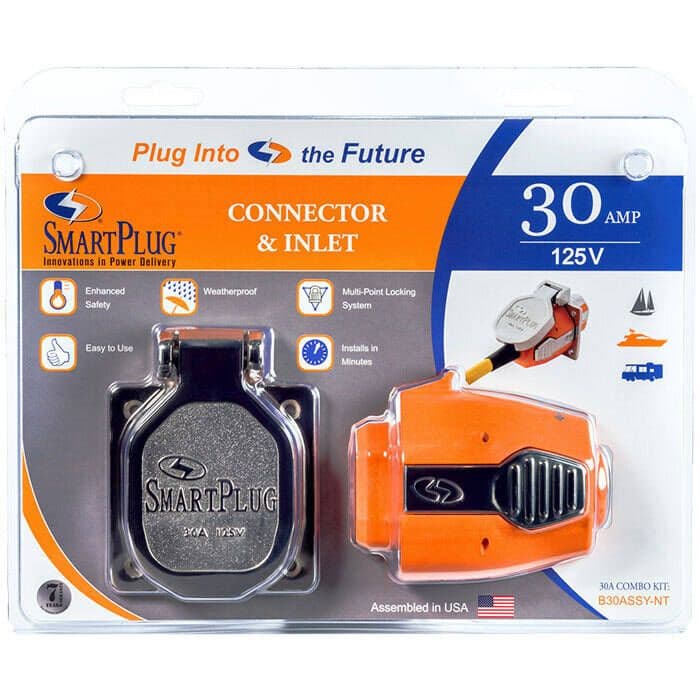
A hot shore-power inlet is not a nuisance to shrug off until haulout. On a cruising boat, a loose twist-lock, corrosion at the blades, or a cover left open in salt spray can turn a routine dockside plug-in into a breaker trip, damaged gear, or a burn hazard. A SmartPlug-style retrofit is built to correct the mechanical and electrical weak points that make old shore-power hardware fail.
Why the old shore-power inlet becomes a liability
Marine How To titled its comparison “Shore Power - SmartPlug vs. 1938,” and the point holds. The basic twist-lock idea survives because it is familiar, not because it is well matched to the realities of salt air, vibration, UV, occasional spray, and repeated connect-disconnect cycles.
Those conditions punish every part of the system. As connections loosen, resistance rises; as resistance rises, heat rises with it. That heat is the warning sign sailors cannot afford to ignore, because the failure can start as a warm inlet and end as a tripped breaker, a cooked cord end, or a fire problem at the dock.
Twist-lock inlet covers are “rarely” properly closed when boats leave the dock, which leaves the inlet exposed to salt mist or ocean spray. Once moisture and corrosion get into the contact surfaces, the old system loses the firm contact pressure it depends on, and the margin for error gets thinner on every outing.
What SmartPlug changes mechanically and electrically
The appeal of SmartPlug is not just that it looks newer. The design uses a larger contact area, which helps reduce resistance at the connection, and it uses side-locking retention instead of relying on the older twist-lock geometry. That matters because accidental partial-disconnects are exactly the sort of nuisance that older plugs can develop when a boat moves at the dock or the cord gets tugged.
SmartPlug was also designed to address water intrusion and overheating at the inlet and cord ends, two of the most common trouble spots on aging shore-power setups. A better locking mechanism and more robust strain relief are not abstract spec-sheet extras here. They are the parts that keep a plug from sitting half-seated, working loose, or heating up under load.
The SmartPlug 30A inlet was purposely designed to use the same mounting and hole pattern as the standard 30A marine inlet. That gives you a clearer path to replacement without turning the project into major fiberglass work, which is one reason this upgrade has become a mainstream dockside fix rather than a specialty modification.
When the upgrade is worth doing now
If your inlet is already showing heat, looseness, or corrosion, the case for replacement is immediate. Those are not minor annoyances; they are the exact failure modes that make shore-power hardware a liability. Morgan’s Cloud calls shore-power issues “a safety problem and code violation.”
The urgency rises further if your setup still depends on a long adapter chain, an aging pedestal cord, or a cordset that no longer seats with confidence. In that situation, replacing only the visible plug may not be enough. The smartest repair is the one that restores clean terminations, corrosion-resistant hardware, and the whole connection path from pedestal to inlet.
In a five-year analysis of BoatUS Marine Insurance claim files cited by Vessel Vanguard, the AC shore-power system contributed to 9 percent of fires, while the boat’s DC electrical system caused more than a third of fires in that same period. SmartPlug’s fire-prevention material puts electrical systems as the leading cause of boat fires and at nearly 50% of all reported incidents.
Installation details that matter most
A clean retrofit starts with the basics sailors already know to check: the cordset, the inlet backing surface, and the breaker size protecting the circuit. Those parts have to work together, because even the best inlet cannot compensate for a bad termination or a mismatch in protection. Clean terminations and corrosion-resistant hardware matter just as much as the shiny new faceplate.
Before you swap anything, inspect the old inlet closely. If the cover no longer stays shut, if the plug feels loose, or if the connection has visible corrosion, the system is already telling you it has aged past casual use. In that state, the next plug-in should be treated as a decision point, not a routine dockside chore.
Fisheries Supply and West Marine keep shore-power products and safety guides in regular circulation.
The wider electrical context behind the retrofit
The old twist-lock family did not come from the marine world alone. NEMA locking connectors sit in the broader electrical standards landscape, and that helps explain why the old marine inlet looks familiar even as it falls short on a cruising boat.
This article was produced by Prism’s automated news system from verified source data, official records, and press releases, then run through automated quality and moderation checks before publishing. The system is built and supervised by the people who set the standards it runs under. Read our full AI policy.
Did this article answer your question?