50 sourdough recipe cards help bakers track every bake
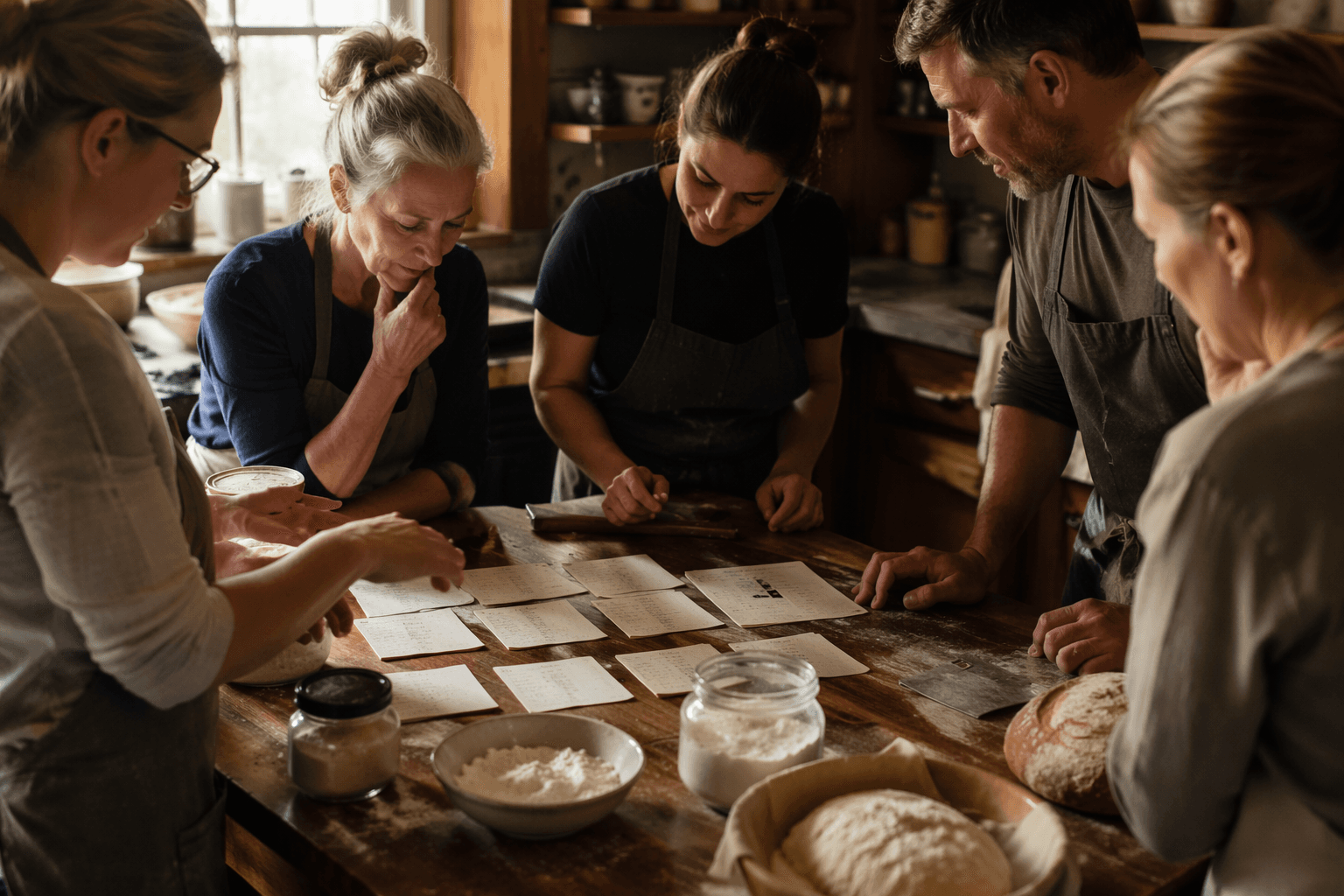
These 50 cards turn sourdough guesswork into a repeatable log, capturing starter, hydration, temperature, and bake results in one place.
1. Feed time
Write down when you fed the starter so the next bake is not built on memory.
2. Feeding ratio
Log the refresh ratio every time you feed; no single ratio works for every starter.
3. Flour used in the feed
Record whether the starter was fed with bread flour, whole wheat, rye, or a blend. Flour type can change rise speed, flavor, and how quickly the starter moves toward peak.
4. Water temperature in the feed
Note whether the feed water was cool, room temperature, or warm. Temperature can speed up or slow down a refresh.
5. Starter temperature
Write down the starter’s actual temperature before mixing, not just the room temperature.
6. Starter peak
Mark the moment the starter reaches its highest rise. That gives you a clean checkpoint for deciding whether to mix, wait, or refresh again.
7. Starter aroma and flavor
Describe whether the starter smells mild, fruity, sharp, or extra tangy.
8. Starter maintenance routine
Track whether the starter lives on the counter, in the fridge, or on a more frequent refresh cycle.
9. Kitchen temperature
Write down the temperature in the room where the starter and dough sat.
10. Flour blend in the final dough
List the full flour blend used in the dough, plus percentages if you know them.
11. Hydration percentage
Record hydration as a percentage instead of a loose description like wet or stiff.
12. Holdback water
Note whether you held some water back during mixing or added it later. That small choice can change dough feel enough to affect bulk fermentation and shaping.
13. Dough temperature after mixing
Take the dough temperature right after mix.
14. Autolyse time
Write how long flour and water rested before the starter and salt went in. A short or long autolyse can change extensibility and the way the dough takes shape.
15. Mix method
Record whether you mixed by hand, with slap-and-folds, or in a mixer. The handling method matters when you are trying to repeat a loaf at the same hydration.
16. Bulk start time
Mark the exact moment bulk fermentation began. Once that point is fixed, you can compare rise, temperature, and timing instead of guessing from memory.
17. Bulk rise percentage
Log how much the dough rose during bulk. Warm dough often needs a lower rise target.
18. Bulk cutoff point
Write down the exact point where you stopped bulk, whether you used time, rise, or dough feel. That decision is one of the most important ones in the whole bake.
19. Fold schedule
Note when you did stretch-and-folds or coil folds. The pattern helps explain how the dough gained strength before shaping.
20. Dough feel during bulk
Describe the dough as slack, smooth, elastic, puffy, or jiggly. Those quick notes become far more useful when you compare them against the finished loaf.
21. Sourness target
Mark whether you wanted mild, balanced, or sharp flavor.
22. High-hydration handling
Record whether you needed extra flour, wetter hands, or gentler shaping.
23. Salt timing
Write when the salt went in relative to the rest of the mix. Salt changes fermentation pace and dough feel, which is why it deserves its own line.
24. Bulk container
Note the vessel you used for bulk fermentation, especially if it has markings. Straight sides and visible marks make rise easier to read.
25. Shape time
Mark when you pre-shaped and when you did the final shape. That timing helps you see whether tighter shaping improved oven spring or whether the dough needed more rest.
26. Bench rest length
Write how long the dough rested between pre-shape and final shape. That pause can change how easily the dough tightens, especially in wetter formulas.
27. Proof method
Record whether proofing happened at room temperature or in the fridge. The choice affects both fermentation speed and the flavor that lands in the finished loaf.
28. Proof temperature
Note the temperature where proofing happened. Just like starter temperature and dough temperature, this one can explain why a loaf raced ahead or lagged behind.
29. Proof duration
Log the total proof time from shaping to bake. Once you pair it with temperature, you can tell whether the loaf was underproofed, overproofed, or right on target.
30. Cold retard length
If you cold-proofed, record how many hours the dough spent in the fridge. That one number helps compare flavor, structure, and spread from bake to bake.
31. Bake vessel
Note whether you baked in a Dutch oven, on a stone, or on a steel. The vessel changes heat retention and steam, and those differences show up fast in the oven.
32. Oven preheat time
Write how long the oven and vessel preheated. A properly heated setup is often the difference between a weak lift and a strong bloom.
33. Steam method
Record how you created steam, if you used it. Steam shapes crust development, so it belongs in the same log as temperature and timing.
34. Score pattern
Note the slash pattern and how deep the cut was. A good score gives the loaf a planned place to expand, which makes the finished shape easier to judge.
35. Oven spring
Measure or describe how much the loaf lifted in the oven. It is one of the fastest ways to see whether fermentation and shaping lined up.
36. Crust color
Record whether the crust came out pale, golden, amber, or dark. Color tells you a lot about bake time and oven heat.
37. Crust thickness
Note whether the crust was thin and crackly or thicker and chewier. That detail helps if you are aiming for a specific style of loaf.
38. Crumb openness
Describe the crumb as open, medium, or tight. A repeatable log makes it easier to connect that structure to hydration, bulk rise, and proof timing.
39. Crumb gumminess
Write whether the crumb sliced cleanly or felt gummy. That outcome often points back to bake time, cooling time, or fermentation balance.
40. Final bake result
Give the loaf a plain-language verdict, such as success, close, or needs work.
41. Slice timing
Record how long you waited before cutting the loaf. Cutting too early can hide the real crumb and make troubleshooting harder.
42. Cooling time
Log the full cooling window before slicing or bagging. A cooled loaf gives you a truer read on crust, crumb, and moisture.
43. Spread versus height
Write whether the loaf spread sideways or held itself tall. That clue often points to hydration, dough strength, or proofing balance.
44. Stickiness at shaping
Note if the dough stuck to the bench, your hands, or both. A quick note here can explain whether the flour blend or hydration pushed the dough too far.
45. Starter refresh frequency
Track how often you fed the starter in the days before baking. A more frequent refresh often means a more predictable starter.
46. Recipe variation
List any change from the base formula, even a small one. One altered ingredient or one shifted temperature can explain a very different loaf.
47. One-change experiment
Use one card to test a single variable at a time. That is the cleanest way to see whether hydration, flour type, or temperature is actually driving the result.
48. Beginner log habit
Keep the cards where you mix, not buried in a drawer.
49. Notebook or spreadsheet cross-check
Use the card as the quick in-the-moment record, then decide whether the same data belongs in a notebook or spreadsheet for longer comparison.
This article was produced by Prism’s automated news system from verified source data, official records, and press releases, then run through automated quality and moderation checks before publishing. The system is built and supervised by the people who set the standards it runs under. Read our full AI policy.
Did this article answer your question?