Algerian Date-Enriched Sourdough Starters Boost Crumb, Porosity and Shelf Life
Researchers found that adding 50-150 g of dates to sourdough starters improved crumb openness, porosity and shelf life, with 100 g rated best for overall consumer acceptance.

A team of researchers led by Bellal, Dassamiour and Abdeddaim tested how mixing dates into sourdough starters changes bread structure, texture and longevity, and the results could shift how home bakers and small bakeries work with local date harvests. The study compared starters with 0, 50, 100 and 150 g of dates and found clear, measurable benefits: the date-enriched starters produced airier crumb, higher porosity and extended shelf life in some formulations.
The most open crumb came from the starter using 150 g of dates, identified as SB3 in the study, which showed the greatest porosity and an airy internal structure prized by many bakers chasing open crumb. Consumer sensory testing favored the 100 g formulation, SB2, which scored highest for overall acceptance. Both SB2 and SB3 demonstrated a slower rate of staling and reduced mold risk compared with the control. The authors highlight the potential of local date palm resources to add both functional value and flavor to sourdough baking while noting practical constraints such as cost and differing sensory preferences.
For the sourdough community this research offers actionable takeaways. Date additions appear to alter dough fermentation dynamics enough to change crumb architecture and improve shelf life, which could reduce day-to-day waste and extend sales windows for small bakers. Home bakers curious to experiment can view the results as a starting point: a moderate date enrichment around 100 g may balance crowd-pleasing flavor with textural gains, while heavier enrichment like 150 g will push openness and porosity if that is the goal.
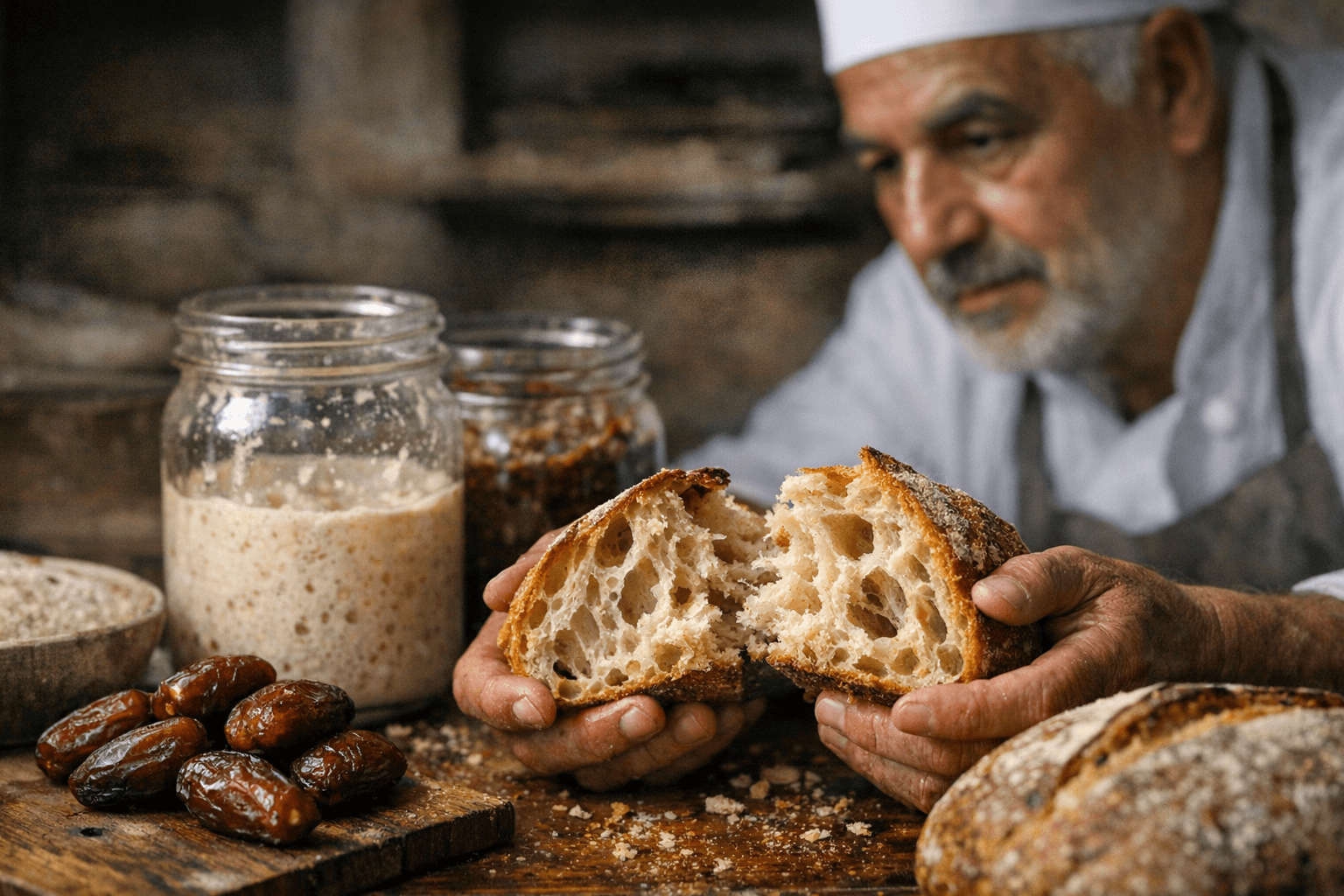
The study also raises supply and scaling questions relevant to community bakers and co-ops. While using local dates can add regional identity and value, the researchers caution that cost and consumer taste will influence whether date-enriched starters gain wide adoption. Sourcing decisions, price points for date varieties, and how dates are prepared for the starter will matter when moving from lab trials to real-world bakes.
This work gives bakers a reason to take a second look at fruit-forward levains and to run controlled trials in their own kitchens. Try small-batch trials, note how hydration, feeding schedule and date form affect your starter and loaf, and compare crumb and keeping qualities across recipes. If you bake for market, consider offering a date-enriched loaf as a limited run to gauge customer response. The study suggests that a sweet tweak to your starter can pay dividends in texture and shelf life, with SB2 and SB3 as promising formulas to explore further.
This article was produced by Prism’s automated news system from verified source data, official records, and press releases, then run through automated quality and moderation checks before publishing. The system is built and supervised by the people who set the standards it runs under. Read our full AI policy.
Did this article answer your question?