Blueberry Cream Cheese Sourdough Loaf Makes a Sweet Breakfast Centerpiece
Blueberry pockets and cream cheese swirled through fermented dough — this sweet-tangy sourdough loaf reimagines breakfast in the most delicious way.
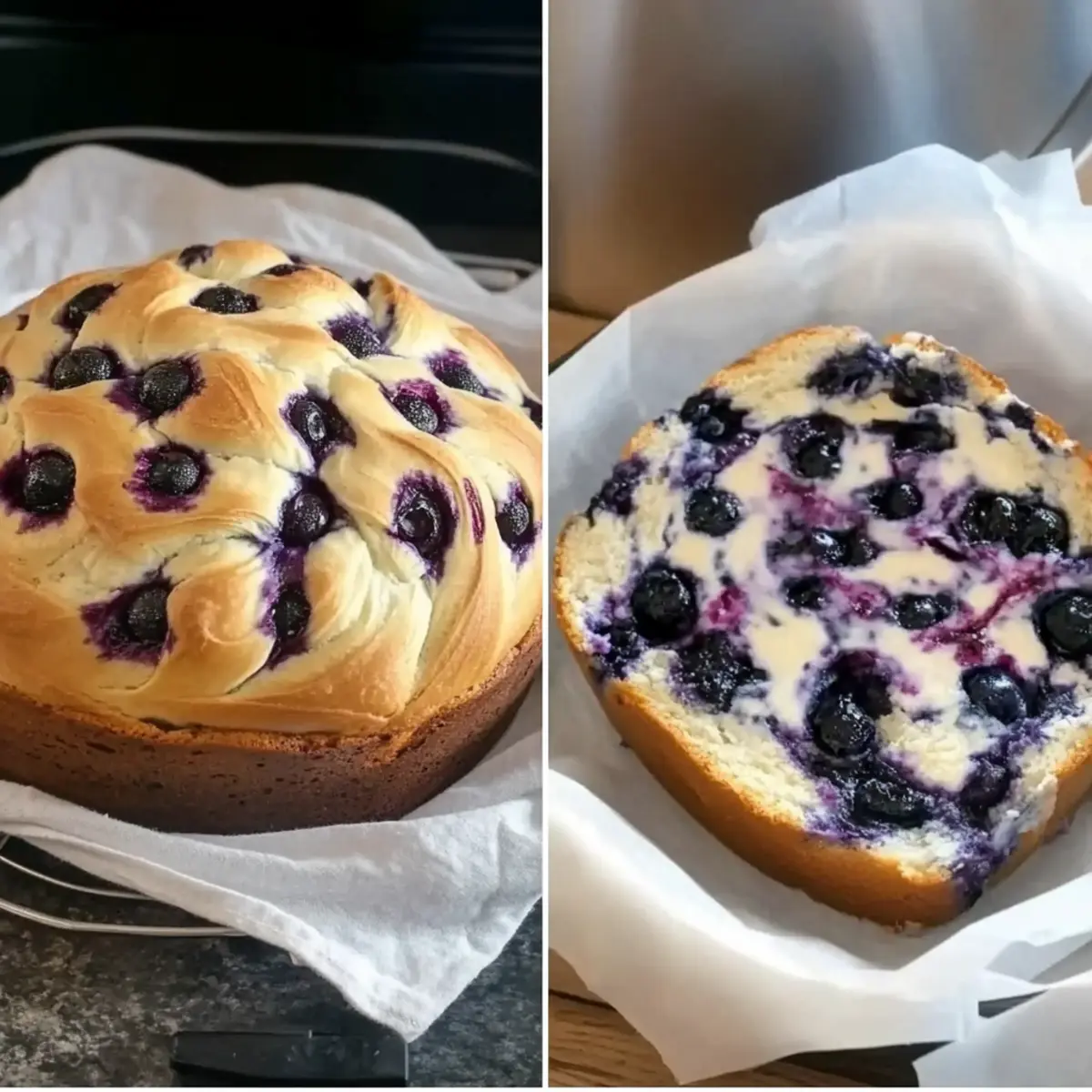
There's a particular kind of magic that happens when a well-developed sourdough dough meets something it has no business being paired with — fruit, cream cheese, a whisper of sweetness — and the result is somehow more satisfying than either element alone. That's exactly what this blueberry cream cheese sourdough loaf delivers: a naturally fermented base carrying pockets of jammy blueberries and rich cream cheese, designed to sit at the center of a breakfast table or stand in as a genuinely special snack.
The recipe, which surfaced on March 12, 2026, represents the kind of creative enriched sourdough baking that's been quietly building momentum in home baking communities. It's not a dessert loaf pretending to be sourdough, and it's not a plain country loaf that happens to have a blueberry or two. It occupies a specific and well-considered middle ground: a sweet/tangy hybrid that uses the natural fermentation process as a flavor backbone, then leans into that complexity with fruit and cheese inclusions that echo the tang rather than fighting it.
Why the flavor combination works
Sourdough's signature acidity is the secret weapon here. Where a standard enriched dough made with commercial yeast can taste flat or overly sweet when you fold in fruit and cream cheese, a properly fermented sourdough brings enough tang to balance the richness of the cream cheese and the natural sugar in the blueberries. The result is a loaf where no single flavor dominates. The blueberries provide bursts of brightness. The cream cheese melts into soft, custardy pockets. The crumb, built on a live starter, ties everything together with that underlying sour complexity that makes sourdough worth the effort in the first place.
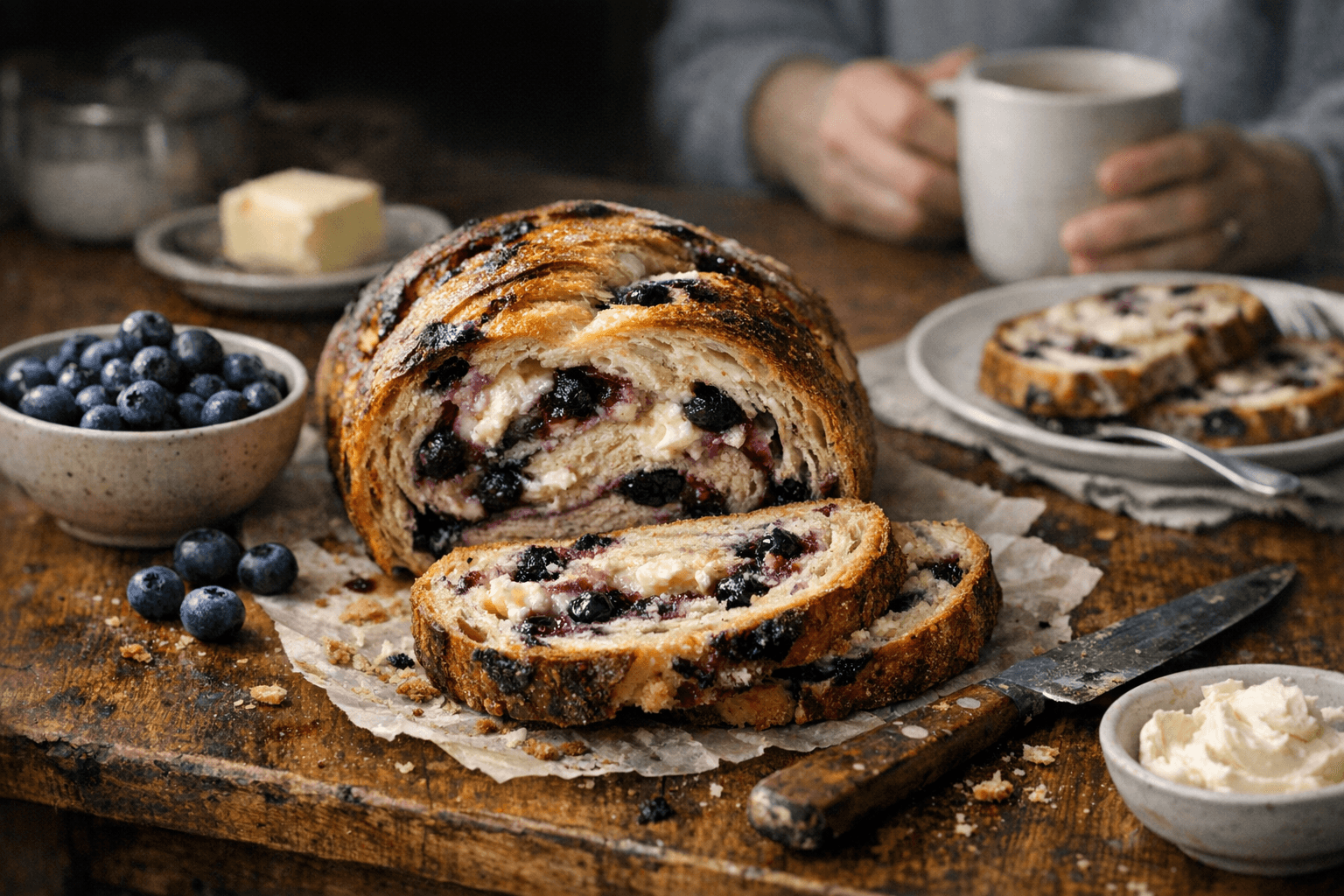
Blueberries are a particularly well-suited inclusion for sourdough. Their skins are sturdy enough to survive the folding process without completely breaking down, which means you get distinct fruit pockets in the final bake rather than a uniformly purple crumb. Some bleeding is inevitable and honestly welcome — it creates those dramatic streaks of deep blue and purple that make a sliced loaf visually striking. Cream cheese behaves similarly well when handled correctly; kept cold and added in chunks rather than spread, it holds its shape through the final proof and bakes into distinct creamy zones rather than disappearing into the dough.
Building the dough
The foundation of any enriched sourdough loaf is a strong, active starter. Before you even think about blueberries or cream cheese, your starter needs to be at peak activity, doubling reliably and showing a domed top with good bubble structure. An underactive starter will produce a dense, gummy loaf that no amount of cream cheese can rescue.
Because this is an enriched dough — meaning it carries more sugar, fat, and moisture than a standard country loaf — fermentation timing will behave differently than you might expect. Enriched doughs typically ferment more slowly because the sugars and fats can inhibit yeast activity. Give the bulk fermentation extra time and watch the dough rather than the clock. You're looking for roughly a 50 to 75 percent volume increase and a dough that feels airy and jiggly when you shake the container, with visible bubbles at the edges and surface.
Hydration is worth thinking about carefully here. The cream cheese introduces additional moisture into the crumb, so erring on the slightly lower side with your base dough hydration gives you more control during shaping and prevents the loaf from spreading too aggressively in the oven.
Incorporating the fillings
The inclusion process is where this loaf demands the most attention. A lamination fold or a series of stretch-and-folds during bulk fermentation is the cleanest method for distributing blueberries and cream cheese evenly without overworking the dough. The goal is even distribution without crushing every blueberry or smearing the cream cheese into oblivion.
A few practical notes for the folding stage:
- Use fresh or frozen blueberries rather than dried; the moisture content is part of what creates those jammy pockets in the final bake.
- If using frozen blueberries, add them straight from the freezer. Thawed blueberries release too much liquid too quickly and can turn your dough soupy.
- Cut cream cheese into roughly half-inch cubes and chill them well before adding. Cold cream cheese holds its shape far better than room-temperature cheese during folding.
- Add the fillings in stages across two or three folds rather than all at once. This distributes them more evenly and reduces the risk of tearing the dough.
Shaping and final proof
Shaping an enriched sourdough with chunky inclusions is genuinely trickier than shaping a plain loaf, and being honest about that upfront saves frustration. The inclusions create irregular tension points in the dough. Work gently, use a pre-shape rest of at least 20 to 30 minutes to let the gluten relax, and focus on building surface tension without forcing the dough into a tight ball. A batard shape often works better than a boule for filled loaves because the elongated form gives you more surface area to work with and distributes the inclusions more evenly along the loaf.
Cold proof the shaped loaf overnight in the refrigerator. The slow, cold fermentation develops flavor depth, firms up the cream cheese inclusions, and makes scoring far more manageable. A cold dough also holds its shape better during the oven spring phase, which tends to be vigorous in enriched doughs thanks to the added sugars.
Baking
Bake in a Dutch oven preheated to high heat, following the standard covered-then-uncovered method. The initial covered bake traps steam that keeps the crust extensible during oven spring. Remove the lid for the final portion of the bake to develop color and set the crust. Because this loaf carries more sugar than a plain sourdough, watch the crust color carefully; enriched doughs brown faster and can tip from golden to burned more quickly than you might expect.
The finished loaf will have a crust that's slightly softer than a traditional sourdough, which is entirely appropriate for a breakfast-oriented bake. The crumb should be open enough to show distinct pockets of purple-stained dough surrounding the blueberries, with visible cream cheese zones that look almost like a swirl when sliced.
Serving and storing
This loaf is genuinely at its best the morning after baking, when the flavors have had time to settle and the cream cheese has fully set in the crumb. Slice it thick, serve it as-is or with a light spread of butter, and it functions as a complete breakfast without needing much else alongside it.
Because of the cream cheese content, store any leftovers in the refrigerator after the first day. The loaf reheats well: a few minutes in a low oven or a quick toast brings the crust back to life and softens the cream cheese pockets again.
The blueberry cream cheese sourdough sits at a genuinely interesting intersection in home baking right now, where the technical rigor of naturally fermented bread meets the creative instinct to make something that feels celebratory. It's the kind of loaf that earns its place on a weekend breakfast table without apology.
This article was produced by Prism’s automated news system from verified source data, official records, and press releases, then run through automated quality and moderation checks before publishing. The system is built and supervised by the people who set the standards it runs under. Read our full AI policy.
Did this article answer your question?