Bobby Berk demystifies sourdough, turning beginner mistakes into confidence
Bobby Berk turns sourdough’s three biggest rookie traps into a workable first-loaf plan, from starter readiness to fermentation timing and dough handling.
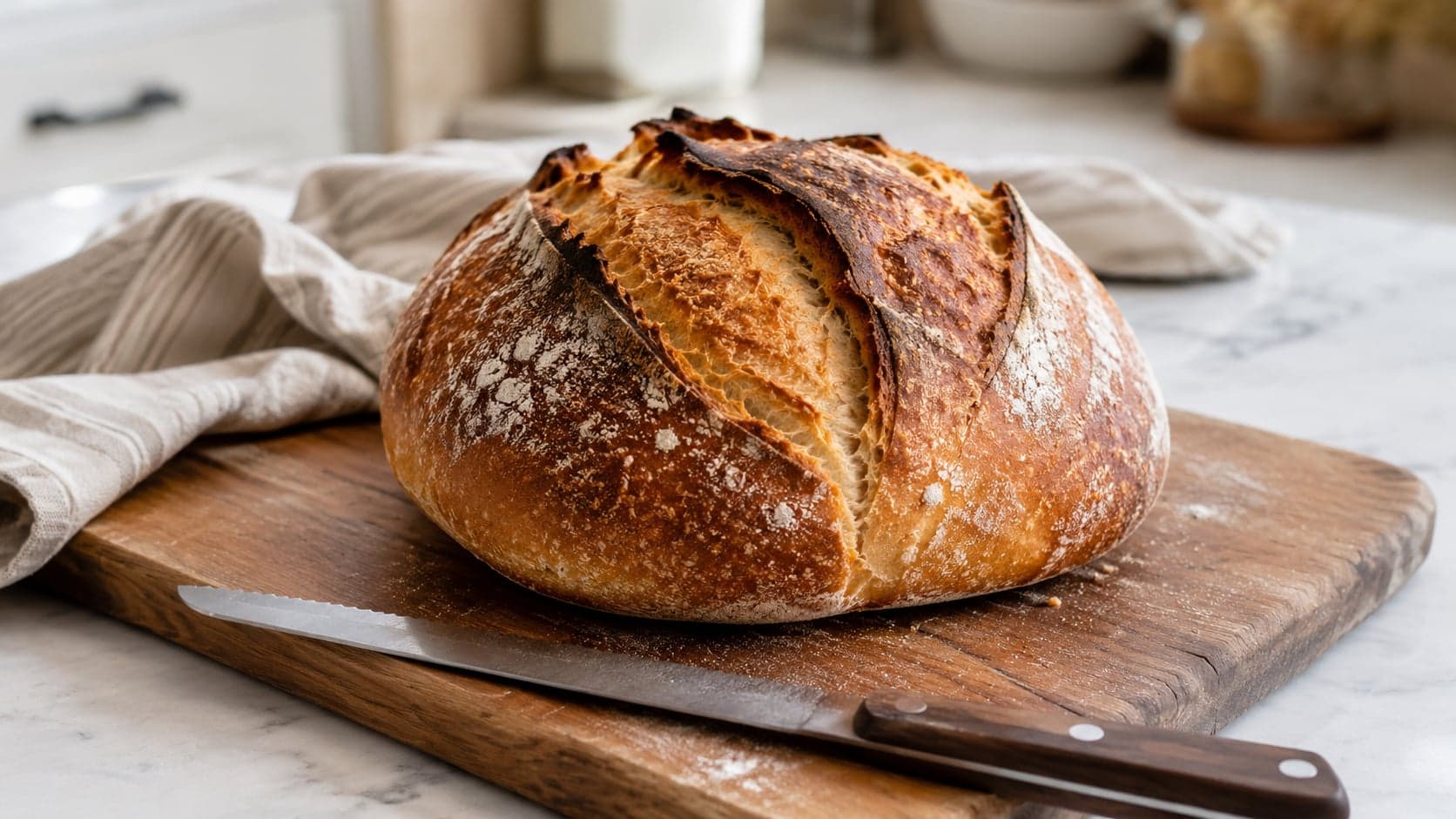
Bobby Berk’s sourdough story starts where most first loaves fall apart: the first three burned, the fourth was edible, and only by the seventh and tenth tries did he trust his own recipe. That is exactly why his take lands for new bakers, because it replaces perfection with a clear path from mess to confidence.
Why sourdough still has people reaching for flour
Sourdough is not fading into nostalgia. The story behind this guide says it still draws hundreds of thousands of monthly searches, and that fits the larger pattern: the pandemic-era baking boom may have begun as a homebound habit, but it never really disappeared. Google Trends also makes that kind of interest visible over time, which helps explain why sourdough keeps showing up in kitchens long after the first wave of starter jars.
That matters because sourdough has always carried more than a recipe. Bread itself has been a major food since prehistoric times, and sourdough is one of the oldest fermentation methods still in regular use. When you bake it now, you are joining a technique that predates commercial yeast and still rewards patience, repetition, and a little humility.
Know what you are making before you mix it
The simplest way to understand sourdough is this: it is bread leavened by wild yeast and bacteria instead of commercial yeast. The starter is the living culture that does the work, fermenting flour and water into the engine that helps the dough rise. Britannica describes it in exactly those terms, and that definition is useful because it keeps the process grounded in biology, not mystique.
That same fermentation is why sourdough has a reputation for flavor and digestibility. Review literature says sourdough fermentation can increase mineral bioavailability, improve protein digestibility, and lower the glycemic index, while other studies have found differences in digestion and postprandial effects between sourdough and baker’s yeast breads. The practical takeaway is not that sourdough is magic, but that time changes the dough in ways you can taste and sometimes feel.

The first-loaf workflow that actually lowers the stress
The most beginner-friendly sourdough setups do not rely on fancy gear. Bobby Berk’s approach is built around a Dutch oven and a kitchen scale, and that matches King Arthur Baking’s advice that a scale is an “incredibly helpful tool” for sourdough from scratch. Weighing ingredients matters far more than using cups, because sourdough is sensitive to small shifts in hydration and ratios.
If you want the workflow to feel manageable, keep it stripped down:
- Start with an active starter that is ready to ferment, not one that has been ignored for days.
- Weigh every ingredient instead of scooping by volume.
- Use minimal kneading, because sourdough does not need the same treatment as a standard yeast dough.
- Lean on long fermentation, then bake in a hot Dutch oven for better oven spring and crust.
King Arthur Baking’s beginner guidance lines up with that structure, and it is valuable because it turns sourdough into a series of manageable decisions. You are not trying to force dough to behave on command. You are setting up the conditions that let it rise on its own.
Starter readiness and fermentation timing are where beginners usually wobble
If a sourdough loaf fails early, it is often because the starter was not ready or the timing was rushed. That is why the Bobby Berk story works so well as a confidence builder: he did not pretend the first attempts were beautiful, and he did not need them to be. The fourth loaf was edible, and the later tries helped him build a schedule he trusted, which is the kind of progress that keeps people baking.
Fermentation timing is also where flexibility beats rigidity. King Arthur Baking notes that starter vigor, recipe complexity, dough hydration, and even weather can all affect rise, texture, and flavor. That is a useful reality check for your first bakes, because it tells you not to expect every loaf to look identical, even when you follow the same formula.
What the health claims mean in practice
Sourdough gets a lot of attention for wellness claims, and some of that attention is supported by research. A 2020 review found that sourdough fermentation can improve mineral bioavailability, support fortification with dietary fibers, and lower the glycemic index, while a 2019 study found digestion and postprandial effects differed between sourdough and baker’s yeast breads. Those findings are worth knowing, but the real value for a home baker is simpler: long fermentation changes how the bread behaves, tastes, and digests.
That is why sourdough has stayed compelling long after the pandemic baking rush. It offers a practical craft, a living starter, and a process that teaches you to read dough instead of forcing it into a deadline. By the time your seventh or tenth loaf starts to look like the one in your head, the burned first attempts will feel less like failures and more like the moment you learned how sourdough actually works.
This article was produced by Prism’s automated news system from verified source data, official records, and press releases, then run through automated quality and moderation checks before publishing. The system is built and supervised by the people who set the standards it runs under. Read our full AI policy.
Did this article answer your question?