Colorado Springs Bakers Fuel Whole-Grain Sourdough Revival With Health-Focused Roots
Colorado Springs' whole-grain sourdough scene is quietly booming, with local bakers tracing roots to family starters, organic Colorado farms, and a growing community hunger for real fermentation.
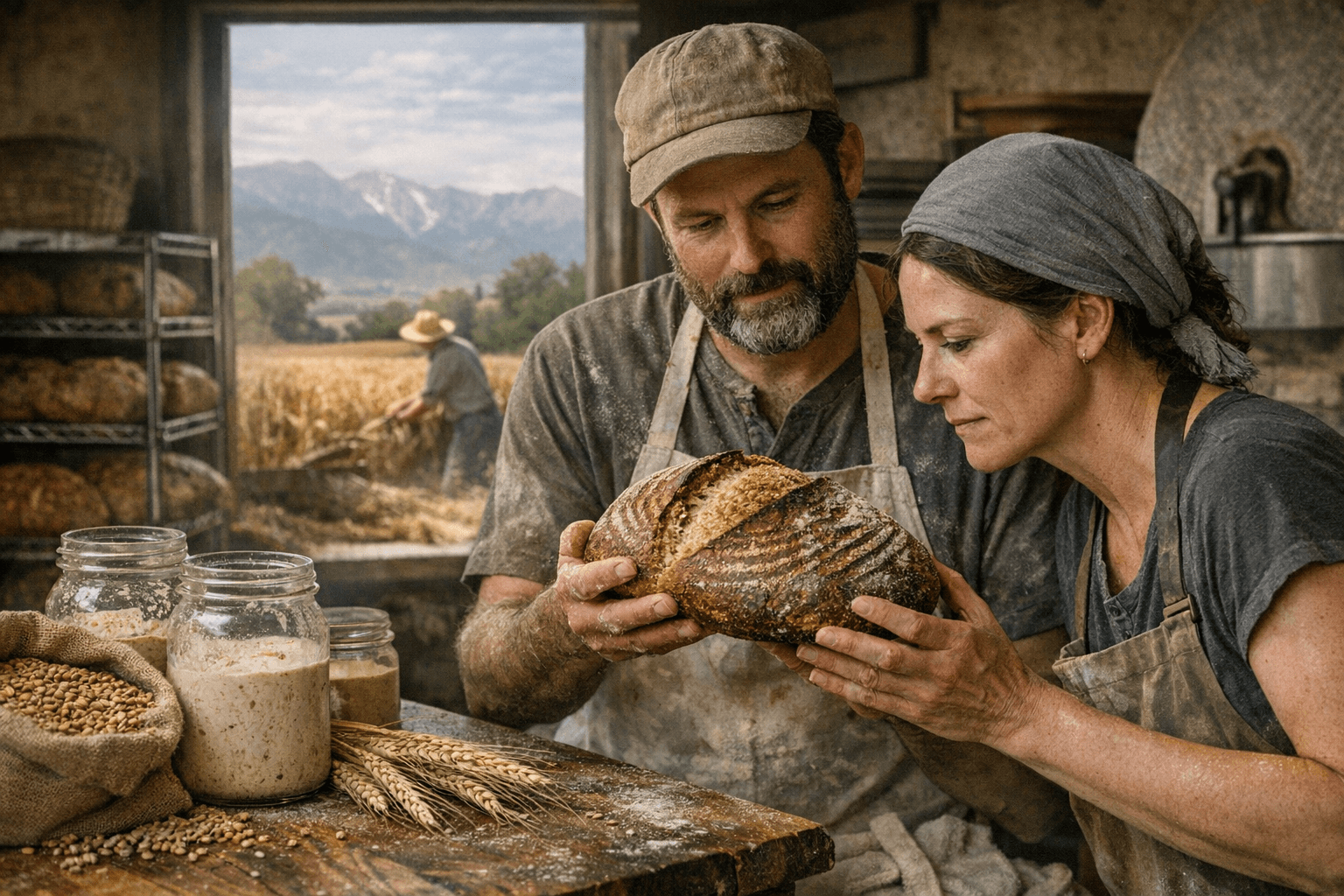
Sourdough is one of the oldest forms of fermented bread, but what's happening in Colorado Springs right now feels distinctly new. A wave of small, fiercely intentional bakeries has taken root across the city, each one staking its identity not on speed or convenience but on whole grains, long fermentation, and the kind of health-driven craft that turns a daily loaf into something worth seeking out. SoCo Insider, a Colorado Springs local magazine, spotlighted this movement in a feature titled "Local Culture of Sourdough Bread," profiling the bakeries and bakers shaping the revival and the deeply personal origin stories behind it.
Where the Grain Comes First
The most striking thing about Colorado Springs' whole-grain sourdough scene is how far upstream bakers are willing to go. Nightingale Bread uses a New American stone mill from Raleigh, NC to mill organic Colorado grains for most of the flour used in the shop, making traditional breads with plenty of water, natural leavening, longer fermentations, and a full bake. Established in 2017, the craft bakery focuses on traditional bread and pastries made with shop-milled, organic grains. Owner David McInnis has put the entire process on display for customers: he imported the mill himself, and as he says of his raw materials, sourced from small farms, "For us, the process starts with the grain." Once the grain is ground down to flour, he mixes the dough by hand in a large wooden French trough.
Nightingale Bread is located in a defunct elementary school on the north end of Downtown Colorado Springs, and it prides itself on producing high-quality traditional breads and pastries with all ingredients coming from organic, heirloom grains. The result is a loaf that regularly draws freshly milled sourdough at high altitude, which is notoriously hard to replicate at home.
Provision Bread & Bakery, anchored in downtown, takes a similarly farm-direct approach. Located in the heart of Downtown Colorado Springs, Provision serves bread, pastries, and other baked goods while sourcing directly from family farms across Colorado, prioritizing organic heirloom varieties. Their signature sourdough is a must-try, crusty on the outside, delightfully chewy within, and layered with the perfect tang.
The Newer Wave: Fresh Faces, Family Roots
The local culture SoCo Insider documented isn't only built on established names. Nature's Start Bread Company, named for its natural wild yeast starter that develops remarkable flavor and beautifully risen bread, held its grand opening on March 7, 2026, making it one of the newest additions to the Springs' sourdough landscape. Customers note it's "incredibly good and nice to know it is good for you too," and praise the care and attention to detail as top notch.
Crumble Crust Creations represents another strain of this revival: small-batch, woman-owned, and community-rooted. All baked goods are carefully handcrafted in small batches using simple, honest ingredients with no yeast, no additives, and no artificial preservatives. Their authentic sourdough breads are naturally leavened with a wild starter maintained for over three years, resulting in superior flavor, incredible texture, and bread that's easier to digest. The bakery invites customers to find them at local farmers markets, pop-ups, and events around Colorado Springs, with online ordering available for pickup.
The Sourdough Boulangerie brings yet another angle. It describes itself as one of Colorado Springs' only artisan bakeries using old world techniques with new techniques and interesting ingredients, using sourdough starter in almost everything it makes. The bakery strives to support local farmers when sourcing flour, grains, and produce, with stone-ground whole wheat coming from Mountain Mama Milling in Monte Vista, CO.
Origin Stories Rooted in Something Personal
One of the most compelling threads in the Springs' whole-grain sourdough culture is how many of these bakers trace their craft to something genuinely personal. The Colorado sourdough ethos connects closely to the statewide story told by operations like Kulina Lani, an organic sourdough bakery that has its origins in Paonia, Colorado with a sourdough starter the founder's grandfather kept, with the family raised on homemade sourdough bread and cinnamon rolls. The bakery leavens only with organic sourdough starter culture, mills all whole grains in-house, and sources many of those whole grains grown in Colorado, purchased directly from the farmer.
That generational connection to the starter, the grain, and the land is a recurring motif in the local culture SoCo Insider profiled. Bakers in Colorado Springs aren't positioning whole-grain sourdough as a trend; they're presenting it as a recovery of something that was nearly lost.
Why Whole Grain Matters for Health
The health motivations driving this revival are grounded in real science, and Colorado Springs bakers are leaning into them deliberately. The fermentation process in sourdough bread breaks down complex carbohydrates and proteins, making it easier to digest. Specifically, the lactic acid bacteria and wild yeast pre-digest starches and gluten in the flour, which can be beneficial for individuals with mild gluten sensitivities, reducing the burden on the digestive system.
Phytic acid, found in whole grains, can bind to minerals like iron, zinc, and magnesium and inhibit their absorption. The lactic acid bacteria in sourdough degrade phytic acid during fermentation, enhancing the bioavailability of these essential minerals, meaning sourdough may lead to better nutrient absorption compared to non-fermented breads.
The combination of whole grain and long fermentation is where the real nutritional argument concentrates. Antioxidants are especially abundant in whole-grain sourdough, where the bran and germ remain intact. Nutritional content varies based on the type of flour used; whole grain sourdough provides more fiber and nutrients than white sourdough. And cutting-edge research published in March 2026 by Vrije Universiteit Brussel found that sourdough fermentation does more than make bread rise: it transforms wheat fibers in unexpected ways, with enzymes already present in wheat, activated by the sourdough's acidic environment, breaking down key fibers called arabinoxylans, a process that may influence the bread's texture, digestibility, and flavor.
When flour and water are combined with an active sourdough starter and allowed to ferment for at least 16 hours, that long, slow fermentation gives the lactic acid bacteria, wild yeasts, and enzymes enough time to significantly break down the tough-to-digest components of flour, including gluten. Bakeries like Kulina Lani take this further, with sourdoughs truly long-fermented, held for 24 plus hours before baking, resulting in healthier, more digestible bread that is unlikely to trigger an immune response in gluten-intolerant and sensitive people.
A Scene Built on Local Supply Chains
What makes Colorado Springs an especially fertile ground for this revival is the proximity to Colorado's grain-growing regions. Bakeries here aren't importing heritage flour from distant mills; they're building direct relationships with in-state farmers. Consumer interest in whole grain sourdough has grown due to rising awareness about gut health, clean labeling, and sustainable food practices, with people increasingly asking how food is made and how it affects their bodies.
Choosing to support local bakeries that source ingredients nearby whenever possible means fresher food with a smaller environmental footprint. Every loaf purchased helps strengthen the local economy, supports community sustainability, and keeps dollars in Colorado.
The grain-to-loaf philosophy permeating Colorado Springs' best whole-grain sourdough operations isn't just a marketing posture. For bakers like David McInnis at Nightingale, who gets back to the grain and focuses on crafting instead of assembly as the core of his approach, it's the whole point. The SoCo Insider feature's timing feels right: Colorado Springs' whole-grain sourdough culture has grown quietly and deliberately enough that it now deserves exactly the kind of sustained, community-level attention it's beginning to receive.
This article was produced by Prism’s automated news system from verified source data, official records, and press releases, then run through automated quality and moderation checks before publishing. The system is built and supervised by the people who set the standards it runs under. Read our full AI policy.
Did this article answer your question?