Complete Sourdough Primer: Starter Science, Techniques, and Health
This primer brings together essential sourdough knowledge for home bakers, explaining how a starter works, practical maintenance, core dough techniques, and what research says about nutrition and digestion. Understanding the biology and method helps bakers improve consistency, flavor, and schedule their bakes with confidence.

Sourdough is bread leavened by wild yeasts and lactic acid bacteria captured and cultivated in a starter made of flour and water. Those microbes produce the carbon dioxide that lifts dough and the acids that give sourdough its signature tang and keeping quality. For everyday baking this biological partnership matters more than any single recipe: get the starter healthy and the rest of the process falls into place.
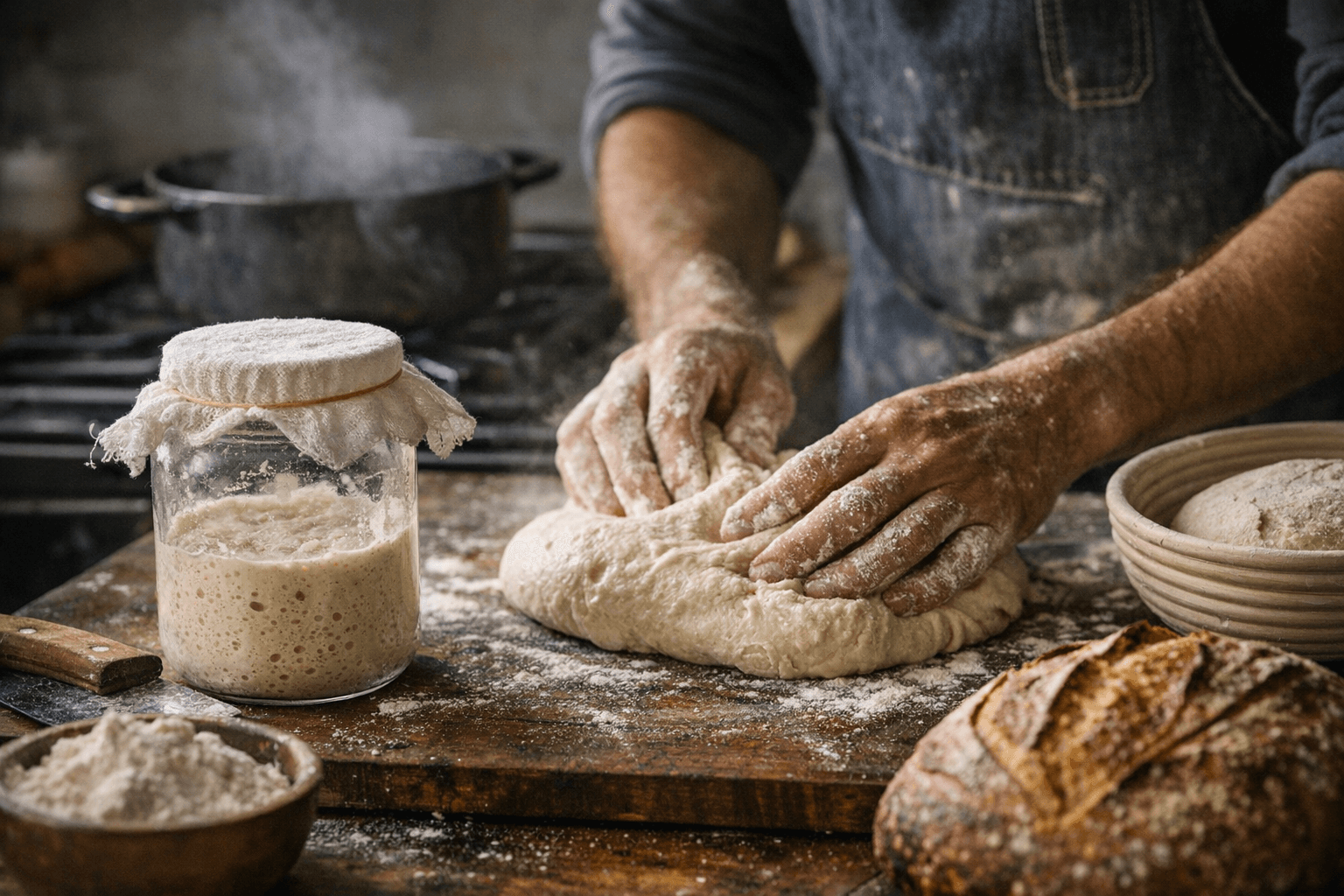
Start with starter basics. Hydration is expressed as percentage of water by weight; a 100 percent hydration starter contains equal weights of flour and water and is easy to mix and measure. A typical feeding ratio for active room-temperature use is 1:1:1 by weight (starter:flour:water). For less-frequent maintenance, refresh at lower ratios or refrigerate and feed weekly; many bakers use a 1:5:5 or similar refreshment to stretch fridge life while preserving strength. Look for regular doubling or pronounced doming between feedings as signs of vitality.
The microbiology behind your loaf is straightforward in its roles. Wild yeasts such as Saccharomyces and several Candida and Kazachstania species produce gas for rise. Lactic acid bacteria in the Lactobacillus group and related genera generate lactic and acetic acids that develop flavor, slow spoilage, and modify dough chemistry. Those organisms respond to temperature, hydration, and feeding schedule; warmer, wetter conditions favor faster yeast activity, cooler and drier conditions can encourage acetate-producing bacteria and tang.
Technique shapes outcome. An autolyse, mixing flour and water and resting 20 to 60 minutes before adding starter and salt, improves gluten development and handling. During bulk fermentation, use gentle stretch-and-folds every 20 to 40 minutes in the early stages to strengthen the dough without overworking. Bulk times vary by temperature and starter strength; expect anywhere from two hours at warm room temperatures to much longer if cool-fermenting. Cold retardation in the fridge for 12 to 72 hours firms dough, deepens flavor, and allows baking to fit a schedule.
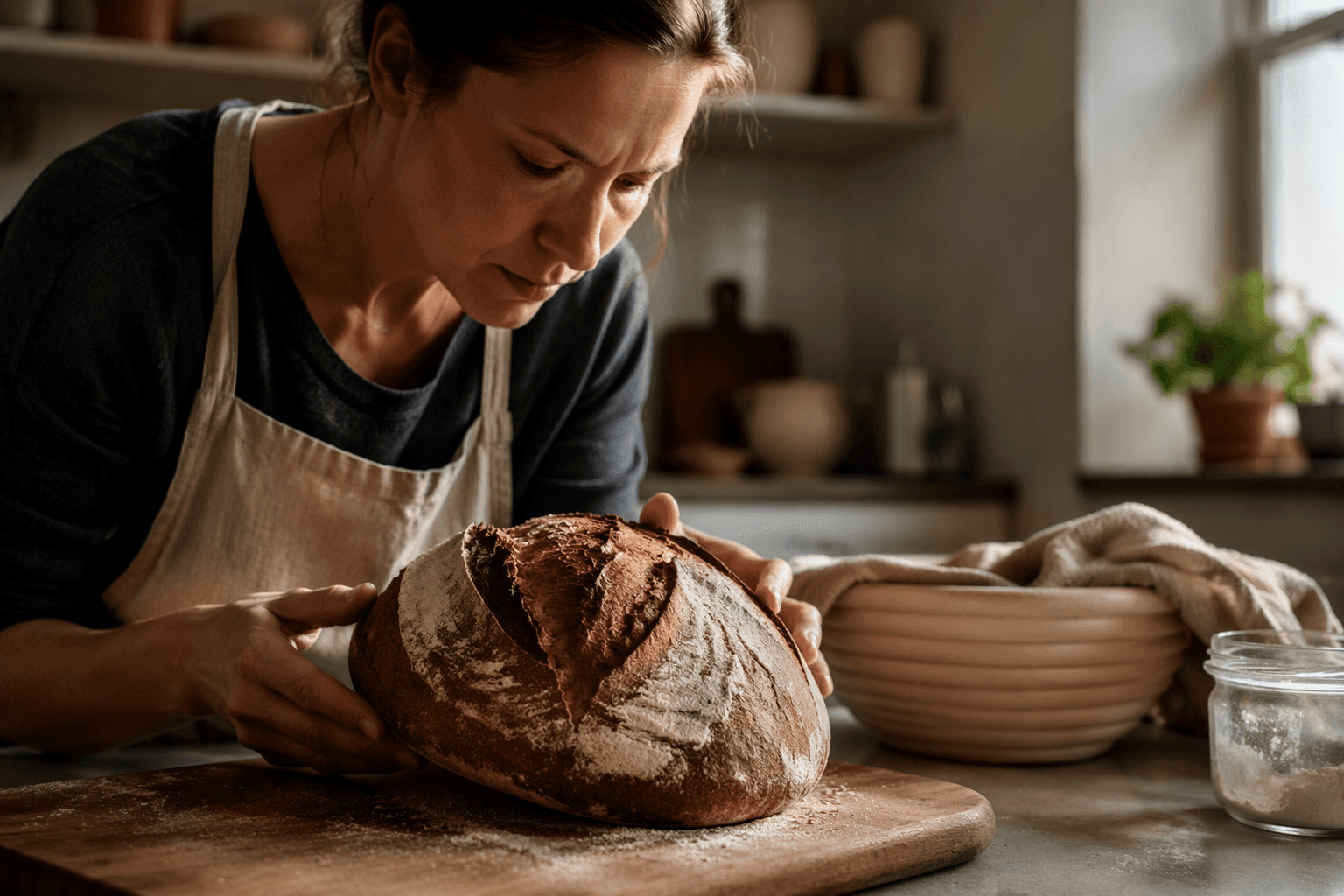
Scoring controls oven spring by providing weak points for expansion; make incisions with a sharp blade a few millimeters deep. Bake with steam for the first 10 to 20 minutes to promote oven spring and crust formation, then finish uncovered at 230 to 250 degrees Celsius (about 450 to 480 degrees Fahrenheit) depending on loaf size and oven.
Sourdough traditions span cultures: European wheat and rye sourdoughs, San Francisco–style tangs, and fermented flatbreads from other regions each reflect local grains and methods. Nutritional research indicates sourdough fermentation can reduce phytic acid and alter glycemic response compared with some fast-rise breads, potentially improving mineral availability and digestion for some people. Effects vary by grain, fermentation time, and individual sensitivity; sourdough is not safe for people with celiac disease unless specifically processed and tested to be gluten-free.
Practical value in these basics is immediate: steady starter routines, mindful fermentation, and proper scoring lift consistency, flavor, and shelf life. Keep notes on hydration, feeding ratios, temperatures, and timings; small adjustments yield large differences. For a quick refresher before a bake, remember equal-weight starter is 100 percent hydration, 1:1:1 feedings keep a starter active at room temperature, autolyse relaxes dough, stretch-and-fold builds strength, and cold retardation deepens flavor and adds scheduling flexibility.
This article was produced by Prism’s automated news system from verified source data, official records, and press releases, then run through automated quality and moderation checks before publishing. The system is built and supervised by the people who set the standards it runs under. Read our full AI policy.
Did this article answer your question?