dill pickle sourdough loaf turns a divisive snack into bread
Dill pickle sourdough is a real savory loaf, with bright pickle tang and a balanced crumb that works best in sandwiches and hearty pairings.
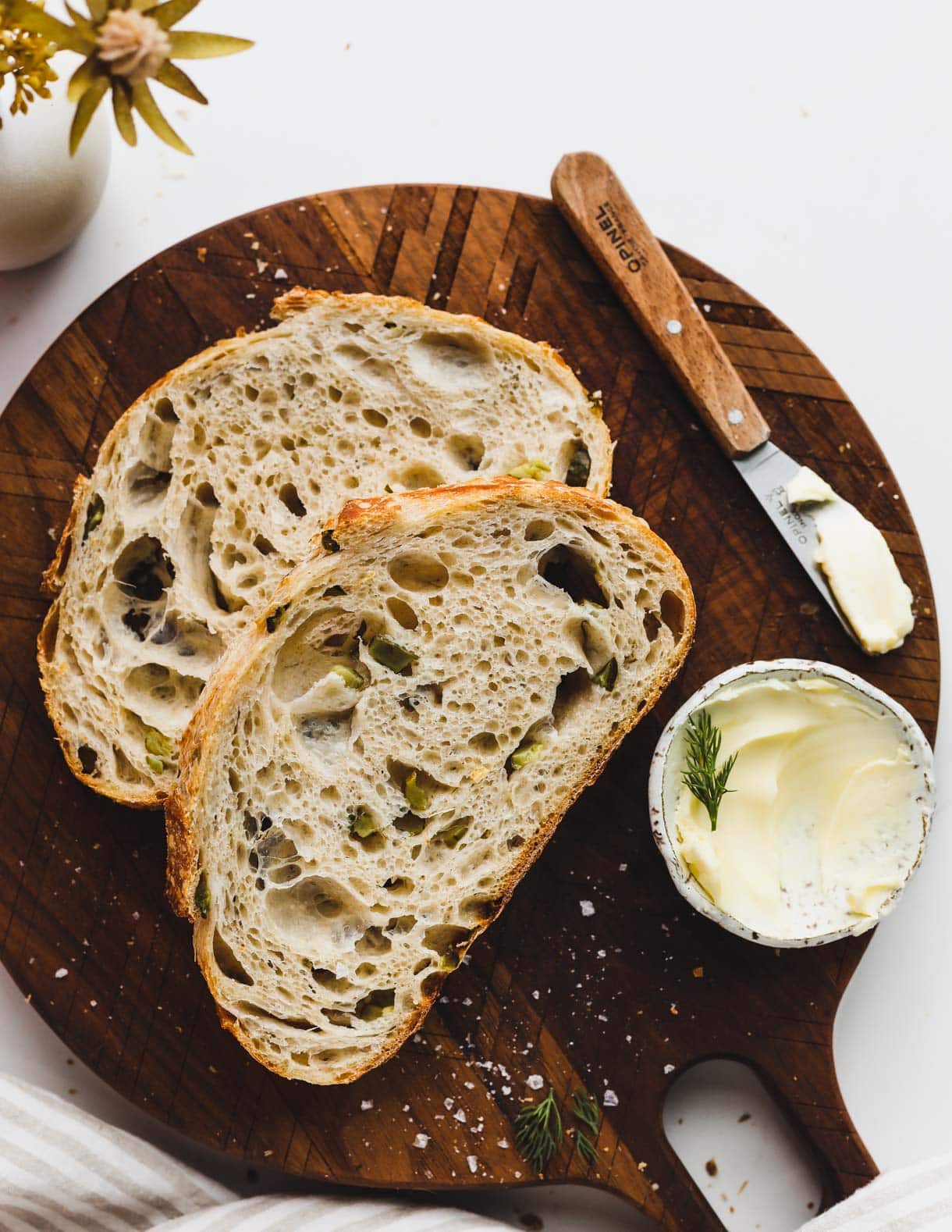
EMMA’s dill pickle sourdough loaf answers the question every pickle skeptic eventually asks: is this a joke, or is it actually good bread? The first bite is what sold her, and that reaction makes sense once you see how deliberately the flavors are built. Chopped dill pickles and pickle juice fold into naturally fermented dough, so the finished loaf reads as sourdough first and pickle second, with enough brightness to feel lively instead of loud.
Why the flavor works
The success of the loaf starts with a shared language between the two ferments. Sourdough gets its tang from lactic and acetic acids produced by bacteria in the starter, while dill pickles are also built through fermentation and brining, which is why the combination lands as cohesive rather than chaotic. USDA materials note that finished fermented dill cucumber pickles contain lactic acid, and Oregon State University Extension Service says brined or fermented pickles may take three weeks or longer to cure, which helps explain why the flavor has real depth.
That fermentation overlap matters in the bowl and on the palate. Pickle juice helps spread flavor through the dough, dill brings an herbal lift, and the starter’s acidity keeps everything feeling integrated. Instead of tasting like a loaf stuffed with novelty ingredients, it comes across as a deliberately savory sourdough with a clear point of view.
Where the pickle flavor shows up
The best dill pickle sourdough loaves do not hit you like a briny punch in the face. They tend to be tangy, bright, and surprisingly balanced, with the pickle flavor woven through the crumb rather than concentrated in one harsh pocket. EMMA’s version leans into that balance, and that is the key difference between a bread that feels clever and one that feels edible.
Other bakers have taken the same idea in slightly different directions, which suggests this is becoming a small but real niche rather than a one-off internet stunt. One 2026 recipe folds chopped dill pickles, pickle brine, and dill into active sourdough starter, while another describes the loaf as a tangy, savory sandwich bread with pickle juice folded into the dough. A separate formula from Crave The Good uses 180 grams warm water, 150 grams pickle juice, 100 grams active sourdough starter, 400 grams bread flour, and 100 grams dark rye flour, showing how the flavor can be built into a more structured, hearty loaf.
Who this loaf is for
This is the kind of bread that rewards people who already like savory bakes, bright acidity, and a little personality in the slice. If fried pickles are your reference point, the appeal is familiar: salty, tangy, snackable flavor translated into something you can build a meal around. It is also the sort of loaf that gets talked about at the table, because the idea alone makes people curious enough to ask for a taste.
The most obvious fans are pickle lovers, but the bread has broader appeal than that. People who like sourdough with enough edge to stand up to strong fillings will appreciate it, especially if they already reach for herbs, brine, or sharp cheese in their bakes. The loaf feels playful, but it is not fragile, and that practicality is what keeps it from tipping into gimmick territory.
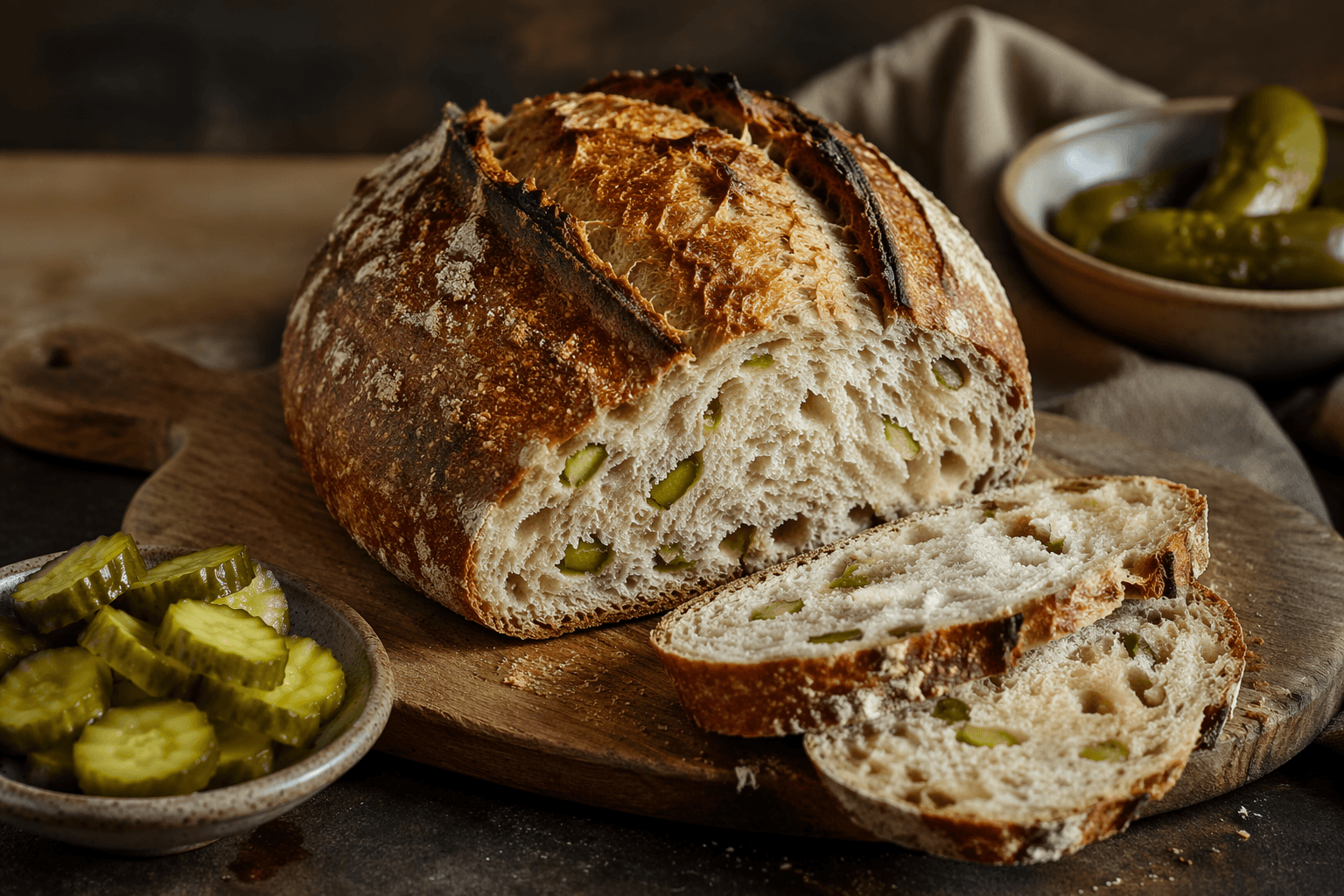
How to serve it so it feels purposeful
This bread shines when you use it like a real sandwich loaf rather than a novelty slice. It works for sandwiches, soups, stews, and charcuterie boards, and that range is a big part of why it feels useful in a home kitchen. Heartbeet Kitchen says a version with chopped dill pickles, pickle brine, and dill has a custardy, soft crumb and golden crust, making it especially strong for sandwiches and avocado toast.
Other bakers push the same idea toward richer savory pairings. One recipe source recommends it with cheese, cured meats, or even salmon, which makes sense because the bread’s tang cuts through fat and salt cleanly. It is the kind of loaf that can anchor grilled cheese, support a stacked deli sandwich, or sit alongside a bowl of soup without disappearing into the background.
- Sandwiches with sharp cheese and sliced turkey or ham bring out the briny edge.
- Avocado toast gets a brighter, more savory backbone.
- Grilled cheese benefits from the loaf’s tang against melted dairy.
- Cured meats and salmon lean into the bread’s clean, fermented finish.
- Soup and stew service works because the crumb has enough character to hold up to dipping.
Why sourdough keeps inviting bolder experiments
Dill pickle sourdough fits neatly into the larger modern revival of sourdough baking. Academic and extension sources have long described sourdough as one of the oldest forms of leavened bread, and its comeback in home kitchens has made it a forgiving base for bolder flavor experiments. Once you have a dough that already carries natural tang and complexity, it becomes easier to imagine cheese, herbs, citrus, or even snack-food flavors turning into something that still tastes like bread.
That is also why pickle bread makes sense in this moment. Dill pickle flavor has moved far beyond the jar and into chips, crackers, cashews, and other packaged snacks, so the loaf rides a broader taste trend as much as it does a baking one. The result is less a dare and more a smart piece of savory baking, a loaf that knows exactly where it wants the pickle flavor to live.
In the end, EMMA’s first skeptical bite tells the whole story. What sounds questionable at the idea stage turns out to be convincing in the oven, because the bread tastes like sourdough with a bright pickle accent, not like a joke wearing bread’s clothes.
This article was produced by Prism’s automated news system from verified source data, official records, and press releases, then run through automated quality and moderation checks before publishing. The system is built and supervised by the people who set the standards it runs under. Read our full AI policy.
Did this article answer your question?