Flour Type Shapes Sourdough Starter Microbiomes and Alters Bread Flavor
Researchers found that the flour you feed a starter changes its bacterial community and can nudge bread flavor and fermentation behavior.
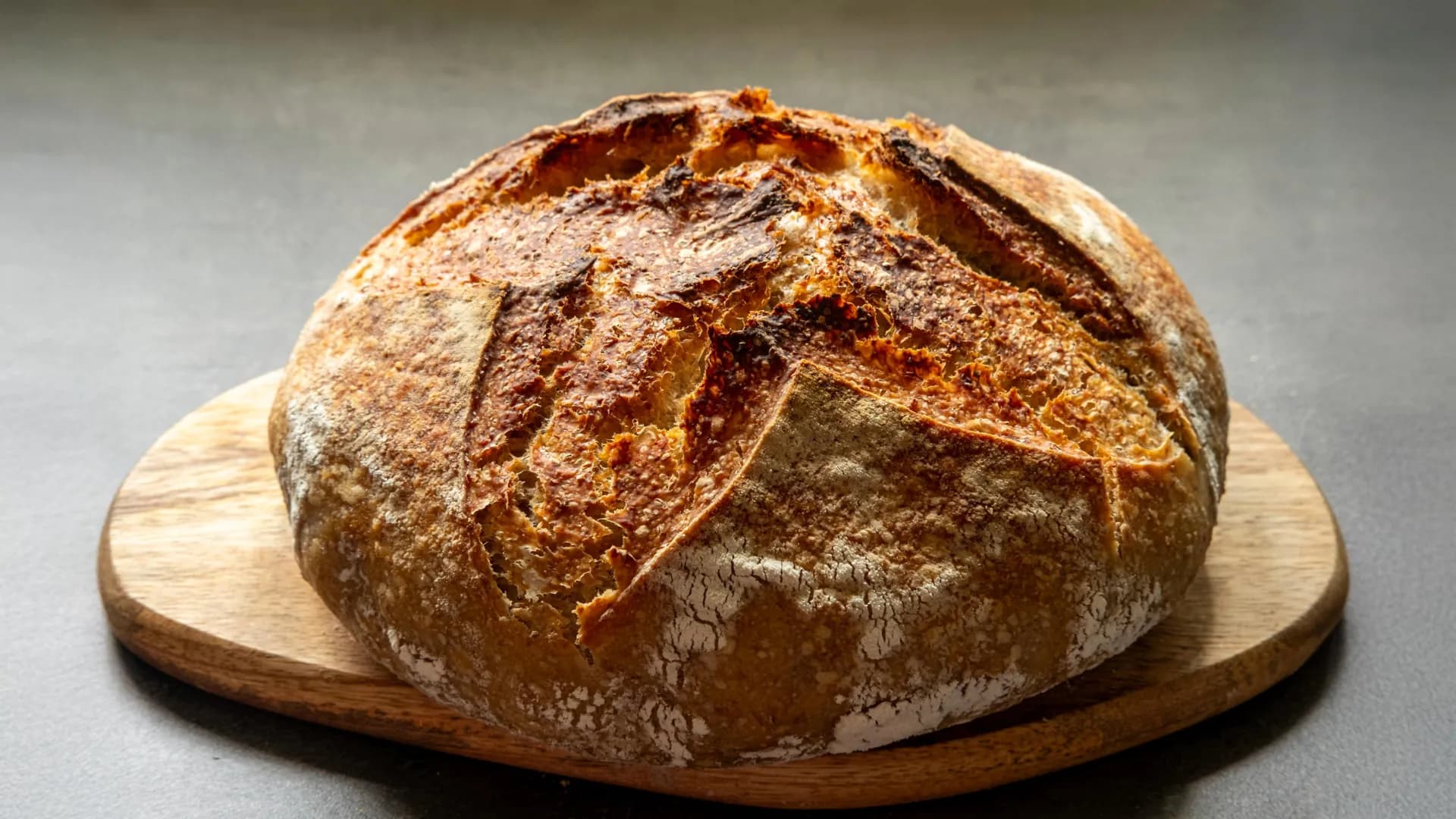
Changing the flour you feed your sourdough starter steers its bacterial makeup and can subtly alter flavor and fermentation, researchers at North Carolina State University report. In a classroom project led by the Caiti Heil lab, student bakers created starters and repeatedly fed them with three common flours - all-purpose, bread flour, and whole wheat - then tracked microbial changes using metabarcoding.
After several weeks of routine feedings, all starters converged on the same dominant yeast genus, Kazachstania. Bacterial communities, however, diverged by flour type. Starters fed with whole wheat selected for Companilactobacillus, while starters fed with bread flour favored Levilactobacillus. All-purpose flour produced a community that fell between those patterns. The work identifies flour as an ecological driver that can shape starter microbiomes and, consequently, dough behavior and bread flavor.
The team used metabarcoding to profile microbes to genus level, a technique that sequences marker genes to reveal who is present and in what relative amounts. That approach gave the investigators a clear view of how repeated feedings with different substrates push community assembly. Because bacteria contribute to acid production, aroma compound formation, and fermentation kinetics, shifts from Companilactobacillus to Levilactobacillus are likely to produce perceptible differences in tang, crust color, and rise timing for bakers experimenting with levain and bulk fermentation.
For home bakers and community bakers, the practical takeaway is immediate: deliberately switching the flour you use for maintenance is a low-effort way to influence starter ecology. Feeding a starter mostly with whole wheat will tend to favor a different bacterial profile than feeding mostly with bread flour, and that can be one tool among hydration, temperature, and feeding schedule to dial in desired flavor and performance. Because the experiment began as a classroom exercise, the methods are accessible: start multiple mini-starters, feed them on the same schedule with different flours, and track changes by smell, activity, and bake outcomes while labs or community spaces with sequencing access can use metabarcoding for confirmation.

The findings moved from the teaching bench into the literature in a study reported by Sima Taheri et al. (2026) in Microbiology Spectrum. That paper reinforces that substrate choice - not just water and wild yeast - shapes starter communities, giving bakers a concrete variable to experiment with when chasing a tangier crumb or a gentler fermentation.
For everyday bakers, that means notebooks matter: record which flour you fed, feeding ratios, hydration and room temperature, and note crumb, oven spring, and flavor. Expect predictable nudges rather than wholesale changes; Kazachstania appears resilient as the dominant yeast, while bacterial cast members shift with the menu. As more community labs and classrooms apply metabarcoding to sourdough, bakers will get finer-grained recipes for manipulating starter microbiomes to bake the loaf they want.
This article was produced by Prism’s automated news system from verified source data, official records, and press releases, then run through automated quality and moderation checks before publishing. The system is built and supervised by the people who set the standards it runs under. Read our full AI policy.
Did this article answer your question?