Home Baker Bakes First Loaf With 60‑Year Starter, Seeks Tips
A Reddit user, u/TheRealRosey, posted on December 29, 2025 about baking a first sourdough loaf using a 60-year-old starter gifted by a relative, sharing exact weights and a clear method. The bake produced a crispy crust and good chew but milder sourness and larger holes than expected, sparking community troubleshooting on shaping, fermentation timing, and flavor development.
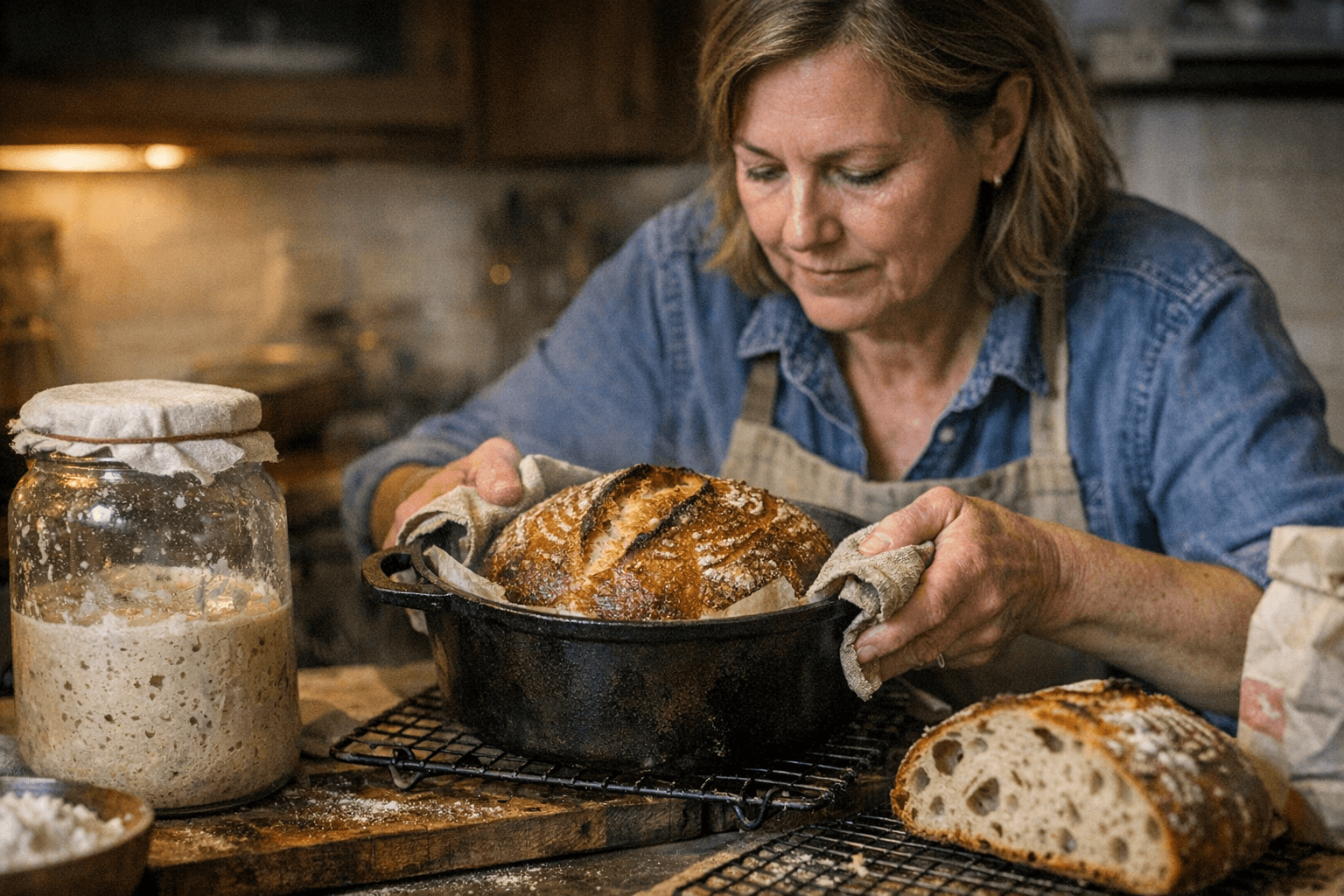
On December 29, 2025, u/TheRealRosey shared a detailed account of a milestone bake: a first sourdough loaf made with a starter that has been maintained for six decades. The post listed precise formula and technique, offering a usable recipe for other bakers: 500 g bread flour, 375 g water, 75 g starter and 10 g salt; a 45-minute autolyse; four rounds of stretch-and-folds with 30-minute rests between each; a 3-hour bulk rise; a pre-shape and 30-minute bench rest; shaping into a banneton; an overnight cold proof; and a Dutch-oven bake of 20 minutes covered at high heat followed by 25 minutes uncovered.
The result, by the baker's report, was a loaf with a crispy crust and satisfying chew, but a milder sourness than hoped and a crumb with larger-than-expected holes. The post included photos and prompted responses from a community of home bakers offering troubleshooting ideas focused on shaping, fermentation timing and developing more pronounced acidity.
For readers who received heirloom starters or want to replicate the posted formula, the recipe and method provide a clear starting point. The weight-based approach is helpful for consistency, and the combination of stretch-and-folds and a cool overnight proof is a reliable route to oven spring and crust color. The large holes and mild tang point to a few practical adjustments you can try on your next bake: tighten shaping to reduce oversized air pockets, adjust bulk fermentation length or temperature to control gas production, and manipulate proofing times or fridge temperature to boost acid development. If you prefer more sourness, consider extending the cold proof, lowering fermentation temperature during bulk rise, increasing the proportion of mature starter or incorporating a portion of whole-grain flour to promote acidity and flavor complexity.
The thread doubled as a community workshop: bakers compared how small changes in handling and timing affect crumb structure and taste, and they highlighted the sentimental value of keeping long-lived starters active. For anyone stewarding an older culture, this episode underscores that vintage starters can produce technically successful loaves while still requiring tuning to match personal flavor and texture goals.
u/TheRealRosey’s post illustrates two things valuable to the sourdough community: the power of precise technique shared openly, and the benefit of peer troubleshooting when a loaf doesn’t match expectations. Try one variable at a time, document changes with weights and times, and share your results back with the community to continue the cycle of learning.
This article was produced by Prism’s automated news system from verified source data, official records, and press releases, then run through automated quality and moderation checks before publishing. The system is built and supervised by the people who set the standards it runs under. Read our full AI policy.
Did this article answer your question?