How Sourdough Starters Rise, Wild Yeast and Bacteria at Work
A bubbly starter is a living meter: gas means yeast activity, tang means acid, and the jar’s smell and rise tell you what to fix.
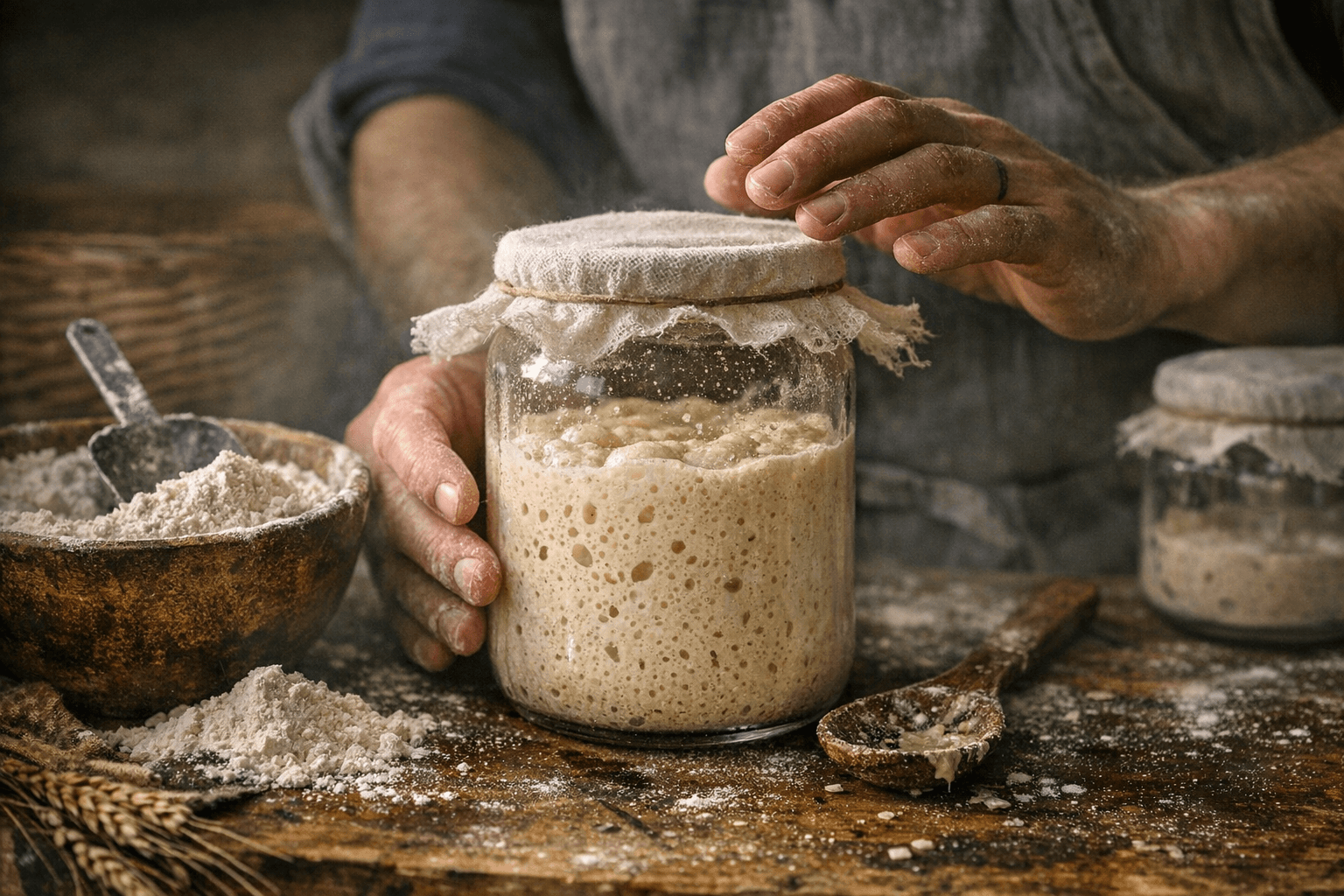
A viral jar of bubbles, and the real story inside it
The clip that keeps getting shared is mesmerizing for a reason: it turns a starter jar into a tiny, visible ecosystem. What looks like kitchen magic is really fermentation in action, with wild yeasts making carbon dioxide and lactic acid bacteria shaping the flavor and keeping the culture stable enough to bake with. That same process has been used for roughly 5,000 years, which makes sourdough less a trend than a very old method that keeps finding new fans.
Sourdough is simply a mixture of flour and water that is fermented by yeasts and bacteria. Scientists now describe it as one of the oldest natural starters, and the modern surge in interest makes sense after pandemic-era home baking pushed more people toward bread projects that could happen at the counter, not the bakery. The appeal is easy to understand once you can read the signs in the jar: bubbles, aroma, rise, and acidity all tell you something useful.
What lives in a starter
A healthy starter is not a single organism, but a mixed culture. Reviews of sourdough microbiology show that starters can support more than 50 species of lactic acid bacteria and more than 20 species of yeasts, while broader studies have identified more than 60 bacterial genera and 80 yeast species in starters around the world. That diversity is part of why two starters fed in different kitchens can behave so differently, even if they look similar at first glance.
One of the biggest myths is that the microbes come mainly from your hands or from some special regional air. Recent microbiome work points in a different direction: flour appears to be a major source of the microbes, and what matters most is how the culture is built and maintained over time. Geography plays a smaller role than many bakers assume, while repeated backslopping, the cycle of feeding and refreshing the starter, can steadily reshape the community, especially in the first months.
Why the jar rises
The rise is the easiest part to see because it is literally gas production in action. Louis Pasteur showed in the late 1800s that microorganisms cause fermentation, setting the stage for what bakers now watch every day in a starter: yeasts convert available sugars into carbon dioxide, and that gas gets trapped in the dough or starter, inflating it with bubbles and lift.
That means a lively starter is not just “active” in some vague sense. It is making measurable gas, and the visible signs are the ones to trust most. More bubbles usually mean more fermentation activity, and a steady rise after feeding shows that the yeast population is doing enough work to build pressure inside the culture.
Why sourdough tastes sour, and why that matters
The tang in sourdough comes from lactic acid bacteria. They produce lactic acid and acetic acid, which create the bread’s signature flavor and also lower pH, helping preserve the loaf and making conditions less friendly for foodborne pathogens. That is one reason sourdough has lasted so long as a method: it does not just leaven bread, it changes the loaf in ways that support shelf life and flavor at the same time.
That acidity also gives you a practical reading on starter health. A starter that smells pleasantly tart and develops complexity over time is showing the bacterial side of fermentation at work. If the aroma is sharp and acidic but the rise is weak, the culture may be leaning more toward acid production than gas production, which can happen as the balance shifts during feeding cycles.
How to read your starter day by day
The smartest way to use sourdough science is to make it visible. You do not need lab tools to understand what is happening if you pay attention to the same four cues every time you feed:
- Bubbles: These are the clearest sign that yeasts are producing carbon dioxide. A starter that is full of tiny bubbles or has a webbed, airy look is fermenting.
- Rise timing: If the starter expands predictably after feeding, the yeast community is active. If rise takes much longer than usual, the culture may need more time, more consistent feeding, or a refresh of its balance.
- Aroma: Lactic acid bacteria create the tang. Softer, yogurt-like acidity points to lactic acid, while sharper, more vinegar-like notes reflect acetic acid. Both are part of sourdough, but the balance can shift with feeding and maintenance.
- Acidity: Lower pH helps preserve the bread and can suppress harmful microbes. If a starter smells very sharp and seems sluggish, that can be a sign that acidity is rising faster than gas production.
This is where sourdough gets practical. Instead of asking whether a starter is “good” in some abstract sense, you can ask what the jar is telling you right now. Bubbles tell you about yeast activity, smell tells you about bacterial balance, and rise timing tells you whether the community is strong enough to make dough lift on schedule.
Why every starter behaves a little differently
The reason one baker gets a fast, fragrant starter while another waits longer is not mystery, and it is not necessarily geography. The microbial community changes as the starter matures, especially during repeated backslopping in the early months, and those shifts can alter rise speed, acidity, and aroma. That is why sourdough can feel unpredictable at first: the culture is still settling into its own stable balance.
The upside is that the variability is part of the method, not a flaw in it. Sourdough is having a revival because it gives bakers something both ancient and immediate: a living mixture that rewards attention. Once you learn to read the bubbles, the smell, the rise, and the tang, the starter stops feeling like a science experiment and starts acting like a reliable kitchen partner.
This article was produced by Prism’s automated news system from verified source data, official records, and press releases, then run through automated quality and moderation checks before publishing. The system is built and supervised by the people who set the standards it runs under. Read our full AI policy.
Did this article answer your question?