How to Make and Feed a Sourdough Starter From Scratch
Wild yeast cultivation takes just flour, water, and four to five days; here's the precise day-by-day protocol that turns pantry staples into a living starter.
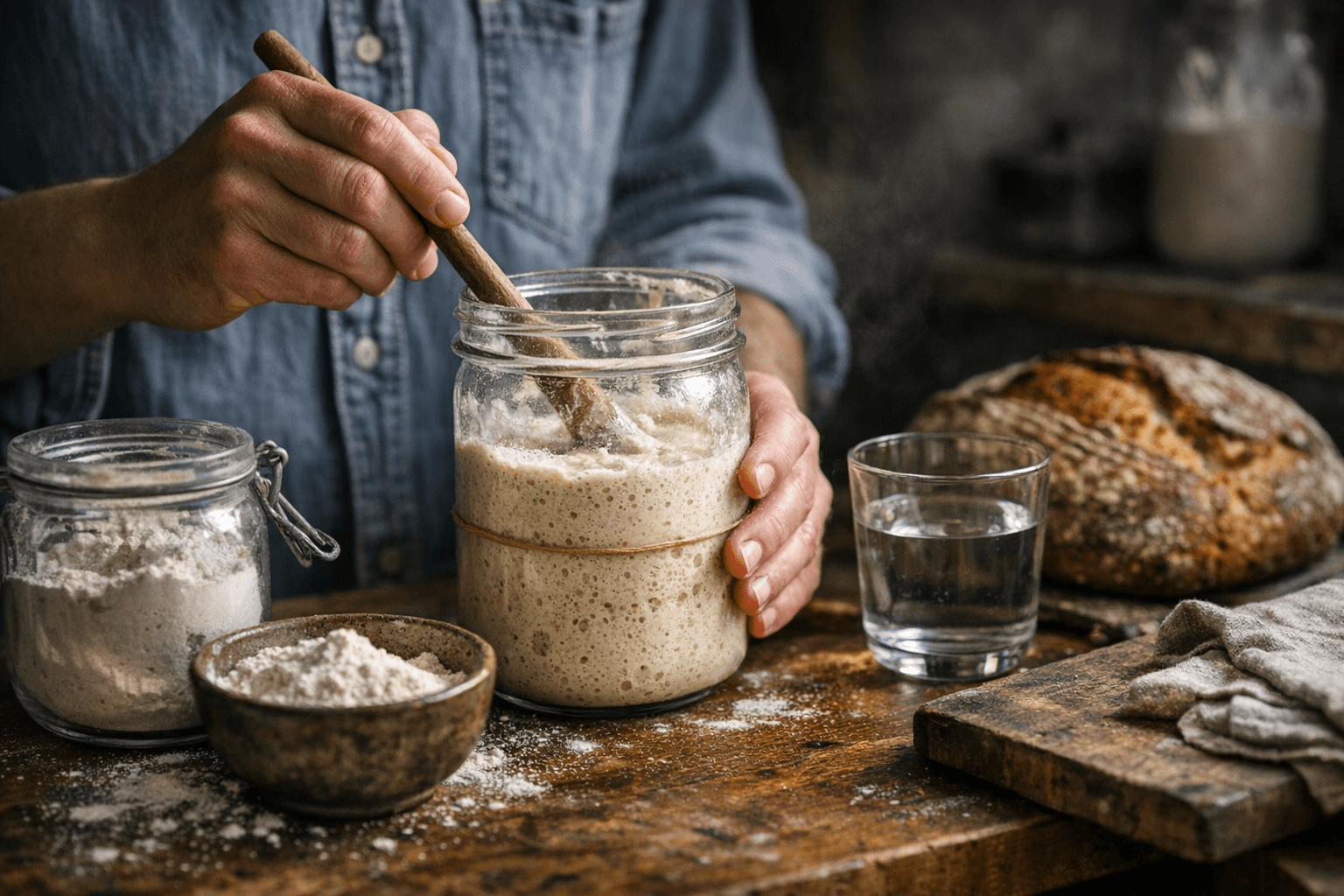
Growing wild yeast from scratch sounds like kitchen alchemy, but as PreppyKitchen puts it plainly: "Making your own sourdough starter is very easy, but it takes several days to grow the wild yeast." The challenge isn't complexity; it's patience. MakerFarm blogger Jennifer laid out exactly how manageable the process is in her guide published on 17 March 2026, framing it as an "accessible, low-barrier four- to five-day starter process using flour, water and simple household equipment." Follow the day-by-day framework below and you'll have a fragrant, active starter ready to leaven your first loaf by day five.
What You'll Need Before You Start
The equipment list is genuinely minimal. You need a clean glass jar, a spoon or spatula for stirring, and a lid that you'll rest loosely on top rather than seal tight. For ingredients, whole wheat flour goes in on day one, and all-purpose (AP) flour takes over for every subsequent feeding. Filtered water is specified throughout; tap water with chlorine can inhibit the wild yeast you're trying to cultivate. That's the full shopping list.
Day 1: Mix the Starter
The first step is the simplest. To your clean glass jar, add whole wheat flour, then pour in the filtered water. Stir with your spoon or spatula until every bit of flour is hydrated. PreppyKitchen describes the target consistency clearly: "It should resemble a paste or thick batter in its consistency." Once you've hit that texture, loosely cover the jar with its lid and move it somewhere warm. The target ambient temperature is 75-80°F; a spot near your oven, on top of the refrigerator, or in a warm corner of the kitchen works well. Leave it undisturbed for 24 hours.
Day 2: Look for Bubbles and the First Feeding
After 24 hours, check for bubbles on the surface and sides of the jar. Even a few small ones signal that wild yeast and bacteria have begun colonizing your mixture; that's exactly what you want. Once the starter has risen, discard half of it, then feed with the same amounts of flour and water you used on day one, this time switching to all-purpose flour. According to PreppyKitchen: "Once it rises, discard half the sourdough starter and feed it again with the same amounts of all-purpose flour and water. Cover loosely with the lid and let sit until doubled in size once more, which could take anywhere from 6 to 24 hours."
The wide timing window isn't vagueness; it reflects real variables like your kitchen temperature and the particular wild yeast strains present in your environment. Don't panic if your starter takes the full 24 hours to double. Watch for the volume, not the clock. At this stage, PreppyKitchen notes, the smell "should start to smell somewhat sour, but it may be faint." That faint tang is fermentation doing its work.
Days 4 and 5: Building a Healthy Starter
This is where the protocol gets its most precise. PreppyKitchen's Day 4 and 5 section, titled "Building A Healthy Starter," introduces specific gram measurements that take the guesswork out of the discard-and-feed cycle: "Each time you feed it, leave 60g of starter in the jar and add another 60g each of water and AP flour." Repeat this discard-and-feed process twice more, each time waiting for the starter to double in volume before the next feeding.
By day four, a distinct sensory shift should be obvious. PreppyKitchen states it should "have developed a noticeable but pleasant sour smell by day 4," something more robust and yeasty than the faint sourness of the earlier days. If you're getting that aroma on schedule, the fermentation culture is healthy and on track.
It's worth addressing the discard directly, because it surprises new bakers. PreppyKitchen is encouragingly honest about it: "You will be creating a bit of discard or waste in this initial phase, but it's worth it! Once your starter is healthy and active, you can use the discard in other recipes." Sourdough discard pancakes, crackers, and flatbreads are all common uses; nothing has to go to waste once your culture is established.
How to Know Your Starter Is Ready
After the final feeding and rise on day four or five, the starter should pass a simple sensory check. PreppyKitchen describes the ready state this way: "It should have developed a pleasantly sour aroma that is easily noticeable when it is fed and active." Volume-wise, it should reliably double after each feeding within the expected 6-to-24-hour window. A starter that consistently doubles and smells actively sour is alive, healthy, and ready to bake with.
The full four-to-five-day arc, as characterized by Jennifer's MakerFarm guide, is designed specifically so that new bakers aren't overwhelmed. The "pragmatic" framing matters: this isn't a high-stakes laboratory procedure. It's a low-barrier process that unfolds mostly while you sleep or go about your day, requiring only brief daily attention.
Your Next Step: Baking with It
Once your starter clears that final rise, put it to work. PreppyKitchen recommends following a sourdough bread recipe immediately to capitalize on an active, freshly fed culture. A starter at peak activity, just after it's doubled and before it begins to fall back, is at its most powerful for leavening. Timing your bread bake to coincide with that peak is the single most impactful variable in getting good oven spring and a well-structured crumb.
The 60g / 60g / 60g feeding ratio established in days four and five is also your baseline going forward. Each time you bake or maintain your starter, that equal-parts protocol keeps the culture in balance. A living starter maintained with consistent feedings will improve in flavor complexity and leavening strength over weeks and months, giving you progressively better results the longer you keep it going.
This article was produced by Prism’s automated news system from verified source data, official records, and press releases, then run through automated quality and moderation checks before publishing. The system is built and supervised by the people who set the standards it runs under. Read our full AI policy.
Did this article answer your question?