How to Make Sourdough Brioche: Rich, Tender Loaves at Home
Sourdough brioche forces you to master two skills at once: keeping fat-rich dough cold enough to protect your butter while letting your starter do its slow, flavorful work.
What Makes Sourdough Brioche a Baker's Real Test
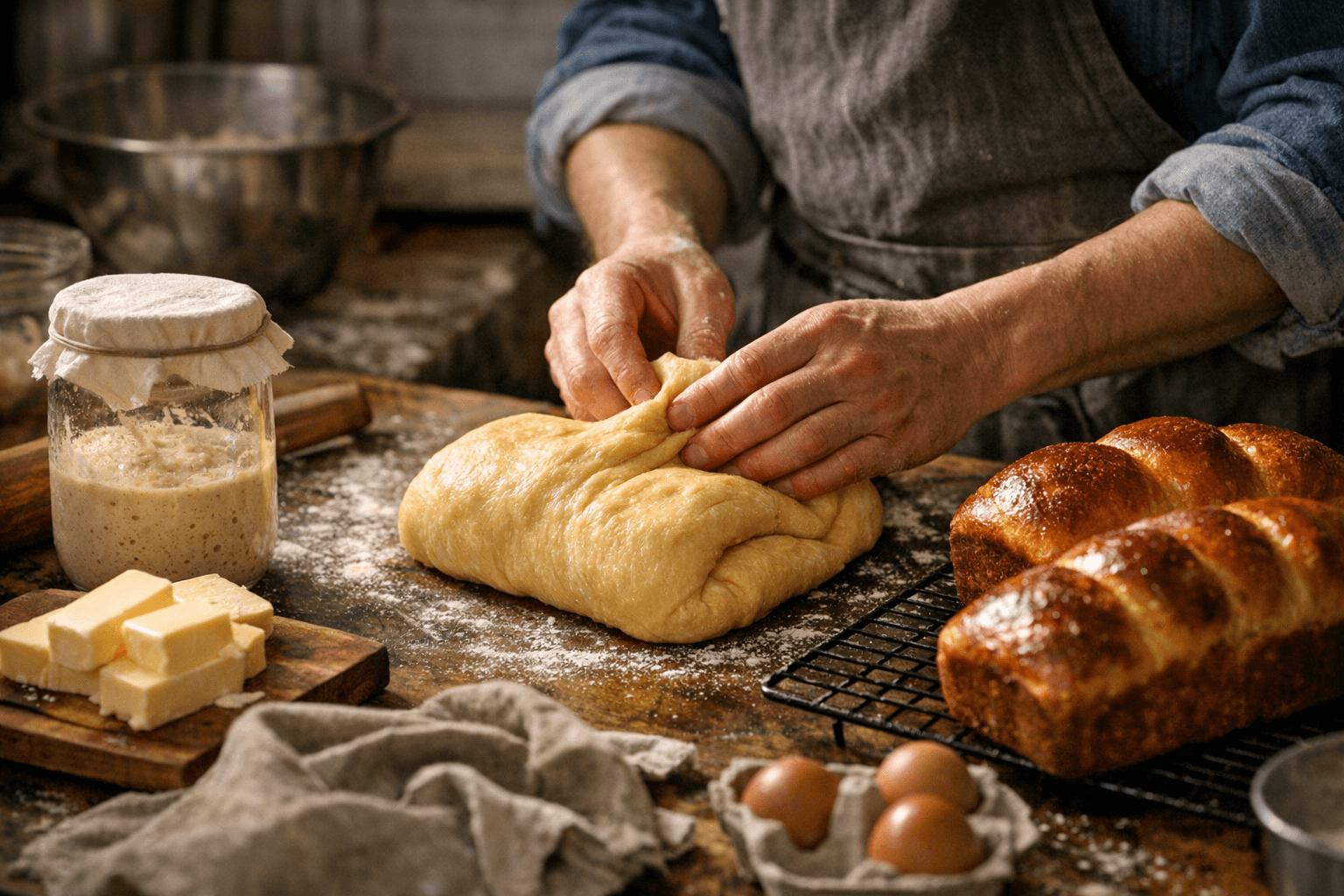
The starter sitting on your counter can do a lot more than proof a lean boule. Sourdough brioche is an enriched dough made with butter, eggs, and milk, naturally leavened with a sourdough starter, and it sits at the intersection of two disciplines that seem designed to fight each other. Classic French brioche demands fat, warmth, and patience; sourdough fermentation demands acidity, enzymatic activity, and careful temperature control. Getting both right in the same loaf is the kind of technical challenge that separates weekend bakers who are ready to level up from those still perfecting their first country loaf.
Natural fermentation not only improves the flavor of brioche but also helps break down gluten and phytic acid, improving digestibility and making nutrients more bioavailable. It also creates a naturally longer shelf life, meaning sourdough brioche stays fresh without artificial preservatives. That flavor dividend is real, and it's the reason more bakers are making the leap from commercial yeast versions. But the process demands respect.
Starting with a Starter That's Actually Ready
Every sourdough failure begins at the same place: an underactive starter. For sourdough brioche, where the enriched dough environment already slows fermentation, this margin shrinks even further. Feed your starter with a 1:1:1 ratio of starter, flour, and water using bread flour and filtered water for best results, and place it in a warm spot between 75 and 78°F. Your starter should double in size within 4 to 6 hours. Rise height and bubble structure are the two physical cues that tell you it's genuinely ready.
Some experienced bakers go further. A stiff starter can help extend the time before your starter peaks, which is useful if you want a longer fermentation window. A more liquid starter will peak faster and is often easier for beginners to work with. A slightly stiffer starter works particularly well in recipes like sourdough brioche and sourdough cinnamon rolls. For brioche specifically, that extra control over peak timing matters because you're working with a cold-retarded dough that moves on a long schedule.
Some bakers make a separate levain for brioche dough at a 1:2:1 ratio, one part starter, two parts flour, one part water, rather than using their regular starter directly. This approach gives you a levain calibrated specifically for the enriched environment it's about to enter.
The Butter Problem: Temperature Is Everything
Ask any brioche baker what goes wrong most often and the answer is almost always the butter. "Make sure all your ingredients, except for the butter, are cold," advises baker Carrie at King Arthur Baking, noting that this includes the flour, which you can refrigerate before using. "It's such a long mix that you run the risk of overheating your dough, and then it won't incorporate the butter very well."
The butter itself needs to be in a "Goldilocks zone": not too cold and hard, not too warm and soft. The friction and heat generated by the long mixing will warm the butter, so if the butter is too soft to begin with, it may melt, causing it to separate in the dough and make it greasy. For home bakers working in warm kitchens, this is where brioche most often goes sideways. The butter must be at cool room temperature, not cold from the fridge and not soft or greasy; take it out 30 to 45 minutes before you start, because too cold and it tears the dough.
For laminated versions of sourdough brioche, tempering the butter before incorporating it is not optional. Properly tempered butter folds cleanly into the dough without fracturing or melting into it, and it's what gives the finished loaf its characteristic tender, layered crumb.
Controlled Fermentation: Slowing Down to Get It Right
Where lean sourdough tolerates a relatively wide fermentation window, enriched dough is less forgiving. The eggs, butter, and sugar create an environment that can mask or suppress starter activity, which means the dough may appear inactive even when fermentation is proceeding normally. Controlled dough temperature and brief delayed fermentation allow the enriched dough to develop flavor and structure without over-acidifying. Too much acid breaks down gluten structure in a dough that's already weakened by fat, producing the dense, gummy crumb that frustrates most first-time sourdough brioche bakers.
Bulk fermentation for an enriched dough typically runs longer than for a lean loaf and benefits from a cold retard in the refrigerator. You can let the dough rest in the fridge for up to 48 hours, allowing the flavors to develop and making it easier to work with when you're ready to bake. The cold also firms the butter back up, making the dough significantly easier to shape. During bulk fermentation, use gentle folds rather than aggressive punching; the goal is building gluten strength without degassing or damaging the fat structure you've built through mixing.
Building Strength: Bench Rest and Shaping
Before shaping, a short bench rest is essential. After the dough comes out of cold retard, it needs time to relax so the gluten loses some of its tension. Without this step, the dough fights back during shaping, causing it to tear or spring back unevenly. The bench rest also brings the dough temperature up slightly, making it pliable enough to work without cracking the butter layers.
For enriched boules, pre-shaping into a round, resting, then performing a final tight shape gives the loaf enough surface tension to hold its structure through the second proof. For brioche-style loaves baked in pans, rolling the dough and placing it seam-side down allows the oven's heat to set the structure before the loaf has a chance to spread.
For brioche rolls, divide the dough after its cold retard into individual portions of around 60 grams each, let them proof in a warm spot until they have almost doubled in size and feel light and airy to the touch, not cold or dense, before applying an egg wash and baking.
Baking: Heat, Steam, and the Sugar Hazard
Brioche dough contains sugar, and sugar burns. This is the key variable that separates the oven settings for sourdough brioche from a standard lean loaf. While a high-hydration country bread can go into a 500°F Dutch oven with confidence, brioche needs a more controlled temperature: typically in the 350 to 375°F range, monitored carefully as the loaf develops its deep golden crust. Steam in the early phase of baking helps the loaf spring and allows the crust to develop color gradually rather than scorching on contact with dry heat.
Bread flour, rather than all-purpose, gives this dough a much lighter and fluffier texture, and it provides the structural strength needed to hold the enriched crumb. A high-protein flour also better withstands the extended fermentation that sourdough requires, since the bacteria in the starter can degrade gluten over time. Skimping on flour protein is one reason enriched sourdough loaves sometimes come out dense despite a technically correct process.
Why This Bake Makes You a Better Sourdough Baker
The skills built in sourdough brioche transfer directly back to lean dough work. Learning to read dough temperature, interpreting starter vigor in an environment that suppresses visible activity, adjusting feed ratios to control fermentation timing, and understanding how fat interacts with gluten: all of these sharpen your instincts across every style of sourdough. The discipline of watching your dough temperature during kneading, essential for brioche, makes you a more attentive handler of any enriched or high-hydration loaf.
Sourdough brioche also rewards repetition more than almost any other bake. The first loaf teaches you what your starter actually looks like at peak in a cold-slow environment. The second loaf teaches you your kitchen's specific butter temperature window. By the third, you're adjusting proofing times with confidence. That's the arc that separates a baker who makes brioche from one who understands it.
This article was produced by Prism’s automated news system from verified source data, official records, and press releases, then run through automated quality and moderation checks before publishing. The system is built and supervised by the people who set the standards it runs under. Read our full AI policy.
Did this article answer your question?