How to Spot Real Sourdough - Shopper's Practical Guide
Practical criteria now clarify how to tell true sourdough from mass-produced "sourfaux" loaves, emphasizing ingredients, leavening method, and fermentation time. This matters because labeling is not legally defined in many markets, so shoppers and home bakers need clear questions and habits to secure the flavor and digestibility that come from genuine fermentation.

True sourdough is defined by a few clear production choices rather than marketing language. At its core a real sourdough uses a short ingredient list of flour, water, salt, and a live starter - a maintained culture of wild yeast and lactobacilli - rather than commercial baker's yeast or preservatives. Real sourdough dough relies on slow fermentation for leavening and flavor development, a process that takes hours or days and produces the tangy, variable taste and the open crumb and crisp crust associated with traditional loaves.
Knowing those essentials gives shoppers practical tools at the counter and in stores. Read packaged ingredient labels: if the list includes "yeast," "preservatives," or other dough conditioners, the loaf is not a traditional sourdough. At bakery counters, ask whether the bakery uses a maintained starter, whether commercial yeast is ever added, and how long dough ferments before baking. Ask for specifics on fermentation time rather than vague claims about "long-fermented" processes; many authentic loaves will include multiple bulk fermentations or extended cold retards to develop flavor.
Taste and texture matter as much as ingredients and process. Real sourdough often presents a tangy, sometimes mildly acidic profile that varies with the starter culture and fermentation schedule. The crumb tends to show irregular holes and a moist, chewy interior while the crust is blistered and crackly. Mass-produced breads marketed as "sourdough" frequently mimic surface characteristics but lack the depth of flavor and digestibility benefits produced by genuine microbial fermentation.
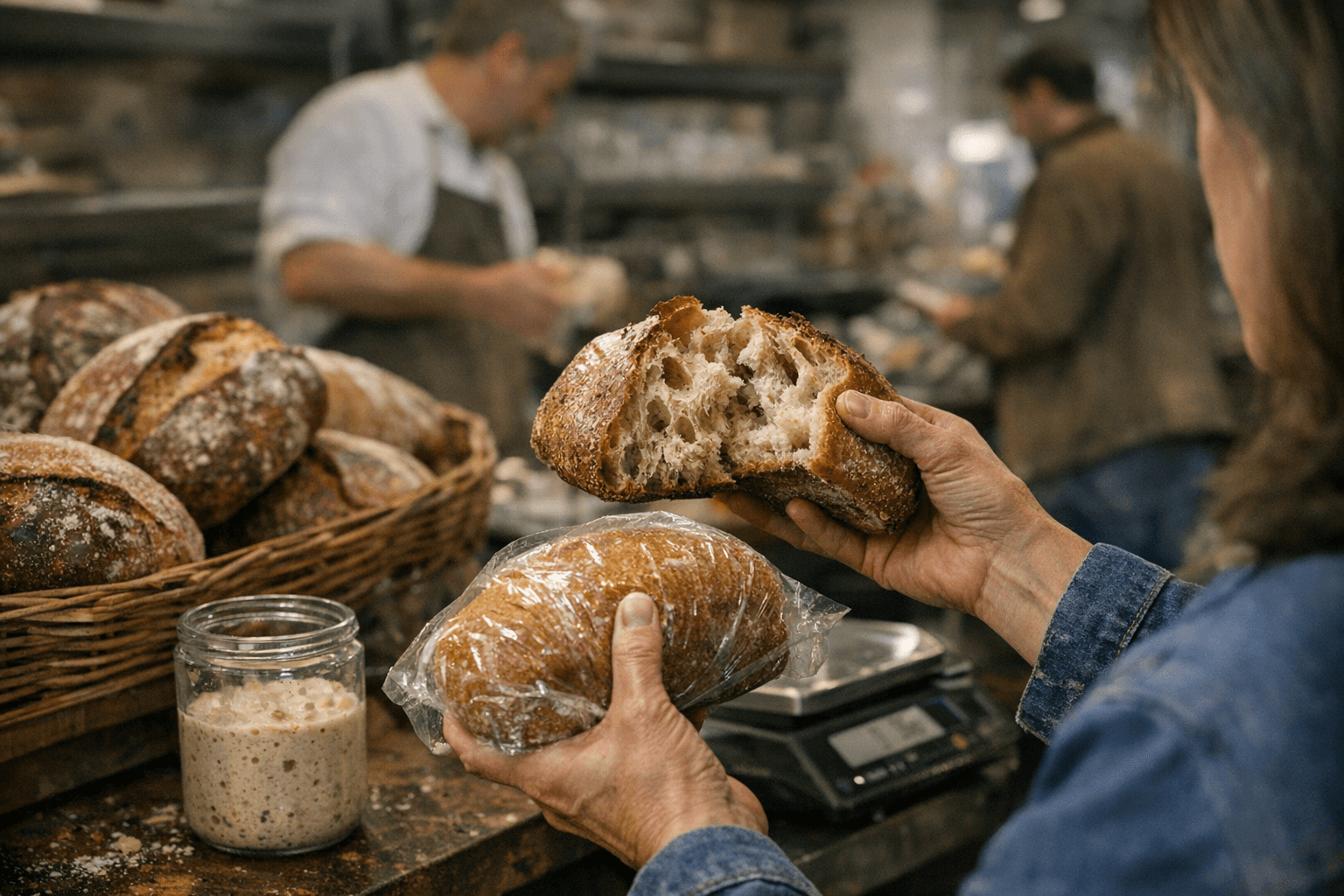
Context matters for shoppers. There is no legal definition of sourdough in many markets, which allows manufacturers to label products as sourdough even when they rely on commercial yeast or additives. Advocacy groups and independent bakers have pushed for greater transparency and clearer labeling, but until definitions change, transparency at the point of sale is the most reliable protection. Support independent bakeries that are open about their process, or maintain your own starter at home if you want full control over ingredients and fermentation schedules.
This guidance is practical and actionable: prioritize loaves with short ingredient lists, confirm the use of a maintained starter, and pay attention to fermentation practices and sensory cues. Those steps will help you distinguish authentic sourdough from look-alikes and make informed choices about flavor, nutrition, and baker support.
This article was produced by Prism’s automated news system from verified source data, official records, and press releases, then run through automated quality and moderation checks before publishing. The system is built and supervised by the people who set the standards it runs under. Read our full AI policy.
Did this article answer your question?