King Arthur Baking Updates Sourdough Starter Guide Based on Home Baker Feedback
King Arthur Baking's February 2026 update shrinks the default sourdough starter from 227g to leaner 50g feedings, cutting waste after years of home baker complaints about excessive discard.
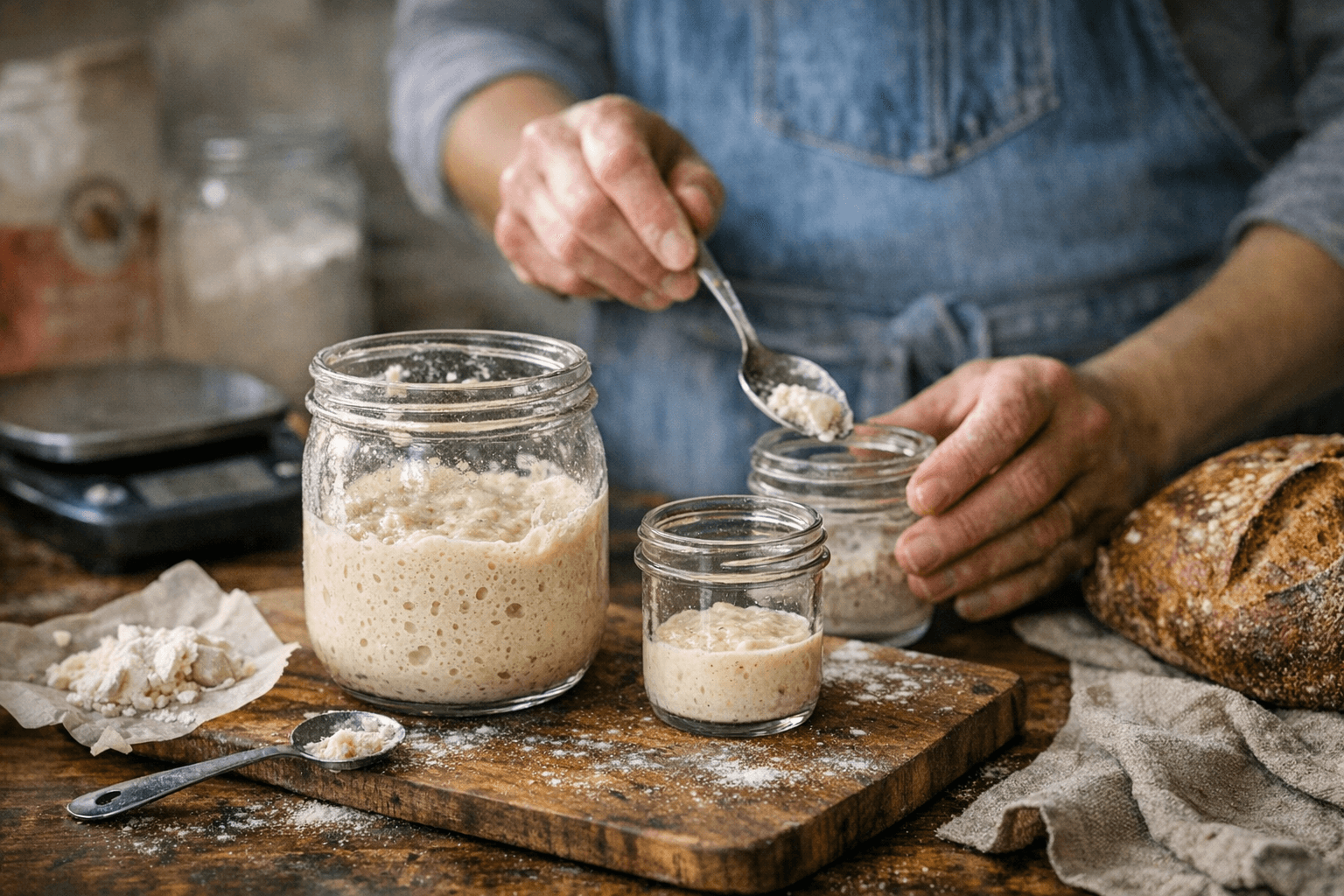
The starter sitting on your counter is probably too big. That is the conclusion King Arthur Baking's test kitchen reached after years of fielding calls on their Baker's Hotline, where home bakers repeatedly flagged a single frustration: the mountain of discard generated by the standard method. In February 2026, King Arthur updated its flagship sourdough starter recipe to create a smaller amount of starter in response to home bakers' feedback.
The original recipe produced 227 grams, or one cup, of starter at maturity. The updated version builds around 50-gram feedings, preserving the foundational 1:1:1 ratio by weight of starter, flour, and water that makes sourdough maintenance reproducible, while dramatically cutting how much flour gets committed to the jar every day. Bakers who prefer the original volume can still access it in the recipe's tips section.
The first week follows a consistent arc whether you're a weekend baker or someone checking jar marks at midnight. Day 1 remains a whole-grain foundation: King Arthur recommends whole wheat or pumpernickel flour, because less-processed grain carries more wild yeast into the mix initially than all-purpose flour. Days 2 through 7 shift to all-purpose flour once the culture begins establishing. The key difference between the two baker types emerges at the end of that first week. If you plan to bake frequently, keep the starter at room temperature and feed it daily. If your schedule only allows occasional baking, store it in the refrigerator and feed it once a week, pulling it out to warm and refresh before your next bake day.
Temperature is where most beginner stalls actually originate. King Arthur specifies 70°F to 78°F as the ideal range, and notes that a kitchen running below 68°F will produce a starter that grows with frustrating slowness. The fix is not more flour but more warmth: the top of a refrigerator, a turned-off oven with the light on, or a purpose-built proofing environment can provide the few degrees that separate an apparently dormant culture from one doubling reliably by Day 5.
The liquid pooling on top of a neglected starter is hooch, an alcohol layer that signals hunger rather than spoilage. Pour it off or stir it in, then resume regular feedings. A starter that smells sharply acidic has been underfed relative to its activity level; more frequent feedings or a slightly larger ratio of fresh flour to existing starter corrects the balance. Discard does not have to go to waste: King Arthur's test kitchen publishes recipes using unfed starter for pizza crust, pretzels, waffles, and even chocolate cake. Mold, the one outcome that genuinely requires discarding and starting over, presents as visible fuzzy growth in colors distinct from the pale yellow or light gray of normal starter surface oxidation.
King Arthur's sourdough learning hub organizes the full process into four modules: Understand, Create, Bake, and Maintain, covering the science, starter creation, recipes, and long-term feeding schedules. The February 2026 update is a sign that the company is iterating alongside its community rather than handing down fixed doctrine. Smaller jars, less waste, the same science.
This article was produced by Prism’s automated news system from verified source data, official records, and press releases, then run through automated quality and moderation checks before publishing. The system is built and supervised by the people who set the standards it runs under. Read our full AI policy.
Did this article answer your question?