Maurizio Leo Explains Autolyse, the Sourdough Step That Transforms Your Dough
Autolyse transforms sticky, resistant dough into something extensible and workable, and Maurizio Leo's technical breakdown tells you exactly when it's worth the extra step.
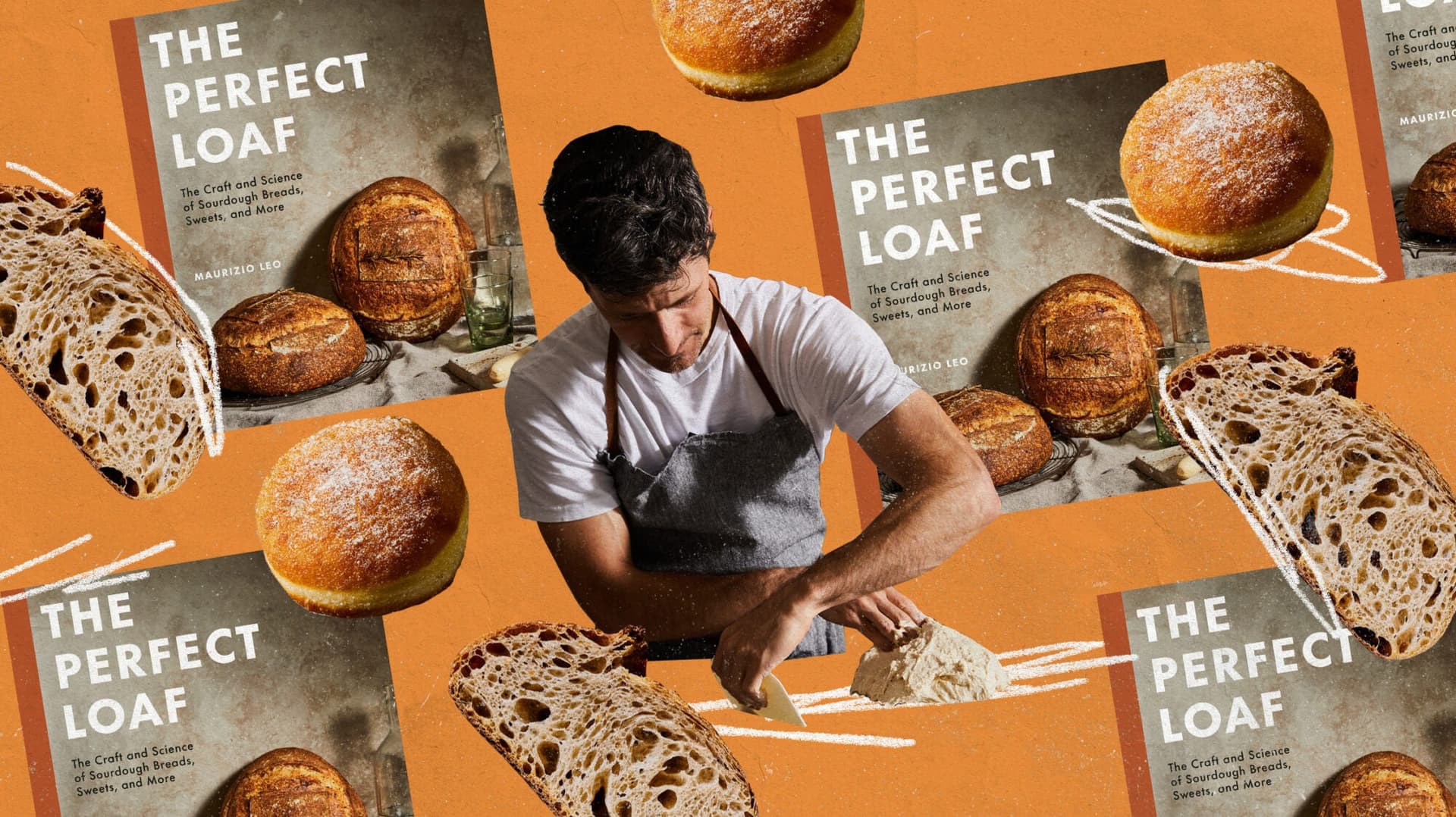
If your dough tears when you stretch it, fights back during shaping, or takes ages to come together in the mixing bowl, there is a single pre-mix rest that addresses all three problems at once. It is called autolyse, it takes as little as 20 minutes, and James Beard Award-winning baker Maurizio Leo has built one of the most technically rigorous explanations of why and how it works at his site, The Perfect Loaf. Understanding the technique means knowing not just what to do, but when to do it and, critically, when to leave it out entirely.
What Autolyse Actually Is
Autolyse (pronounced "aw-toe-lease") is the practice of combining flour and water before any other ingredients join the bowl, then letting that mixture rest undisturbed. Nothing else. No starter, no salt, no oil. That pause triggers two overlapping processes: the flour's starches and proteins begin absorbing water evenly, and enzymes already present in the flour wake up and start doing biochemical work. Protease enzymes break down some of the protein bonds, which loosens the gluten network and makes the dough dramatically easier to stretch. Amylase enzymes begin converting starches into simpler sugars, which feeds fermentation later and contributes to crust color and flavor depth.
The technique traces back to French baker, professor, and biochemist Raymond Calvel, who introduced the method in the early 1970s after observing that industrial mixers were destroying bread quality through aggressive, heat-generating kneading. Calvel found that a simple pre-hydration rest restored the extensibility, flavor, and color that fast mechanical mixing had stripped away. His framework has been foundational to artisan baking ever since, and Maurizio Leo's guide is built squarely on that foundation, extending it with the kind of testable, variable-specific precision that home bakers can actually use.
The Everyday Problem It Solves
Think of gluten development in terms of two competing properties: elasticity (the dough snaps back when stretched, like a rubber band) and extensibility (the dough stretches without tearing). A dough that is too elastic fights every fold, shrinks back from the bench, and resists shaping. Autolyse shifts that balance toward extensibility by allowing partial proteolysis before any mechanical work begins. The result is a dough that opens up willingly under your hands, builds strength faster during bulk fermentation, and requires fewer stretch-and-fold sets to reach full development.
For high-protein bread flours, this matters especially because strong flours form tight, elastic networks quickly. Whole-grain and rye-heavy doughs benefit even more dramatically: the bran and germ particles in whole wheat act like tiny blades that can sever gluten strands during mixing, and autolyse gives those particles time to absorb water and soften before any mechanical stress is applied. The payoff is a less ragged, more cohesive dough that tears less at the bench and produces a more open crumb.
When to Use It, When to Skip It
Autolyse is a tool, not a rule, and applying it indiscriminately can produce worse results than skipping it. Here is a practical decision framework drawn from Leo's guide:
*Use autolyse when:*
- Your formula uses high-protein bread flour, whole wheat, or spelt, where extensibility is the limiting factor
- Hydration is 75% or above, giving enzymes enough water to activate fully
- You are mixing by hand and want to cut down on physical work
- Your goal is a more open, irregular crumb structure
- You are working with a bulk fermentation schedule where dough temperature will stay below 27°C (80°F)
*Skip autolyse when:*
- The formula includes fats (butter, olive oil), sugar, eggs, or dairy, which coat flour proteins and interfere directly with gluten bond formation, making the rest counterproductive
- You are using more than roughly 30% rye flour, since rye's high enzyme activity combined with autolyse can produce a dough that becomes unmanageably sticky and extensible
- Your kitchen is warm and the dough risks exceeding 27°C (80°F) during the rest, which drives enzymatic activity past the useful threshold and weakens structure
- The flour has a low falling number, indicating already-high amylase activity; adding an autolyse rest can push the dough into a gassy, sticky state that is difficult to recover
Timing and Temperature: The Specific Numbers
Duration is not one-size-fits-all. Leo's guide gives these ranges as starting points:
- White bread flour at moderate hydration (70-75%): 20 to 30 minutes
- High-hydration white flour doughs (80%+): 30 to 45 minutes
- Whole wheat or mixed-grain doughs: 45 minutes to as long as several hours, since the bran needs more time to fully hydrate
Temperature control is the variable most bakers overlook. Keep the resting dough in an ambient environment that will not push the dough above 27°C (80°F). Warmer conditions accelerate both protease and amylase activity, and beyond that threshold the gluten network begins to weaken faster than it develops. In summer kitchens, use cooler water to compensate, targeting a final dough temperature after mixing of around 25°C (77°F).
Run Your Own A/B Test This Weekend
The most direct way to feel autolyse's effect is to run a side-by-side comparison with a single dough formula. Leo himself did exactly this with his Beginner's Sourdough Recipe, mixing two identical batches, one with a one-hour autolyse and one without. The differences became apparent well before the oven. Here is how to run the same experiment at home:
1. Mix two identical batches of your standard white or whole-wheat sourdough. Same flour brand, same hydration, same levain percentage, same ambient temperature.
2. Batch A: autolyse flour and water for 45 minutes before adding starter and salt. Batch B: add all ingredients together and mix immediately.
3. At the end of mixing, perform a windowpane test on both: stretch a small piece of dough between your fingers until it is thin enough to see light through. Batch A should reach a clean, translucent pane with noticeably less effort and tearing.
4. Note extensibility during the first two stretch-and-fold sets. Batch A should feel looser and more cooperative; Batch B may feel tighter and spring back more aggressively.
5. Track total mixing time needed to achieve full incorporation and early gluten development. Autolyse typically reduces this by 20 to 30 percent.
6. Monitor bulk fermentation. Because autolyse does not include the starter, fermentation timing is not affected at the start; watch for whether Batch A shows slightly more activity later due to improved sugar availability from amylase activity.
7. At pre-shape, feel the difference in how each dough moves across the bench and holds its form.
Document everything: flour brand, water temperature, room temperature, start times. That record is what separates a one-off observation from a repeatable result.
Reading the Dough: What Autolyse Looks Like When It Works (and When It Does Not)
After the rest, well-autolysed dough should feel noticeably smoother and more pliable than when it was first mixed. It will have developed some light cohesion even without any folding; stretch a piece and it should extend several inches before resisting. If the dough feels extremely slack or pulls apart with almost no resistance, the autolyse has gone too long, the temperature was too warm, or the flour's enzyme activity was already high. Correct by tightening up with a brief lamination pass and reducing rest time in future bakes.
If the dough still feels dense and tears quickly after the rest, it likely needed longer hydration time or the water temperature was too cold to activate enzymes effectively. A few additional stretch-and-fold sets during bulk fermentation can compensate, and a longer autolyse next time, or slightly warmer water, will address the root cause.
From Home Baker to Reproducible Practice
What separates Leo's approach from the usual baking lore is the insistence on treating each variable as something to isolate and test. Flour brand matters because protein content and falling number vary between mills. Ambient temperature matters because enzyme kinetics are temperature-dependent. Water percentage matters because enzyme activation requires sufficient hydration. When those variables are documented and held constant across bakes, the autolyse rest stops being a vague "improves your bread" step and becomes a predictable intervention with measurable outcomes.
For anyone baking at scale, whether running a weekend pop-up or supplying a local market, that reproducibility is not optional. But even for the once-a-week home baker, keeping a simple log of flour, hydration, autolyse duration, and dough temperature turns a single good bake into a blueprint for the next one. Autolyse asks for 20 minutes of patience before mixing. What it returns, when matched to the right dough and the right conditions, is a loaf that handles better, ferments more predictably, and arrives at the oven with the kind of open, developed crumb that makes the whole process feel worth it.
This article was produced by Prism’s automated news system from verified source data, official records, and press releases, then run through automated quality and moderation checks before publishing. The system is built and supervised by the people who set the standards it runs under. Read our full AI policy.
Did this article answer your question?