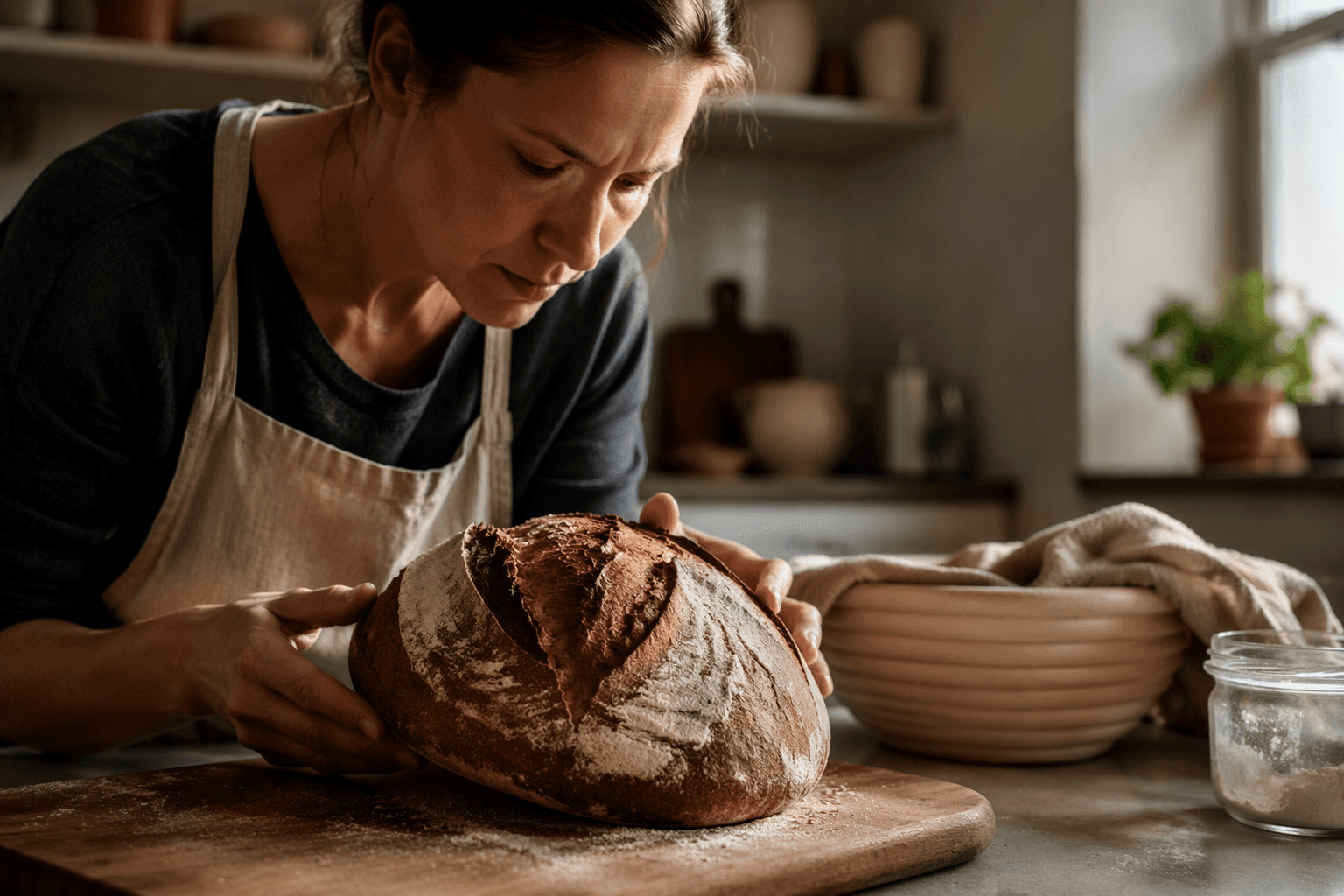
Nourish Farms hosts hands-on sourdough class in Sheboygan Falls Jan. 15
Nourish Farms hosted a hands-on sourdough class Jan. 15 led by Amanda Strojinc, teaching autolyse, stretch-and-folds, scoring and starter building; participants left with a starter and a partially fermented loaf.

Home bakers in Sheboygan Falls got practical, hands-on sourdough training at Nourish Farms’ Good Food Education Center on Jan. 15, a session designed to move students beyond recipes and into technique. The adult cooking class, titled "Sourdough Bread Making with Hopefully Homesteading," ran from 5:30 to 8:00 p.m. and focused on bread fundamentals that make daily baking more reliable.
Amanda Strojinc led the class through the building blocks of a dependable sourdough: autolyse, mixing, dough strengthening via stretch-and-folds, starter creation, and finishing techniques for baking and scoring. Instructors demonstrated how a short autolyse relaxes the dough and improves gluten development, why stretch-and-folds replace heavy kneading for many home bakers, and how scoring patterns affect oven spring and final crumb. The session balanced technique demos with hands-on practice so participants could feel and assess dough structure in real time.
Practical takeaways were baked into the event. Each participant left with a partially fermented loaf and a live starter to take home, providing both an immediate project and the germ of an ongoing practice. That combination lets new bakers complete the bake at home and continue cultivating a starter without starting from scratch. Pre-registration was required for the class, reflecting limited space for close guidance and one-on-one feedback during the 2.5-hour session.
For community members, the class provided more than a single bake. It created a shared language around common sourdough steps, autolyse, bulk fermentation, stretch-and-folds, shaping, proofing, and scoring, so neighbors can swap tips using the same terms and techniques. The workshop format also offered troubleshooting opportunities that recipe reading often misses: handling slack dough, timing lifts between folds, and recognizing when a loaf is ready for the oven.

The session reinforced a key advantage of hands-on classes: immediate, sensory feedback. Students could see the difference a well-executed autolyse makes in dough texture and test scoring strokes on demo loaves before cutting into their own. Taking a starter home supports long-term learning; regular feedings at home let bakers observe how their starter responds to local flour and kitchen temperatures.
As sourdough remains a staple of home baking culture, local classes like this help bakers turn occasional successes into repeatable routines. For anyone who picked up a starter at the event, the next step is routine maintenance and planning a bake window to finish that partially fermented loaf.
This article was produced by Prism’s automated news system from verified source data, official records, and press releases, then run through automated quality and moderation checks before publishing. The system is built and supervised by the people who set the standards it runs under. Read our full AI policy.
Did this article answer your question?