Open baking sourdough challenges the need for a Dutch oven
Open baking can deliver real sourdough lift and crust without a Dutch oven, as long as steam is managed well.
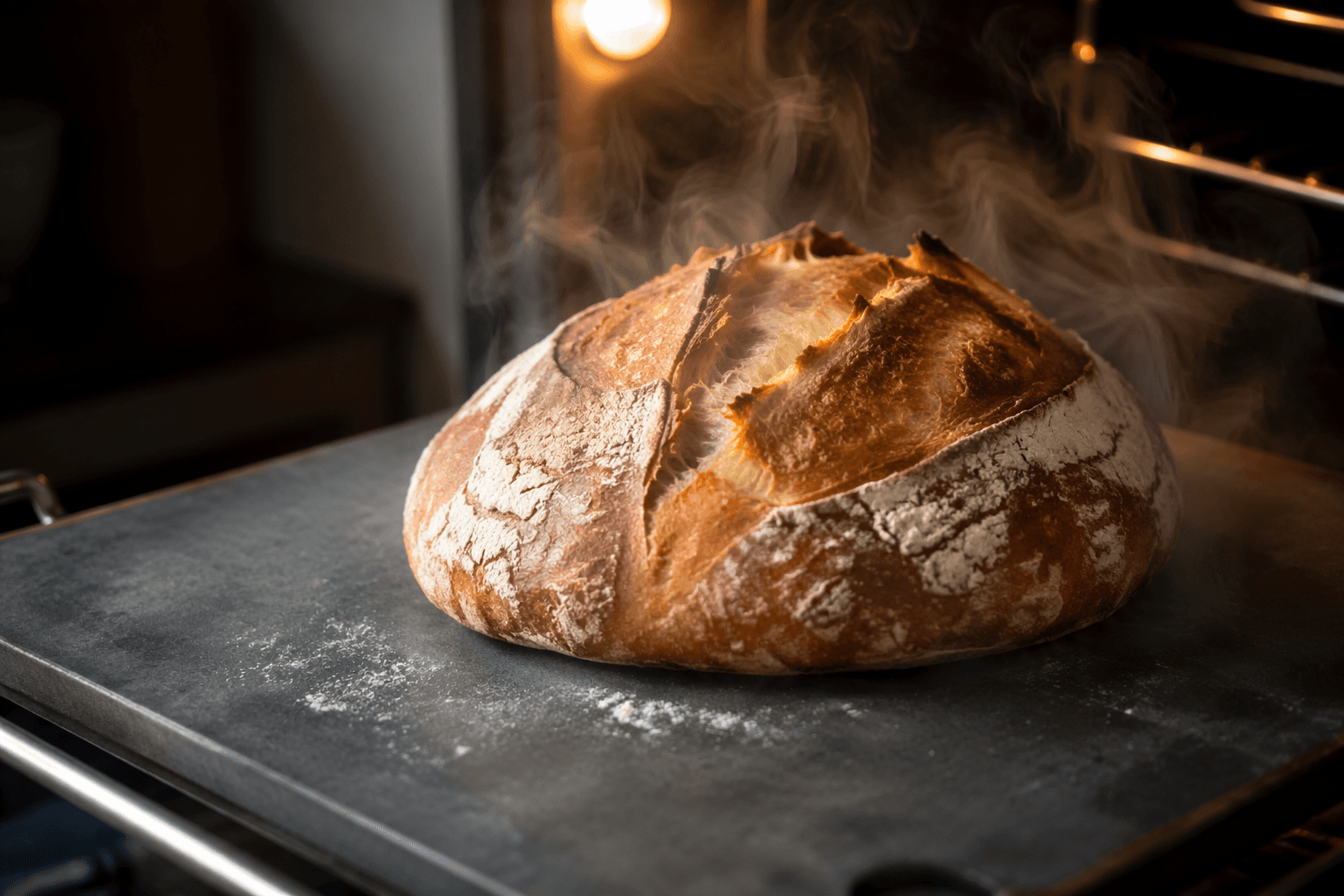
You do not need a Dutch oven to chase a respectable sourdough crust. Open baking shows that the real workhorse is steam, not the heavy pot, and that shift makes better bread feel a lot less expensive and a lot more approachable.
Why open baking is worth a look
CatchyMeals framed the appeal in a way many home bakers will recognize: the first try at open baking was better than expected, even without the usual Dutch oven setup. Instead of trapping the loaf in a scorching pot, the dough goes directly onto a preheated pizza stone, where the oven is arranged to create steam around it.
That matters because the pain point is not just cost, it is friction. A Dutch oven can be effective, but it also means lifting a screaming-hot vessel, lowering dough into a tight space, and handling scoring while trying not to burn your hands. Open baking removes much of that juggling act and turns the process into something closer to a simple load-and-bake routine.
What the Dutch oven is really doing
The Dutch oven has built its reputation for a reason: it traps steam around the loaf early in the bake. That steam delays crust formation, giving the dough time to expand before the crust sets, which is why it helps produce good oven spring.
But that does not mean the pot is magic. Commercial bakeries usually get the same effect with deck ovens or steam-injection systems, which points to the real principle at work. The goal is not the vessel itself, but a moist baking environment at the start of the bake, followed by a dry finish so the crust can crisp.
King Arthur Baking puts that idea plainly. Its sourdough baking guidance says steam during baking is critical to the final look and taste of bread, and that it helps produce a great rise and a crackly crust. Its home steam guide also stresses that bakers should vent the steam away once the loaf has reached maximum oven spring so the crust can finish crisping.
How open baking gets there
Open baking is bread baked directly on a baking stone, steel, or oven rack without a Dutch oven. The setup in the guide uses a preheated stone and a steam-rich oven, which is enough to reproduce many of the effects home bakers want: lift, crust development, and more even baking.
This is where the method becomes more than a budget workaround. It brings home baking closer to the way professional bakeries work, and that is a meaningful shift for anyone who wants bakery-style results without buying another specialty tool. Open baking can also handle multiple loaves at once, which is a major advantage if you bake for a family or try to batch loaves for the week.
The benefits are practical and immediate:
- No heavy pot to lift, lower, or preheat
- Less risk of burning your hands during scoring
- Easier loading onto the baking surface
- Room to bake more than one loaf at a time
- Better alignment with bakery-style production
A guide from Kate’s Pasture to Pantry made the same comparison, noting that open baking is the method used in professional bakeries and pointing to advantages like a superior bottom crust, more even browning, and the ability to bake multiple loaves at once. That is the heart of the argument: the Dutch oven is a useful home solution, not the only route to good sourdough.
A realistic open-bake workflow
The recipe described in CatchyMeals follows a familiar sourdough rhythm and keeps the method accessible. It starts with active starter, warm water, bread flour, and salt, then moves through stretch-and-folds and coil folds before an overnight cold ferment. The loaf is then baked at 450 degrees Fahrenheit on a preheated stone.
That sequence matters because open baking does not erase the need for good dough handling. The dough still needs structure, fermentation, and timing, and the open oven still needs steam management. The process is simpler in equipment, but it is not looser in technique.
A practical open-bake routine looks like this:
1. Build the dough with active starter, warm water, bread flour, and salt.
2. Develop strength with stretch-and-folds and coil folds.
3. Let the dough cold ferment overnight.
4. Preheat the stone and set up the oven for steam.
5. Load the loaf directly onto the baking surface.
6. Bake at 450 degrees Fahrenheit, then vent steam after the loaf has achieved maximum oven spring.
That last step is the one that separates a decent open bake from a flat one. If steam hangs around too long, the crust can stay soft when it should be setting and crisping. King Arthur Baking’s advice to vent steam after maximum oven spring is the simple rule that keeps the method from overcomplicating itself.
What to expect on the first bake
Open baking can work well, but it does not guarantee perfection on the first run. In the CatchyMeals example, the first loaf was encouraging but not flawless. The scoring still needed work, and there was a little too much flour on the outside, both of which are the kind of small issues that show up when a baker is still learning the feel of the method.
That is actually useful news for home bakers. It means you can get a solid result without owning a Dutch oven, but you still need to pay attention to shaping, scoring, and flour handling. The point is not that open baking is effortless. The point is that it is a credible path to good bread, even when the bake is not yet polished.
Why this changes the sourdough conversation
Bread baked with steam is not a novelty. The principle underlies professional deck ovens and the systems commercial bakeries use every day, and home bakers have long tried to imitate that setup with water pans, lava rocks, cloches, and inverted trays. Open baking fits into that same lineage, but with a cleaner, more direct setup.
That is why the Dutch oven debate is really a conversation about access. If the true goal is steam, rise, and crust, then the expensive pot is only one route to the finish line. Open baking makes the bakery-style method feel less specialized and gives home bakers a practical alternative that still respects what sourdough needs in the oven.
The biggest takeaway is simple: the pot is optional, but the steam is not. Once that clicks, sourdough stops feeling like a gear-heavy project and starts looking like a method you can actually repeat.
This article was produced by Prism’s automated news system from verified source data, official records, and press releases, then run through automated quality and moderation checks before publishing. The system is built and supervised by the people who set the standards it runs under. Read our full AI policy.
Did this article answer your question?