Penn State Expert Links Sourdough Gut Benefits to Starter Microbiome Research
Penn State's Josephine Wee says pairing sourdough with yogurt boosts microbiome impact, as new research links starter bacteria to specific gut-health molecules.
Your sourdough starter is unlike any other on the planet. At the microscopic level, no two kitchen starters share the same combination of lactic acid bacteria and wild yeasts, and a growing body of USDA-funded research suggests that microbial individuality isn't just a curiosity — it may be the key to unlocking targeted health benefits from every loaf you bake.
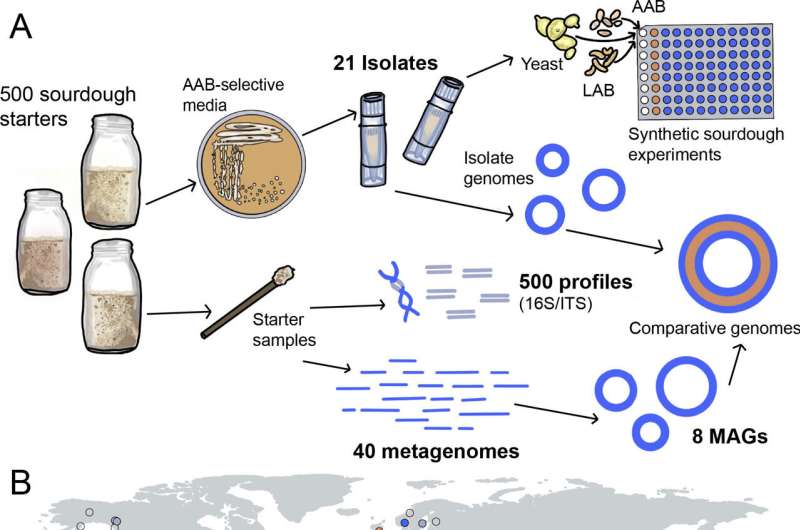
The One Health Microbiome Center at Penn State recently released a short featuring food scientist Josephine Wee, who connects sourdough's fermentation process to digestive health and offers a specific practical recommendation: pair sourdough with yogurt to amplify the microbiome impact. Wee's appearance ties directly into a broader collaborative project, published in the Journal of Food Science, that she co-authored with Charlene Van Buiten, an assistant professor in the Department of Food Science and Human Nutrition at Colorado State University, and Benjamin Wolfe, a microbial ecologist at Tufts University.
The research examines how the specific bacterial and yeast communities living in different starters shape not just flavor and crumb structure, but potentially the chemical composition of the finished bread. "Our latest study focuses on how different groups of organisms can affect quality in bread, including things like texture and color," Van Buiten said. "This demonstrated that we can see vastly different outcomes based on the starter culture that's being used."
Those outcomes extend beyond the sensory. Van Buiten's USDA-funded research investigates how different bacteria-and-yeast combinations can yield distinct health properties, including reduced gluten levels and the elimination of synthetic additives. A collaborator identified as Prenni put the molecular dimension plainly: "Our team looks at the molecular composition of the dough and bread, and finds patterns and differences in the compositions that correlate with the specific bacteria in these sourdough starters. The idea is that we might be able to identify some specific health-promoting molecules that are generated through one culture and not another."
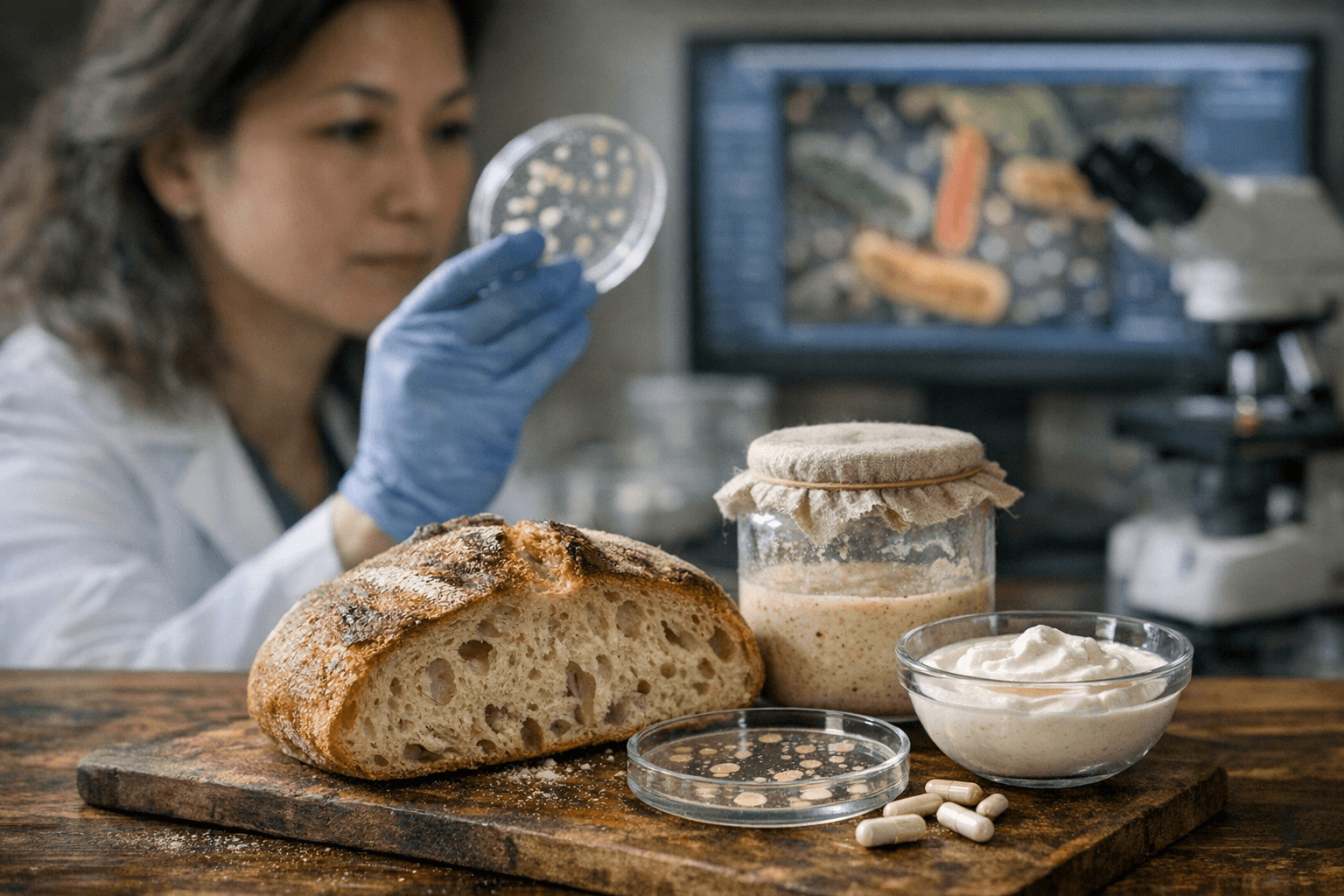
The science behind sourdough's digestibility runs deep. Lactic acid bacteria drive enzymatic hydrolysis processes and trigger Maillard reactions during baking that build flavor complexity. The conversion of arginine to ornithine and glutamine to glutamate by LAB during fermentation produces the tangy, roasty taste that distinguishes a long-fermented loaf from commercial bread. LAB and yeasts also generate invertase enzymes that assist in digestion, and the fermentation process broadly improves nutrient absorption in the gastrointestinal system.
Critically, the starter's microbiome is not fixed. Hydration level, flour type, backslopping frequency, fermentation time and temperature all shape which organisms dominate through a process of microbial succession, where acid-tolerant bacteria gradually take over as the culture matures. That means bakers have more influence over their starter's microbial profile than they might realize.
The next phase of Van Buiten's work will test whether specific starter cultures can actively break down gluten during fermentation — a finding that could have meaningful implications for the estimated 7% of people worldwide who have some form of gluten intolerance. That research is ongoing, and no clinical conclusions have been drawn yet, but the trajectory of the collaboration between Penn State, Colorado State and Tufts points toward a future where selecting a starter culture becomes as deliberate as choosing an ingredient.
This article was produced by Prism’s automated news system from verified source data, official records, and press releases, then run through automated quality and moderation checks before publishing. The system is built and supervised by the people who set the standards it runs under. Read our full AI policy.
Did this article answer your question?