Soft, Fluffy Sourdough Discard Rolls Ready in Under Two Hours
Your discard jar just became the fastest path to warm, buttery dinner rolls — no long fermentation required, just two hours from mixing bowl to table.
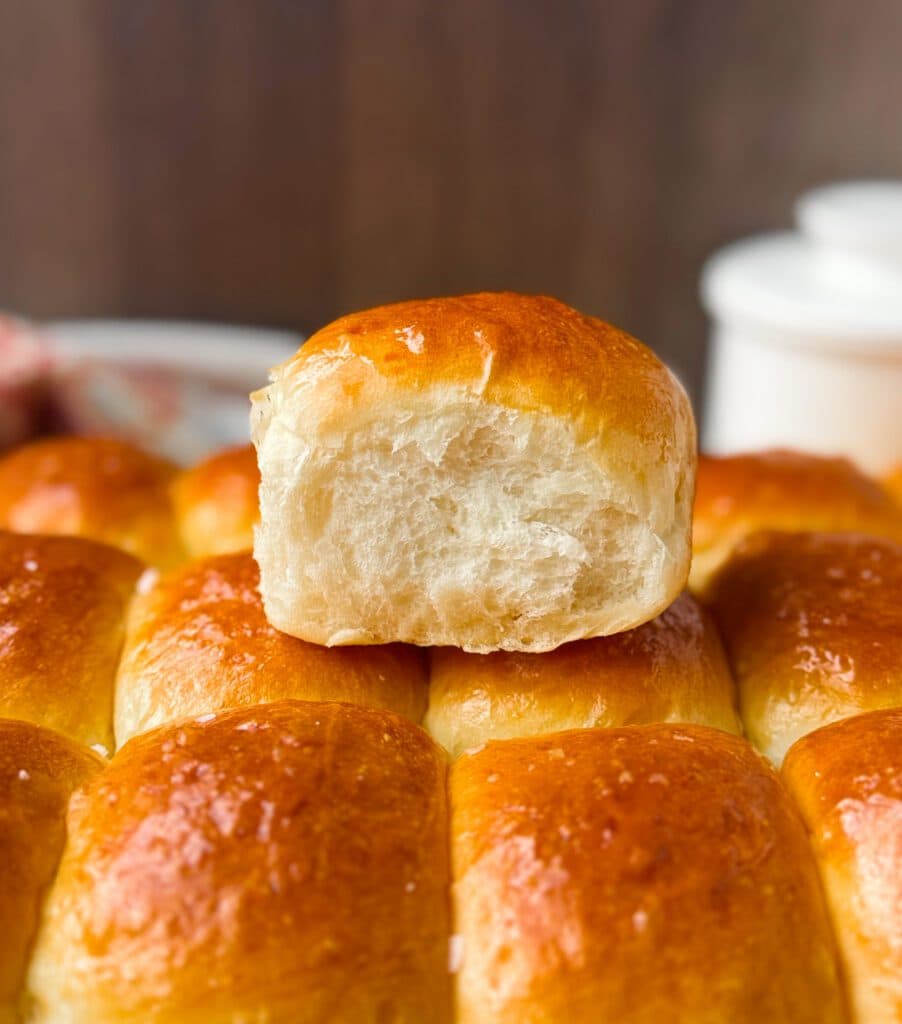
That container of sourdough discard sitting in your fridge is closer to a batch of warm, pull-apart dinner rolls than you might think. The discard-roll format has become one of the most practical corners of the sourdough world, and a wave of detailed recipes from home-baking bloggers makes clear there are now two distinct, well-tested paths to getting there: one uses baking soda to activate the discard's natural acidity, and the other reaches for commercial yeast to drive a fast, reliable rise. Both deliver fresh rolls in under two hours, and neither requires a fed, active starter.
Two Roads to the Same Soft Roll
The split in approaches is worth understanding before you start. Emillie Parrish of Fermenting for Foodies describes her version as something genuinely different from a standard enriched roll: "This sourdough recipe is rather unusual. It is more similar to soda bread and other quick breads. Rather than using the natural sourdough yeast to rise the bread, it uses the acidity of the sourdough starter. Once the starter is mixed with baking soda it starts to rise." The result, she notes, is still properly bread-like: "Using sourdough starter gives these rolls a well-developed gluten structure. So they are more bread-like than cake-like." This is the no-yeast-packet path, quick-bread logic applied to a roll format.
The far more common route is commercial yeast assisted. These rolls carry "just the right tang, similar to buttermilk," and with a little help from instant yeast, you can mix, rise, and bake them in just 2 hours, making it the fastest way to get warm, homemade bread on the table without the long wait. Emily Christensen, whose recipe was updated in March 2026, puts it plainly: "Light, soft, and super fluffy, these Sourdough Discard Dinner Rolls deliver big buttery flavor with minimal effort in 2 hours. With just one rise and a super quick prep, they're the ideal recipe for busy nights or holiday meals."
The Standard Two-Hour Method, Step by Step
For the yeast-assisted approach, mixing technique matters from the very first step. Lisa Bass, who published her "Easy Soft Sourdough Discard Rolls" (updated April 27, 2024) on Farmhouse on Boone, is precise about activation: "Begin by whisking warm water and yeast in your stand mixer bowl. Cover the bowl and let it sit for 5 minutes to give the yeast time to work. When you check back in, the mixture should be bubbly and foamy, showing that the yeast is active." From there, add sourdough discard, sugar, cooled butter, salt, and flour, then use a dough hook attachment and mix on low speed for 2 minutes.
Once the dough is smooth, shaping is where Emily Christensen's method earns its specificity. Divide the dough onto a lightly floured surface into 15 equal pieces. For each piece: "flatten out each piece of dough and pull the corners to the middle. Pinch the seams together and then roll over the dough ball. With your hand in a cupping shape, rotate the ball on the countertop, creating tension, until it is a smooth ball." Place the finished balls into a greased 9x13 baking pan and cover.
The rise window is the most temperature-sensitive part: "Let the dough rise in a warm spot until the rolls have doubled in size and are puffy, about 1 hour at 85-90°F. At cooler temperatures, this will take longer." Emily provides a sample schedule to make timing intuitive: mix and shape at 3 pm, let the dough rise in a warm spot from 3:30 to 4:30 pm, then bake at 4:30 pm.
Before the rolls go in, brush with an egg wash for a deep golden exterior. Bake in a preheated 400°F oven for 17-18 minutes until browned on top. The moment they come out: "brush the tops of the rolls with 1 Tablespoon melted butter. Sprinkle the tops with flaky sea salt."
The One-Hour Version: Skipping the First Rise
If two hours still feels long, Amy Bakes Bread takes the process further by eliminating the bulk fermentation entirely. "This recipe is great for when you are short on time and want to make homemade rolls. After the dough is kneaded, you do not need to let the dough rise. Instead, immediately shape the dough into rolls and set them in a baking pan. Give the rolls a quick 30 minute proof in a warm place and then bake them for about 25 minutes. You have eliminated the first rise and some of the second rise and are relying on the fast-acting power of the yeast and the heat from the oven for some perfect rolls."
The key to making this work is temperature management throughout. "Add warm water (around 100°F) and sourdough discard to the bowl of a stand mixer. Warm water helps compensate for cold sourdough discard (if your discard comes straight from the fridge)." Instant yeast goes in next, and you watch for activation: a yeasty smell and the yeast starting to clump together. Then add the egg, melted butter, and salt before mixing. The warm-dough principle applies from mix to proof; the moment the dough cools down significantly, the timeline stretches.
Ingredients and Substitutions
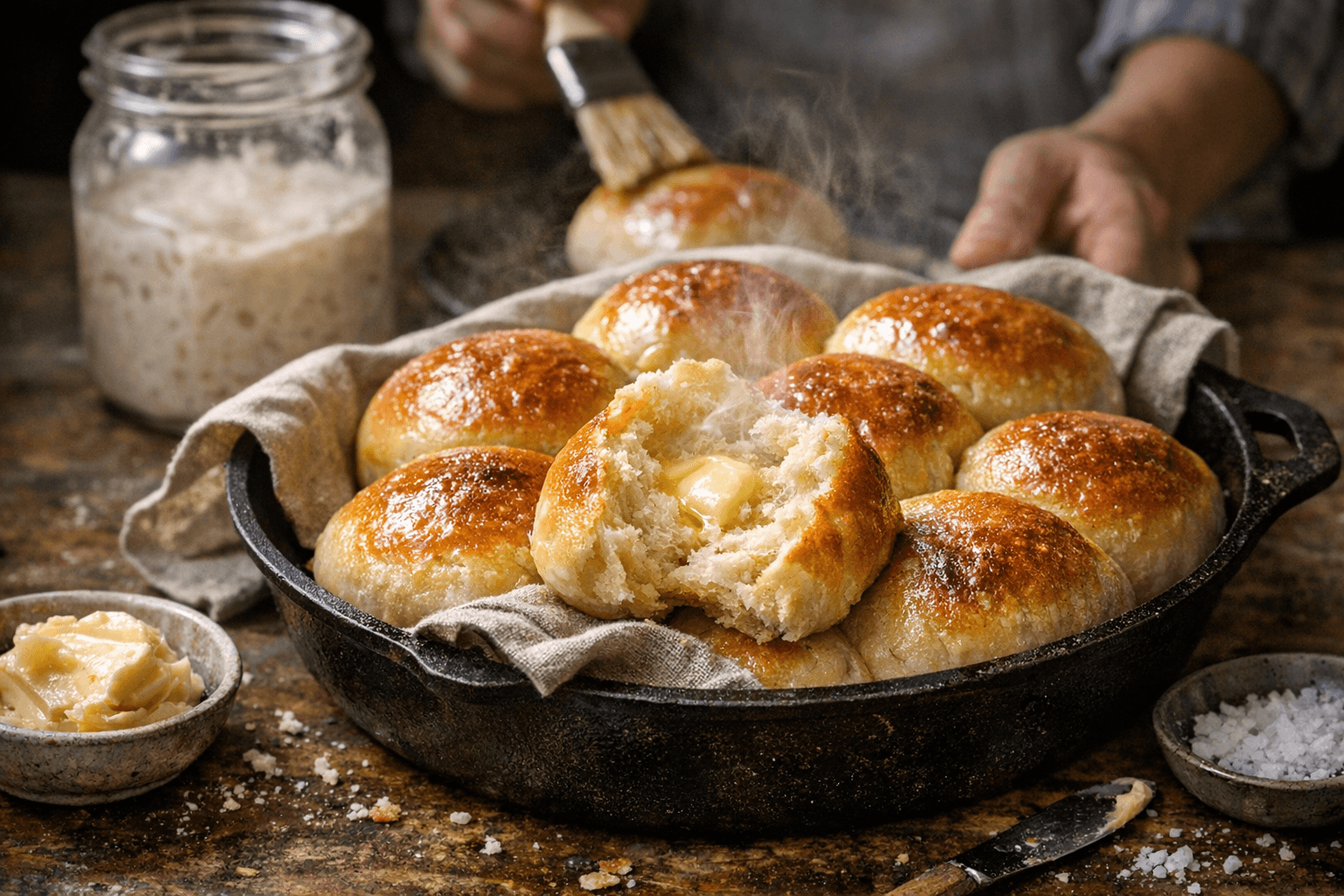
The pantry list for the yeast-assisted style is short and flexible. Sourdough discard rolls offer "a sweet flavor, tangy kick, and fluffy texture," and the ingredients that deliver that include sourdough discard, commercial yeast (instant or active dry), warm filtered water, sugar, butter, salt, egg, and flour. On the sugar front, brown sugar or honey both work as substitutes, though honey will make the dough stickier and a bit more challenging to work with. Bread flour keeps these rolls chewy and supports a good rise, though all-purpose flour can be substituted if that's what you have on hand.
Lisa Bass notes the versatility of the finished rolls extends well beyond dinner: pair them with soups and stews, split them as sandwich buns, or smear them with jam at breakfast.
Whole Wheat and Reader Variations
The baking-soda style recipe from Emillie Parrish has inspired some creative reader experimentation. Commenter Brittany Leppert documented a whole-grain adaptation with specificity worth noting: "I used 100% whole wheat flour and subbed honey for the sugar. I used extra baking soda (1tsp per cup of flour) because I hypothesized that the whole wheat flour would need extra rise power to be lifted." The logic holds: whole wheat's heavier bran structure needs more leavening support to achieve the same lift. Emillie replied warmly, expressing interest in experimenting further with whole wheat to achieve that bun structure.
For yeast-based versions, most bakers recommend not substituting more than a portion of bread flour for whole wheat, since whole wheat will make the rolls more dense and less fluffy than using all bread flour.
Troubleshooting
A few issues come up consistently across the community:
- Dense rolls: Make sure you are using fresh, non-expired yeast, and that the rolls are rising in a warm spot. If the rolls are not warm enough, they will take longer to rise, so before baking make sure the rolls have visibly increased in size.
- Rolls splitting during baking: If your rolls crack on top during the bake, they needed more proof time. Let them rise a little longer before baking next time; this may push the one-hour version slightly past 60 minutes, but the result will be better.
- Cold discard slowing the rise: Use warm water at around 100°F to counteract a cold starter pulled straight from the fridge. You can use discard straight from the refrigerator, but make sure you use warm water to bring the temperature of the dough up. Keeping that dough warm is key to a quick rise.
- Yeast type confusion: Both instant and active dry yeast appear across these recipes. Active dry needs that 5-minute activation window in warm water until foamy; instant yeast can be added directly to the dry ingredients, though many bakers still pre-proof it as a freshness check.
The discard-roll format rewards bakers who treat temperature as an active ingredient rather than a passive condition. Keep everything warm, trust the visual cues (the dough should look visibly puffy and roughly doubled before the oven), and the rest is straightforward enough for a complete beginner, which is exactly how Samantha of Healing Slice framed her own recipe when she published her "Quick Sourdough Discard Rolls (soft & fluffy!)" on March 24, 2026: designed for home bakers who want tender rolls without long fermentation and with no prior experience required. That framing captures the whole appeal of this style of baking. Discard is no longer an obligation to manage; it is the fastest ingredient in the kitchen.
This article was produced by Prism’s automated news system from verified source data, official records, and press releases, then run through automated quality and moderation checks before publishing. The system is built and supervised by the people who set the standards it runs under. Read our full AI policy.
Did this article answer your question?