Sourdough Fermentation Among Key Methods Reviewed for Boosting Mineral Bioavailability
Sourdough yeast acidification activates your flour's own phytase enzymes, a proposed mechanism now featured in a major 2026 review of mineral bioavailability strategies.
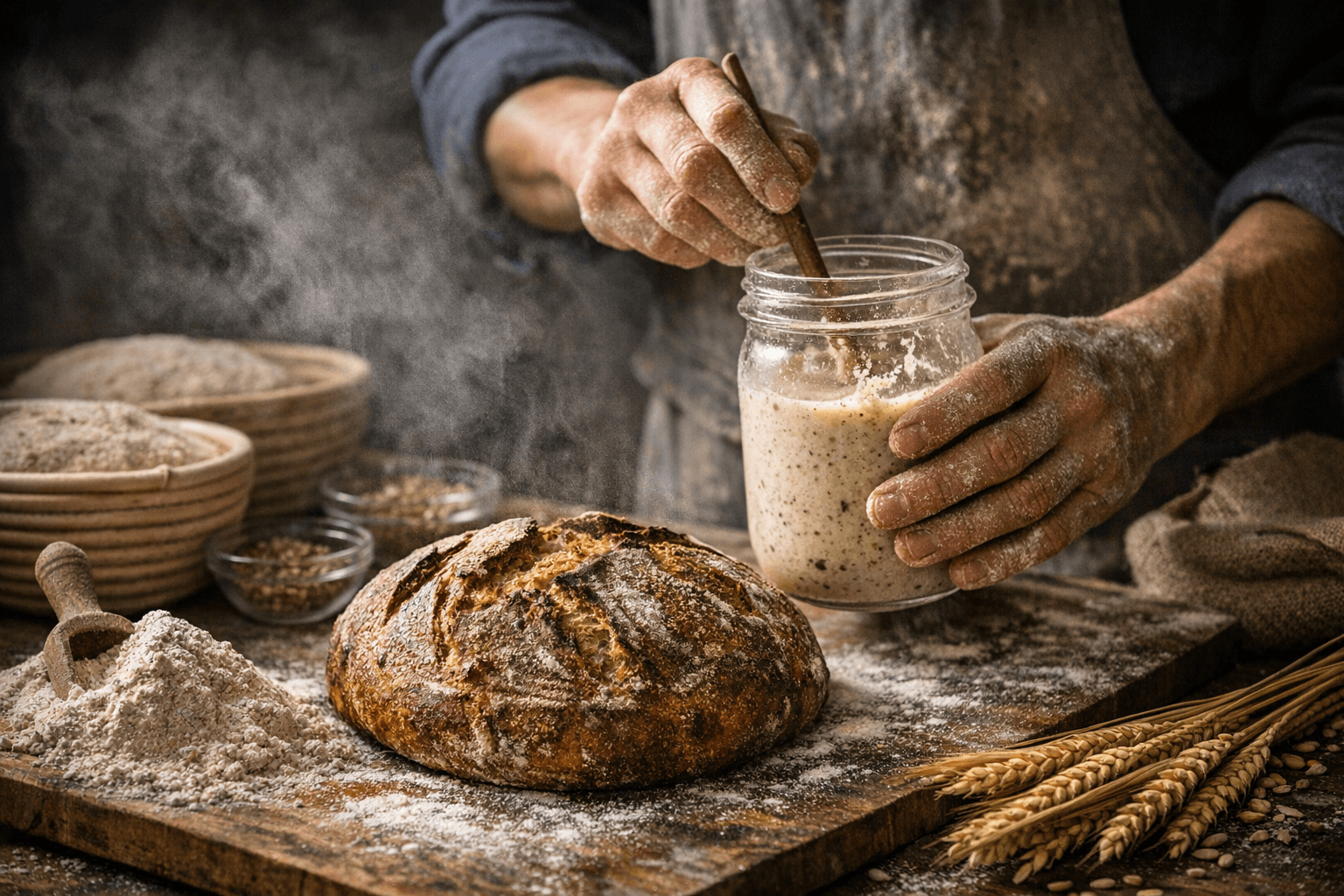
Sourdough fermentation's ability to unlock minerals trapped in grain earns explicit attention in a multi-author review led by Swara Kalantre and colleagues, published March 18, 2026, in Food Science and Biotechnology. The review synthesizes evidence on a range of what it terms "adjuvants" for enhancing mineral bioavailability: enzyme treatments, fermentation (including sourdough), chelating agents, delivery systems, and microencapsulation.
The mechanism proposed in the scientific literature points directly to what happens during a long ferment. It has been proposed that the significant improvement in mineral bioavailability is attributed to acidification by sourdough yeast, which indirectly stimulates the inherent phytases in the flour and enhances microbial enzyme efficacy. In plain terms: the drop in pH that your starter drives isn't just flavor chemistry. It wakes up enzymes already sitting inside the flour itself.
That enzymatic target, phytic acid, is the antinutrient that binds iron, zinc, calcium, and magnesium in whole-grain flours and prevents the body from absorbing them. Research by García-Estepa, Guerra-Hernández, and García-Villanova, published in Food Research International in 1999, mapped phytic acid concentrations across milled cereal products and breads, establishing the baseline problem the field has been working against ever since.
The body of sourdough science Kalantre's team drew from spans decades. Anastasio and colleagues published work in the Journal of Food Science in 2010 on selecting phytate-degrading lactic acid bacteria to improve mineral solubilization during dough fermentation, an early demonstration that strain selection matters. By 2021, Arora, Ameur, Polo, Di Cagno, Rizzello, and Gobbetti synthesized three decades of fermentation knowledge in a systematic review covering 108 pages of Trends in Food Science and Technology. De Vuyst, Comasio, and Kerrebroeck followed in 2023 with a Critical Reviews in Food Science and Nutrition paper spanning pages 2447 through 2479, covering fermentation strategies, microbial ecology, and the use of non-flour ingredients in sourdough production. Sourdough biotechnology has also moved beyond loaves: Montemurro, Coda, and Rizzello examined its application in pasta making in a 2019 Foods paper, while Ma and a six-author team reviewed how sourdough improves whole-wheat flour product quality, identifying both mechanisms and ongoing challenges.
What Kalantre's March 2026 review adds to this accumulation is a comparative framing, positioning sourdough fermentation alongside enzyme treatments, chelating agents, delivery systems, and microencapsulation as distinct strategies that can be evaluated against one another for effectiveness. For bakers who have spent years debating hydration ratios and flour extraction rates, that framing is a useful prompt: the fermentation choices made at the bench, including starter activity, acidification depth, and ferment duration, sit inside a larger toolkit that food scientists are actively mapping.
This article was produced by Prism’s automated news system from verified source data, official records, and press releases, then run through automated quality and moderation checks before publishing. The system is built and supervised by the people who set the standards it runs under. Read our full AI policy.
Did this article answer your question?