Sourdough Shelf Life Explained, From Staling Mechanisms to Safe Storage
Freeze sourdough at -18°C and it keeps eating quality for about three months; refrigerating at 4°C will make the crumb stale in roughly 48-72 hours.
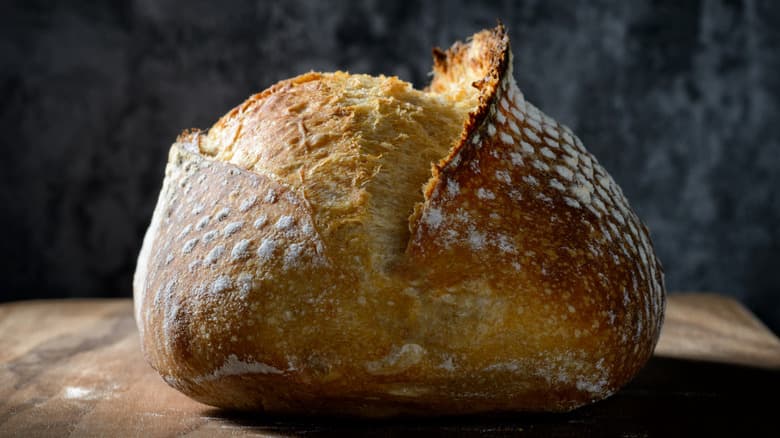
Freeze storage at -18°C preserves sourdough texture for about three months, while refrigeration at 4°C accelerates the crumb firming to roughly 48-72 hours, so the storage choice determines whether you lose freshness or simply delay spoilage. Staling and microbial spoilage are different processes: staling is a physical change in the crumb, and visible mold is a safety cutoff.
At the center of staling is starch retrogradation, the recrystallization of gelatinized starch molecules that begins within a day at kitchen temperatures near 20-22°C and becomes pronounced over 24-72 hours. The crumb firms and the crust softens as moisture migrates from interior to surface; these changes reduce eating quality but do not mean the loaf is unsafe. Freezing halts retrogradation by locking water molecules at temperatures at or below -18°C, which is why a well-wrapped loaf can taste close to fresh after thawing even after several weeks.
Microbial spoilage works on a different clock. Mold appears as fuzzy spots in any color and can make a loaf unsafe to eat; when mold is present, discard the entire loaf rather than cutting around the blemish. The organic acids produced during sourdough fermentation slow mold growth compared with straight-yeasted bread, extending mold-free life by measurable days in many home-baked loaves, but the protective effect does not eliminate mold risk if a loaf is stored in warm, humid conditions where spores thrive.

Practical storage choices hinge on these mechanisms. For same-day or next-day use, keep a cooled loaf in a paper bag or linen-lined bread box at room temperature, around 20°C, to preserve crust and avoid rapid moisture buildup. If you need to keep bread beyond two days, slice and freeze it: double-wrap in foil and a sealed freezer bag and store at -18°C; individual slices thaw in minutes in a toaster, whole loaves thaw overnight on the counter. Avoid the refrigerator: at 4°C the crumb firms faster because retrogradation proceeds more quickly at that intermediate temperature range.
If your goal is the best eating experience, plan around the 24-72 hour freshness window at room temperature and use a 200°C oven set for 5-10 minutes to re-crisp a thawed or day-old loaf. If your priority is safety and long-term supply, moving surplus sourdough to the freezer within two days at -18°C will keep it serviceable for roughly three months while preventing mold and arresting staling.
This article was produced by Prism’s automated news system from verified source data, official records, and press releases, then run through automated quality and moderation checks before publishing. The system is built and supervised by the people who set the standards it runs under. Read our full AI policy.
Did this article answer your question?