Sourhouse DoughBed Tames Celebrity Sourdough Craze for More Reliable Loaves
A countertop proofing pad, the Sourhouse DoughBed, kept dough at 75–82°F in hands-on tests, smoothing bulk fermentation and cutting down on gummy, underproofed loaves.

The sourdough boom driven by celebrity attention has pushed many home bakers into colder kitchens and unpredictable fermentation, and a new proofing device promises a steadier path to reliable loaves. The Sourhouse DoughBed maintained a controlled temperature band of about 75–82°F during bulk fermentation in hands-on testing, producing more even crumb and stronger oven spring than ambient countertop proofing.
In practice, maintaining a steady fermentation temperature matters because inconsistency is where loaves go wrong. Underproofed dough often bakes into dense, gummy crumb; overproofed dough can collapse and lose oven spring. The DoughBed’s ability to hold dough at a near-ideal range helped avoid those outcomes in tests, so levain activity progressed more predictably and bulk fermentation windows were easier to judge in cold kitchens.
The device is designed as a bench-top proofing surface rather than an insulated box; bakers place their dough container or bowl on the heated pad and monitor dough development as usual. During trials, the DoughBed smoothed temperature dips that occur when room air drops below 60°F, a typical problem in unheated apartments and garages. That steady heat produced dough that rose consistently, showed better tension at benching, and expanded more impressively in the oven.
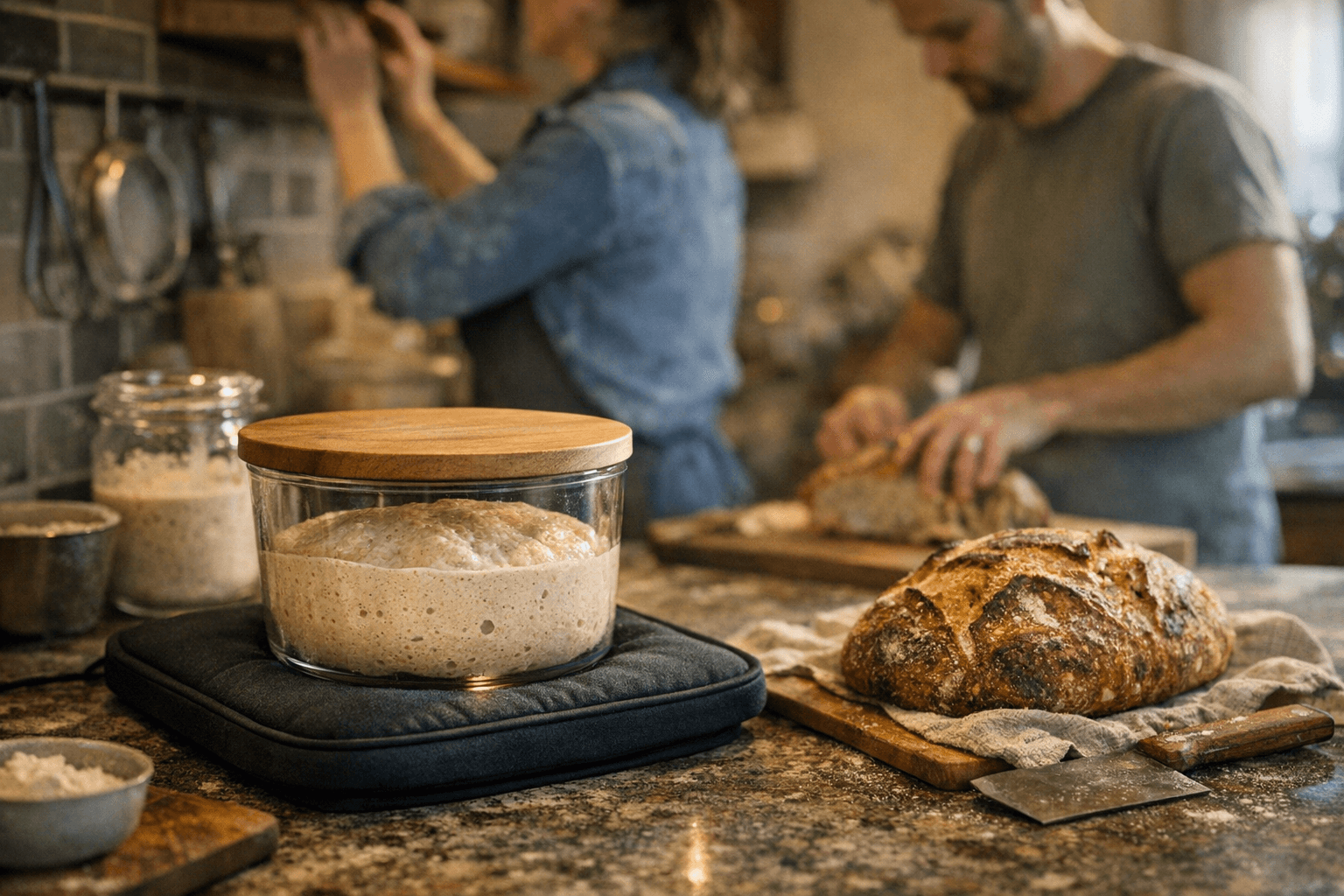
For community bakers who have been drawn into sourdough by celebrity coverage in lifestyle media or by peers sharing glossy loaves, the DoughBed offers practical value without changing routine. Bakers keep the same recipes, hydration, and folding schedule; the main change is a predictable environment for bulk fermentation. That predictability makes it easier to translate experience into repeatable success: warmer bulk fermentation means later stages - shaping, proofing, scoring - follow the expected timing so oven spring is less of a mystery.
This matters especially for readers who proof in cold kitchens, bake on tight timelines, or teach others. A reliable fermentation surface shortens the learning curve for timing levain builds and judging bulk readiness by feel rather than guesswork. It also helps bakers adapt seasonal shifts: what worked in summer often fails in winter, but steady 75–82°F fermentation narrows that gap.
The DoughBed does not replace technique; scoring, hydration control, and starter maintenance still determine crust and flavor. However, by taming the temperature variable, the device reduces one major source of failed bakes and lets bakers focus on shaping and scoring. For community groups, bake-alongs, and classes, the DoughBed can make demonstrations more consistent and lower the number of underproofed loaves students produce.
The sourdough craze brought a flood of new bakers and a lot of trial and error. The Sourhouse DoughBed turns one of the biggest troublemakers - cold-kitchen bulk fermentation - into a manageable, steady factor, so you get to spend more time shaping a great loaf and less time troubleshooting gummy crumb.
This article was produced by Prism’s automated news system from verified source data, official records, and press releases, then run through automated quality and moderation checks before publishing. The system is built and supervised by the people who set the standards it runs under. Read our full AI policy.
Did this article answer your question?