Step-by-Step Sourdough Guide Covers Levain, Autolyse, and Baking Technique
Eight steps from levain to baked loaf: a complete sourdough protocol covers every stage, with starter care and scheduling tips for bakers at any level.
Eight steps stand between you and a finished sourdough loaf, and understanding what each one does is the difference between baking by feel and baking with genuine confidence. The framework at the heart of The Perfect Loaf's Beginner's Guide to Sourdough Bread walks through the entire process "from creating a preferment (levain) to finally baking the dough in the oven," covering every transformation the dough undergoes along the way. While eight stages may sound like a lot, as The Perfect Loaf notes, "most of the time your dough ferments all on its own" — meaning the list of things you're actively doing is shorter than it first appears.
Start with your starter
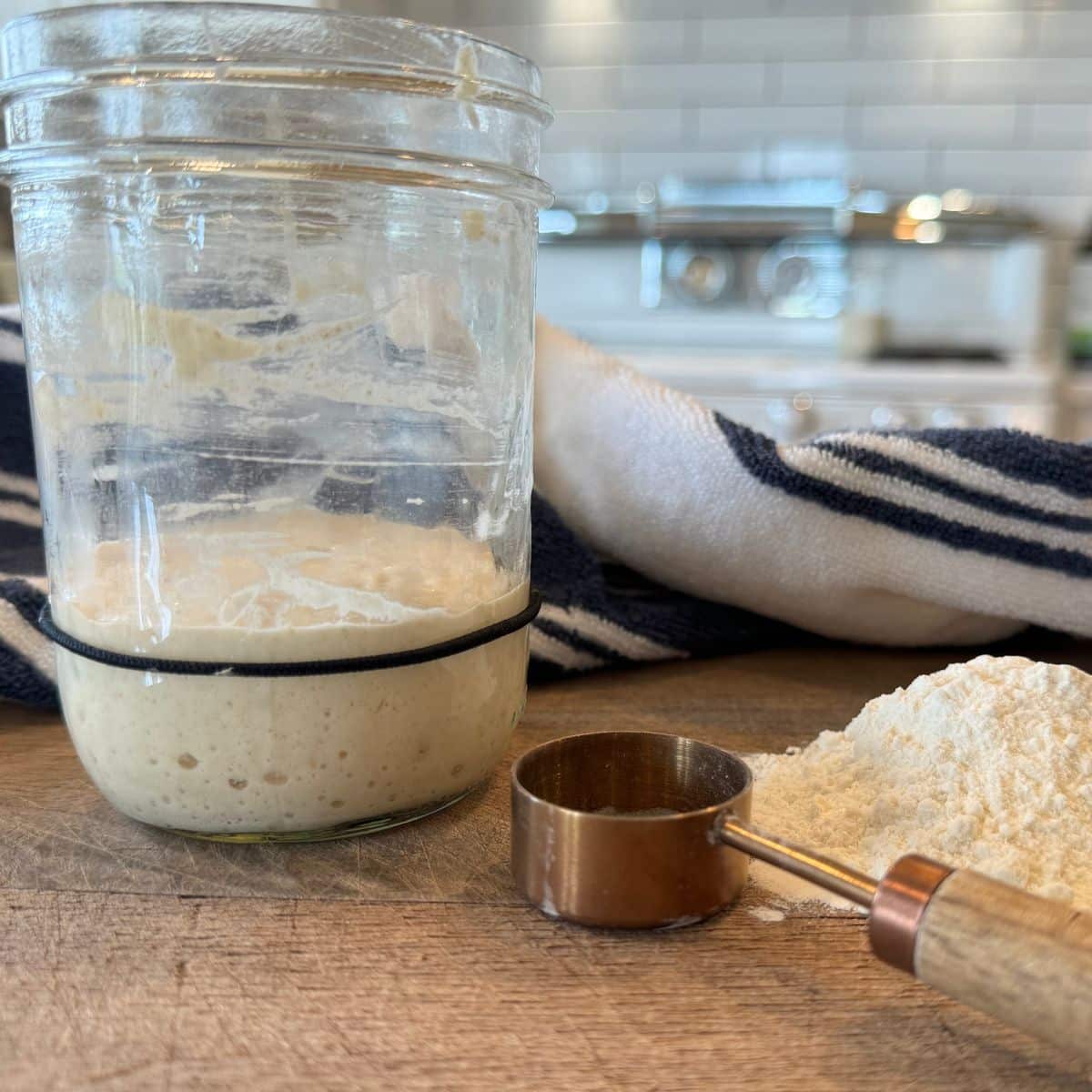
Before any of those eight steps come into play, there's one non-negotiable prerequisite. As The Perfect Loaf puts it: "Of course, it all begins with your sourdough starter." The guidance is to create your starter from scratch, learn how to maintain it, and know how to store it when it isn't in regular use.
The Evergreen Acre frames the same point with equal conviction: "Mastering sourdough baking begins with a healthy, active starter." The reason comes down to what a starter actually is. "Your sourdough starter is the foundation of any great sourdough loaf. It provides natural leavening and contributes to the bread's signature tangy flavor. Starter is a simple water and flour mixture that grows 'wild yeast' and becomes a fermented leaven for bread and baked goods." Without a reliable, active culture, the steps that follow have no meaningful foundation. Whether you're just starting out or troubleshooting an inconsistent jar, building starter confidence pays dividends across every bake.
The eight-step protocol
Once your starter is healthy and ready, the process unfolds in a sequence that The Perfect Loaf breaks down as follows:
1. Levain: Described as "a preferment that seeds fermentation in bread dough," the levain is a small, purpose-built culture mixed ahead of the main dough.
It's essentially a fresher, more vigorous offshoot of your starter, built to peak activity and then incorporated into the mix.
2. Autolyse: This is "a technique for reducing mixing time and increasing extensibility." Combining flour and water before adding other ingredients gives gluten strands time to hydrate and align, making the dough more workable when you get to the mixing stage.
3. Mixing bread dough: Called "the critical step where ingredients are combined and the dough strengthened," this is where the levain, salt, and any remaining ingredients come together and where gluten development begins in earnest.
4. Bulk fermentation: Simply put, this is "the dough's first rise." It's the longest hands-off phase, during which wild yeast and bacteria do the work of leavening and flavor development simultaneously.
5. Divide and preshape: This step involves "portioning the dough and preparing for shaping." If you're baking more than one loaf, here is where the bulk mass gets divided.
The preshape begins to build structure before the dough rests briefly and then moves into final shaping.
6. Shape dough: Described as "forming the dough into its final shape," this step determines the loaf's structure and the surface tension that supports a good oven spring.
It's one of the more tactile skills in the process and one that improves noticeably with repetition.
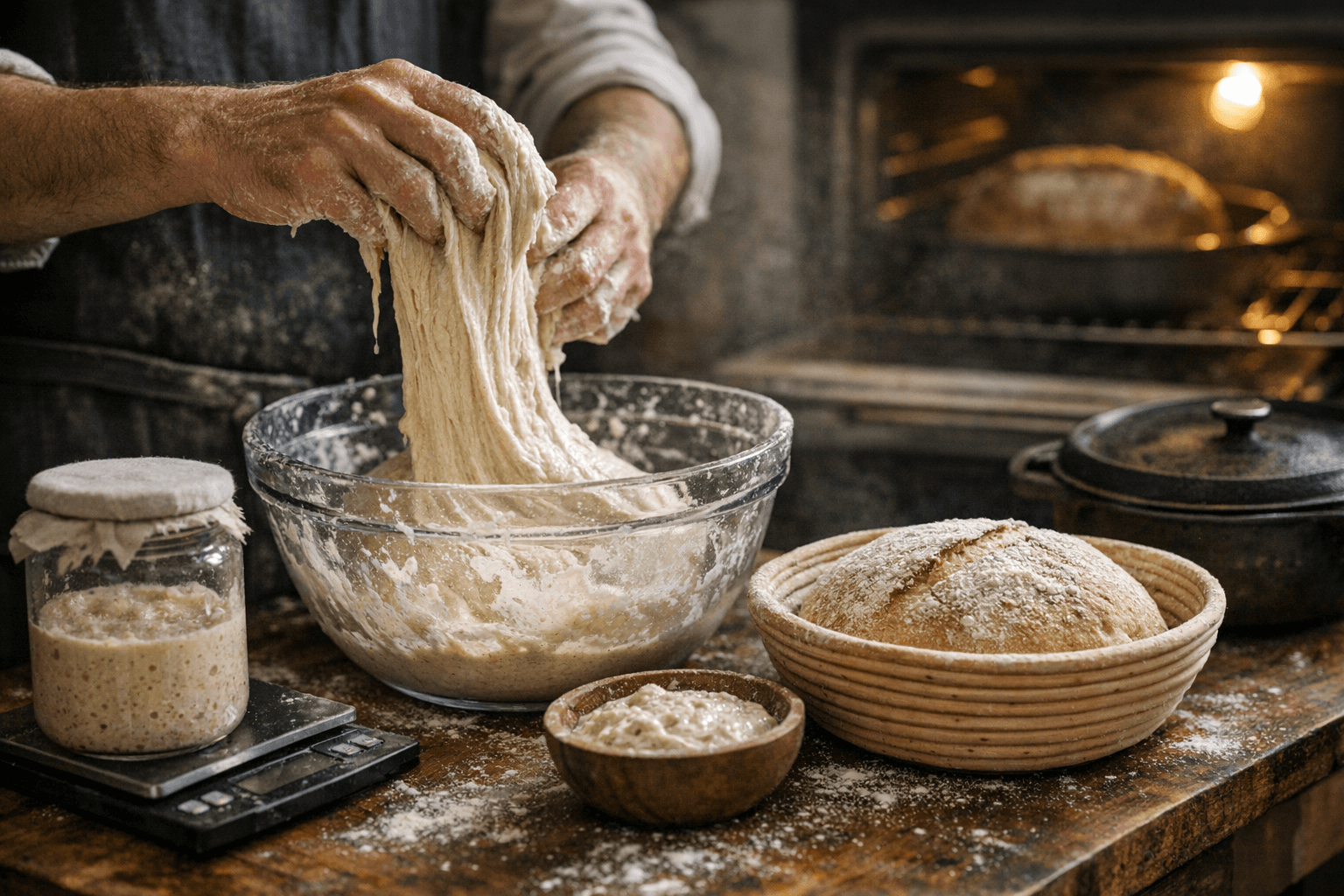
7. Proofing bread dough: The second rise, proofing allows the shaped loaf to ferment further.
This stage is often done cold, in the refrigerator, which both develops flavor and makes scoring easier.
8. Bake bread dough: The final step covers "scoring and baking dough in the oven." Scoring is the deliberate cut made across the surface of the dough just before it goes in, controlling where the loaf opens during the oven spring.
Fitting baking into your schedule
One of the more practical challenges sourdough presents isn't technique — it's time. "Most homebakers tend to base their baking around their time off, which usually means baking on the weekend." The Perfect Loaf addresses this directly with a dedicated weekend baking schedule designed around that reality, while also noting that "it's possible to shift this schedule to bake on any day of the week."
For those who can't wait for days off, there's also a weekday option: "A simple weekday baking schedule and recipe (bake bread during the busy workweek)." The underlying message is practical and encouraging: "We all lead busy lives, but we can work baking into even the busiest schedules with a few handy tips." Cold proofing overnight is one reason the schedule can flex so readily — the refrigerator essentially pauses the process until you're ready.
Beyond the standard loaf
Sourdough technique doesn't stop at the round boule or the batard. As The Perfect Loaf notes, "baking with sourdough isn't limited to baking large, crunchy loaves of bread," and the guidance extends to sourdough pizza and other applications that "bring another dimension to your baking." Navigating that broader range is exactly the point of working through a structured roundup: "Start with the Beginner Baking Guides up top and work your way down as you become familiar with each topic."
The Evergreen Acre takes the beyond-the-loaf idea further still, with an extensive collection of recipes built around sourdough discard. Rather than discarding unfed starter, these recipes put it to work: sourdough discard waffles, zucchini bread, banana bread, granola, chocolate chip cookies, pumpkin muffins, cinnamon apple muffins, chocolate chip muffins, cornbread, strawberry muffins, and carrot cake all appear in their recipe collection. It's a useful reminder that maintaining a starter generates a steady stream of baking material, and none of it needs to go to waste.
Deepening your knowledge
The eight-step framework outlined by The Perfect Loaf is also developed in greater depth in an accompanying cookbook, which expands on each stage with fuller instruction. For bakers who want to move beyond the beginner stage, working through the dedicated guides for each step — levain building, autolyse timing, bulk fermentation assessment, shaping technique — builds the kind of fluency that makes the process feel intuitive rather than procedural.
The consistent thread across both The Perfect Loaf and The Evergreen Acre is that sourdough rewards attention to process without demanding perfection from the start. A strong, reliable starter, a clear understanding of each stage, and a schedule that works with your week are genuinely sufficient to put a well-made loaf on the table.
This article was produced by Prism’s automated news system from verified source data, official records, and press releases, then run through automated quality and moderation checks before publishing. The system is built and supervised by the people who set the standards it runs under. Read our full AI policy.
Did this article answer your question?