Three-Stage Adjustment System Optimizes Sourdough Baking Above 3,000 Feet
Bakers above 3,000 feet can use a three-stage adjustment system for hydration, fermentation, and baking to prevent overproofing and underbaked centers.
High altitude changes the rules for sourdough. Reduced atmospheric pressure speeds gas expansion, causes faster evaporation, and lowers the boiling point of water, so loaves rise faster, dough dries out more quickly, and the crumb can take longer to reach proper internal temperature. That trio of effects has led growers and guides to combine practical fixes into a three-stage adjustment system for kitchens at or above roughly 3,000 feet.
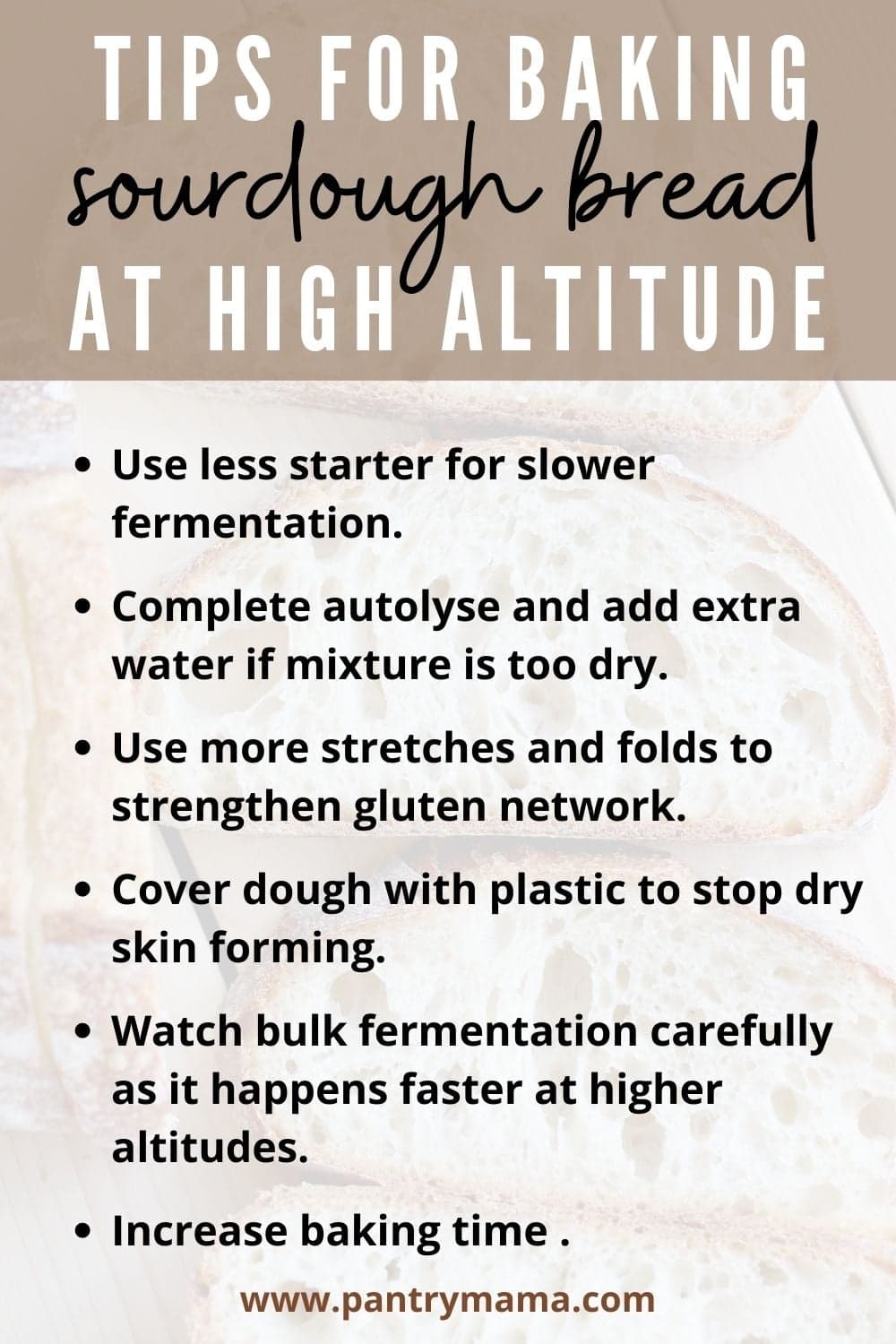
Stage A focuses on dough formulation. Address flour dryness either by increasing dough hydration or by trimming flour. Pantrymama’s advice is to “Increase hydration (after autolyse if necessary),” while Culturesforhealth suggests, “Start with about one‑fourth less flour and add additional flour only as needed.” To slow runaway fermentation, reduce preferment. ThePerfectLoaf labels the step “Reduce Leavening at High Altitude,” and King Arthur explicitly advises home bakers to “Decrease the amount of yeast in the recipe by 25% to slow proofing times.” A Colorado home baker reported living at about 6,000 feet and using 25 g of starter with 450 g of water, 12 hours on the counter and 6 hours in the refrigerator as a working data point.
Stage B covers bulk fermentation and gluten development. Every source agrees you must shorten bulk times or cut leavening. Challengerbreadware recommends you “Start by shortening your bulk‑fermentation times in increments of 15 minutes.” If you compress bulk, add dough work: Pantrymama recommends increasing stretches and folds to “strengthen gluten network,” and Challengerbreadware counsels extra sets of stretch‑and‑folds or coil folds to build strength without overproofing. Culturesforhealth adds a flavor-safe option: “Try rising at cooler temperatures and giving the dough a second rise.”
Stage C is final proofing and the oven. Keep shaped loaves covered to prevent a dry skin that will sabotage oven spring. Pantrymama directs bakers to “Use plastic cover for resting dough on counter and in fridge to stop it drying out,” and Culturesforhealth warns that a tough skin will “thwart the nice ‘oven spring’ desired in home‑baked bread.” For baking, guides offer two paths: raise oven temperature or extend bake time, but test carefully. Pantrymama and the Original Report recommend you “increase the baking temperature by about 25C from what is instructed in the recipe,” while ThePerfectLoaf cautions, “I either change the total bake time (increased) or the baking temperature (increased) - not both,” and explains that “a lower boiling point means reduced heat transfer efficiency,” slowing the interior’s rise to proper doneness.

Troubleshooting stays specific. If dough is “extra sticky, slack, weak, fails the poke test, and shows lots of large bubbles at the end of your proof, it may be over‑proofed,” and you should reduce preferment or cut proof times. If loaves spread or go flat, shorten bulk, reduce starter or yeast, and add folds. When adding inclusions, add them halfway through folds, “around the 3 to 4th fold if you're doing 6 sets,” Pantrymama advises.
Bakers at elevation will still need to experiment. Start with small changes - 15 minute bulk reductions, a 25% yeast cut for yeast breads, or a 25°C oven increment - and bake to learn how your starter, flour, and home oven respond. For technical help, Challengerbreadware lists a contact at techniques@challengerbreadware.com, and King Arthur points readers to Colorado State University Extension and New Mexico State University high altitude resources for further tables and testing protocols. The three-stage system gives a clear, testable roadmap so you can stop fighting altitude and start shaping consistent, well-baked loaves.
This article was produced by Prism’s automated news system from verified source data, official records, and press releases, then run through automated quality and moderation checks before publishing. The system is built and supervised by the people who set the standards it runs under. Read our full AI policy.
Did this article answer your question?