Two Home Bakers Created an Enzyme Cleaner That Dissolves Stubborn Dough Residue
Alexandra Gold and Alexis Dalinka turned a sourdough cleanup frustration into Dough Dissolve, a patent-pending enzyme cleaner that targets the starch bonds in baked-on dough.
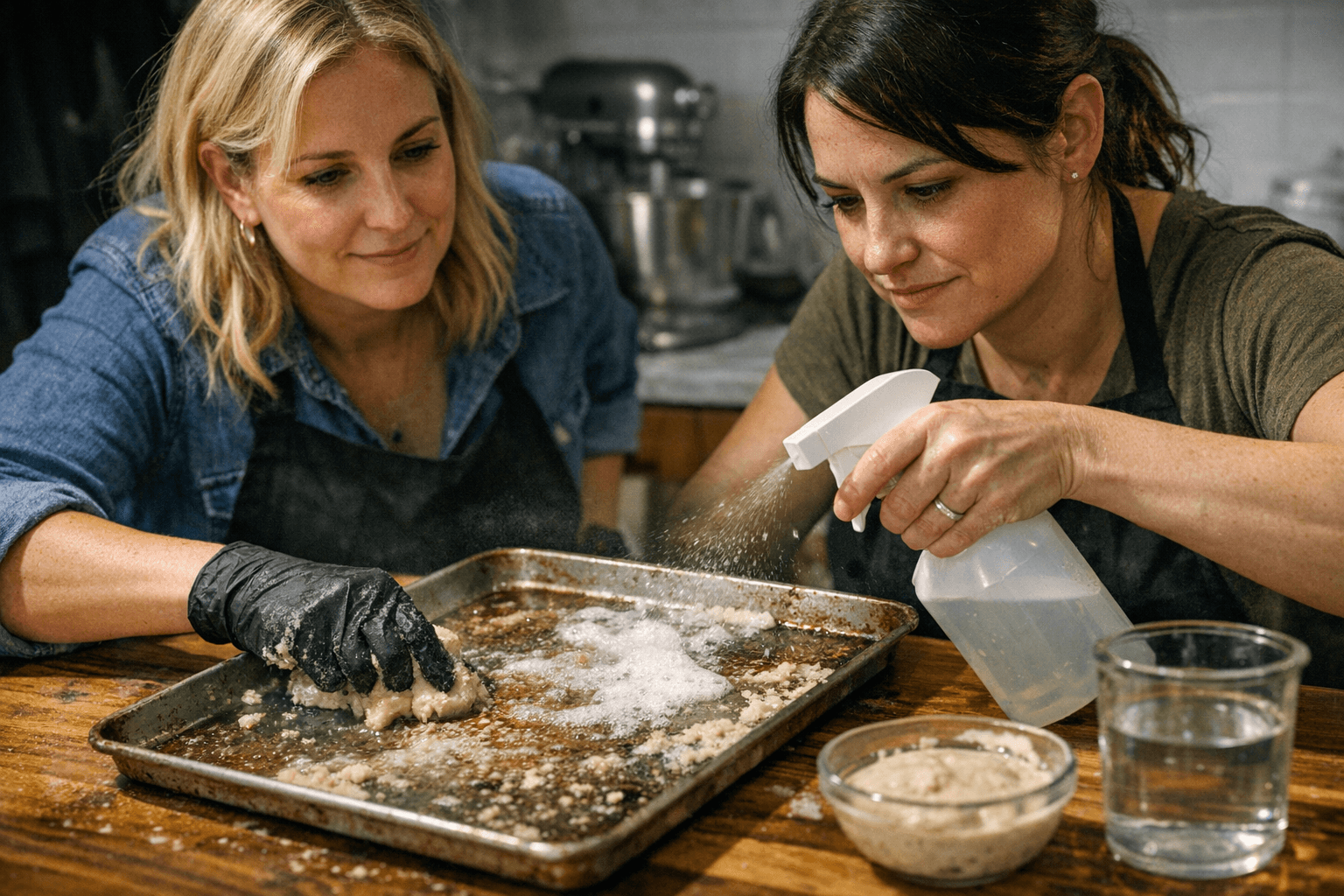
Anyone who has tried to scrub dried levain off a banneton liner or chip hardened dough off a bench scraper knows the particular misery of sourdough cleanup. Alexandra Gold and Alexis Dalinka knew it too, and instead of reaching for another round of soaking and scrubbing, they built a product around the chemistry of the problem.
The two home bakers launched Dough Dissolve this week, a patent-pending cleaner formulated specifically to break down bread and dough residues. The product is built around a food-grade amylase enzyme blend paired with natural surfactants. The distinction matters: amylase is the same class of enzyme your saliva uses to begin digesting starch, which means Dough Dissolve attacks the molecular structure of dried dough rather than relying on abrasion or harsh alkaline chemistry to lift it.
Most general-purpose kitchen cleaners are designed around grease and protein soils. Baked dough residue is primarily starch-based, which is why a standard spray-and-wipe approach leaves a ghostly film on proofing baskets and a cement-like crust on mixing bowls. Gold and Dalinka's formulation targets that gap directly.
The patent-pending status signals that the amylase delivery system or the specific surfactant pairing is considered novel enough to protect, which sets Dough Dissolve apart from repurposed food-equipment cleaners that sometimes circulate in bread-baking communities as DIY solutions.
For a hobby where the tools are as carefully tended as the starter itself, a cleaner built from the ground up for bakers rather than adapted from industrial food-service products is a meaningful development.
This article was produced by Prism’s automated news system from verified source data, official records, and press releases, then run through automated quality and moderation checks before publishing. The system is built and supervised by the people who set the standards it runs under. Read our full AI policy.
Did this article answer your question?