VUB Researchers Reveal How Wheat Fibers Transform During Sourdough Fermentation
Your sourdough's own wheat enzymes, not the microbes, are driving fiber transformation during fermentation, VUB research reveals.
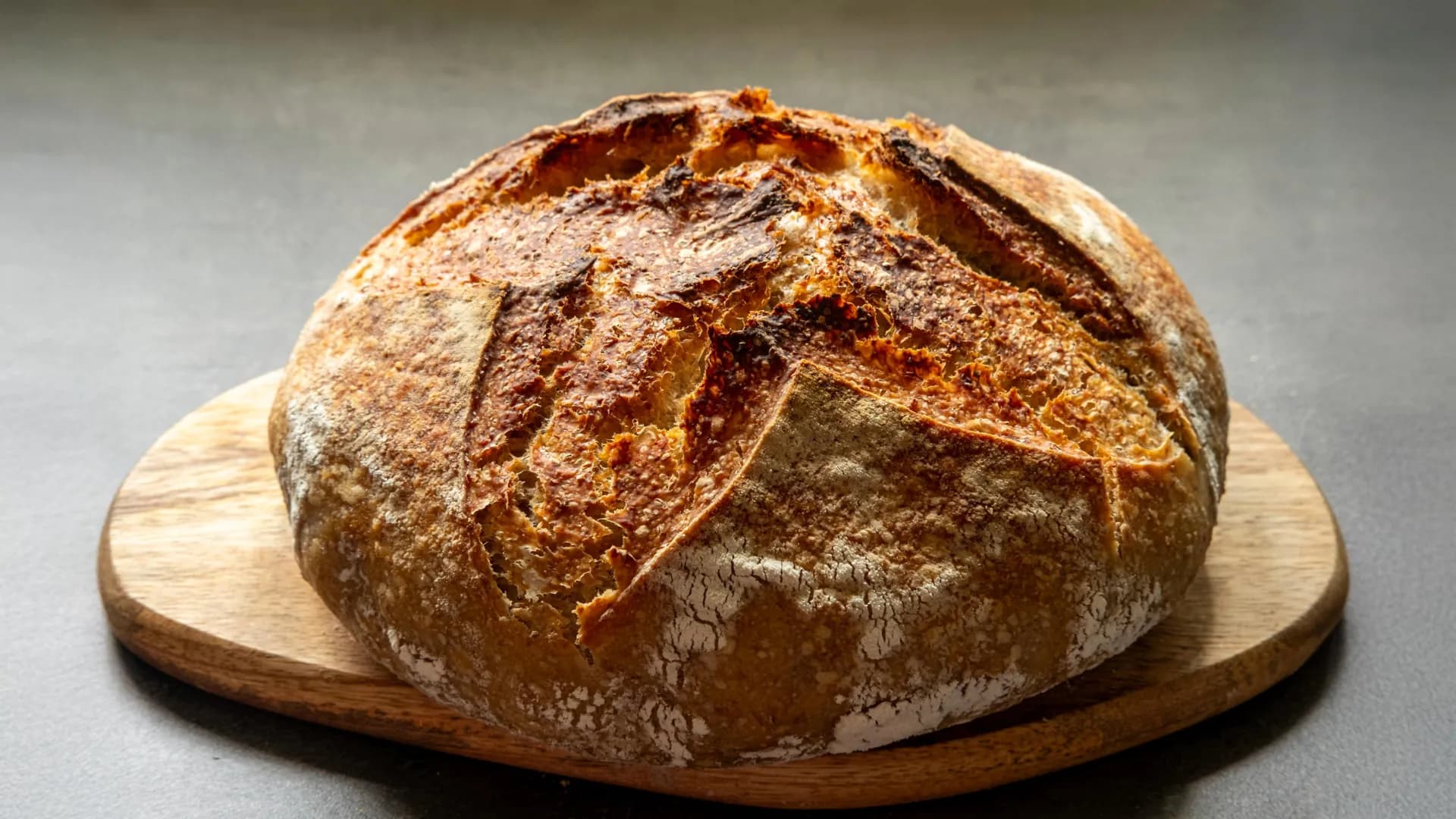
The microbes in your starter may get all the credit, but new doctoral research from Vrije Universiteit Brussel reveals they are not the main architects of what happens to wheat fibers during sourdough fermentation. That distinction, it turns out, belongs to enzymes already present in the wheat itself.
Víctor González Alonso, a doctoral researcher at VUB, built his PhD thesis around two deceptively simple questions: what changes occur as dough ferments, and how do the fibers in wheat shape the final loaf? His investigation focused on arabinoxylans, the specific class of dietary fiber that gives wheat flour much of its structural and nutritional character. "Wheat provides a large share of the calories and fiber consumed in Europe," González Alonso explains, "and arabinoxylans play an important part in this. They help determine the structure and quality of bread."
Arabinoxylans come in two forms with very different effects on your dough. Water-extractable arabinoxylans, known as WE-AX, typically support good dough structure or have a neutral effect. Water-unextractable arabinoxylans, or WU-AX, can negatively influence bread quality. The research demonstrated that sourdough fermentation converts part of the WE-AX into WU-AX, a transformation with real consequences for texture, fiber digestibility, and nutritional value.
The surprise was in the mechanism. Rather than the lactic acid bacteria and yeasts of the sourdough ecosystem driving this conversion, it was the endogenous enzymes native to the wheat grain that did the heavy lifting. As fermentation progresses and the dough acidifies, those enzymes activate and begin breaking large fiber molecules into smaller fragments. The microbes, for their part, maintained a stable and balanced ecosystem throughout: "We observed that sourdoughs develop into stable microbial ecosystems, with lactic acid bacteria and yeasts in a complex balance," González Alonso noted. "A higher fiber content barely altered this process, although we clearly demonstrated that sourdough fermentation converts part of the WE-AX into WU-AX."
González Alonso and the VUB team also mapped specific microbial contributions to sourdough's flavor profile. Lactococcus lactis was identified as a contributor of buttery fragrances, while Limosilactobacillus fermentum synthesizes sugar alcohols that impart a gentle sweetness. These are not abstract flavor compounds: they are the notes experienced bakers often describe when tasting a well-fermented loaf but rarely have a biological name for.
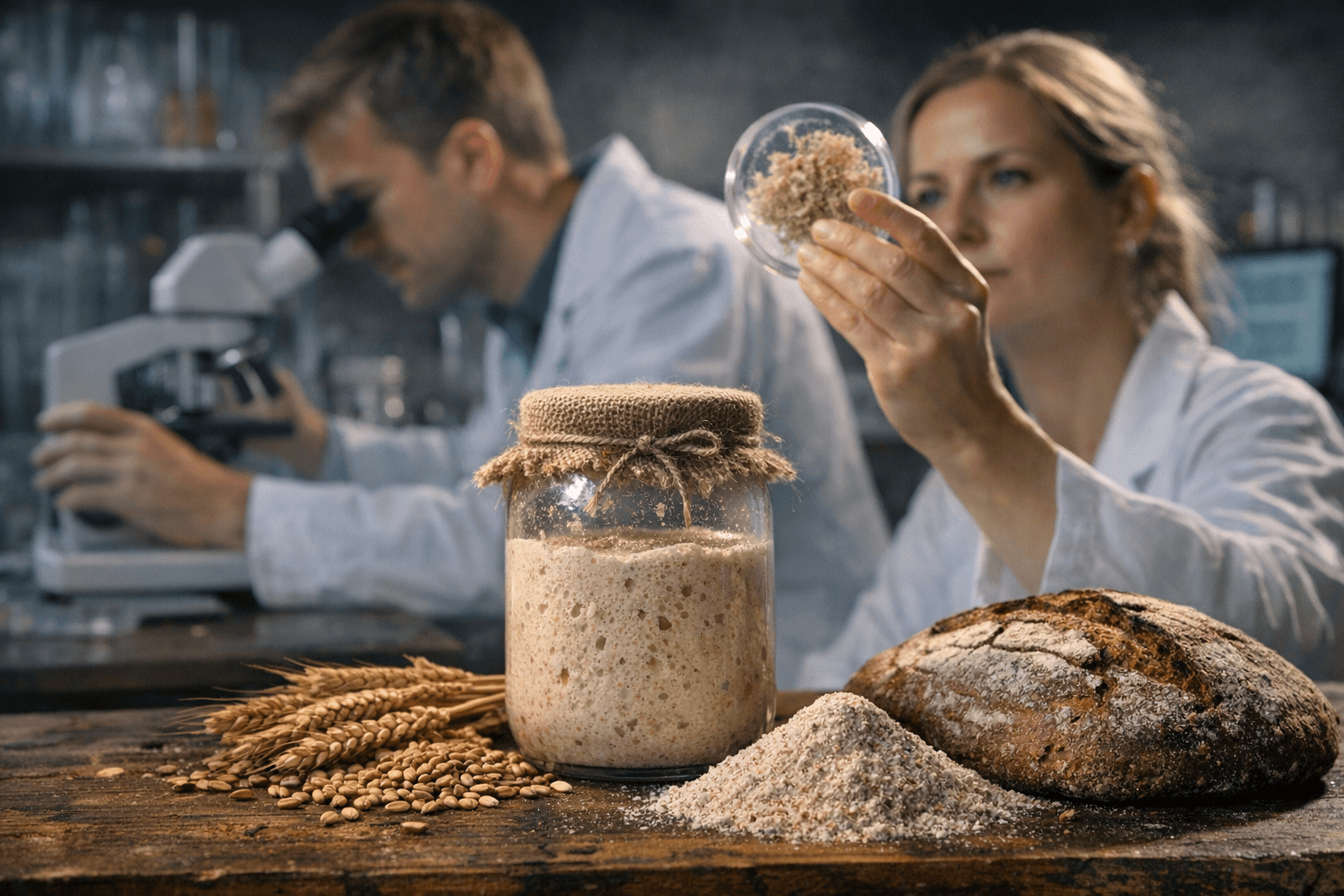
The research extended beyond the laboratory into a pilot-scale baking trial using wheat flour enriched with high levels of arabinoxylans. The resulting sourdough loaves were higher in nutritional value and showed a broader range of flavors than standard loaves, suggesting that deliberately enriching flour with AX could be a practical lever for bakers and formulators interested in both nutrition and taste complexity.
The thesis, titled "Impact of arabinoxylan-enriched wheat flour on sourdough production," was submitted to Vrije Universiteit Brussel in September 2025. "Sourdough remains a fascinating interplay of biology and craftsmanship," González Alonso concludes. "And our research shows that sourdough fermentation influences wheat fibers to a greater extent than previously thought."
For sourdough bakers who obsess over flour selection, hydration ratios, and bulk fermentation times, the implications are significant: the fiber composition of your flour is not a passive ingredient waiting to be acted upon by your starter. It is an active participant in fermentation, shaped by the acidity your process creates, and that transformation is rewriting what scientists understood about an ancient craft.
This article was produced by Prism’s automated news system from verified source data, official records, and press releases, then run through automated quality and moderation checks before publishing. The system is built and supervised by the people who set the standards it runs under. Read our full AI policy.
Did this article answer your question?