what sourdough discard is, and why bakers remove it
Discard is the part of starter you remove to keep sourdough manageable, and it still has plenty of use in pancakes, crackers, muffins, and more.
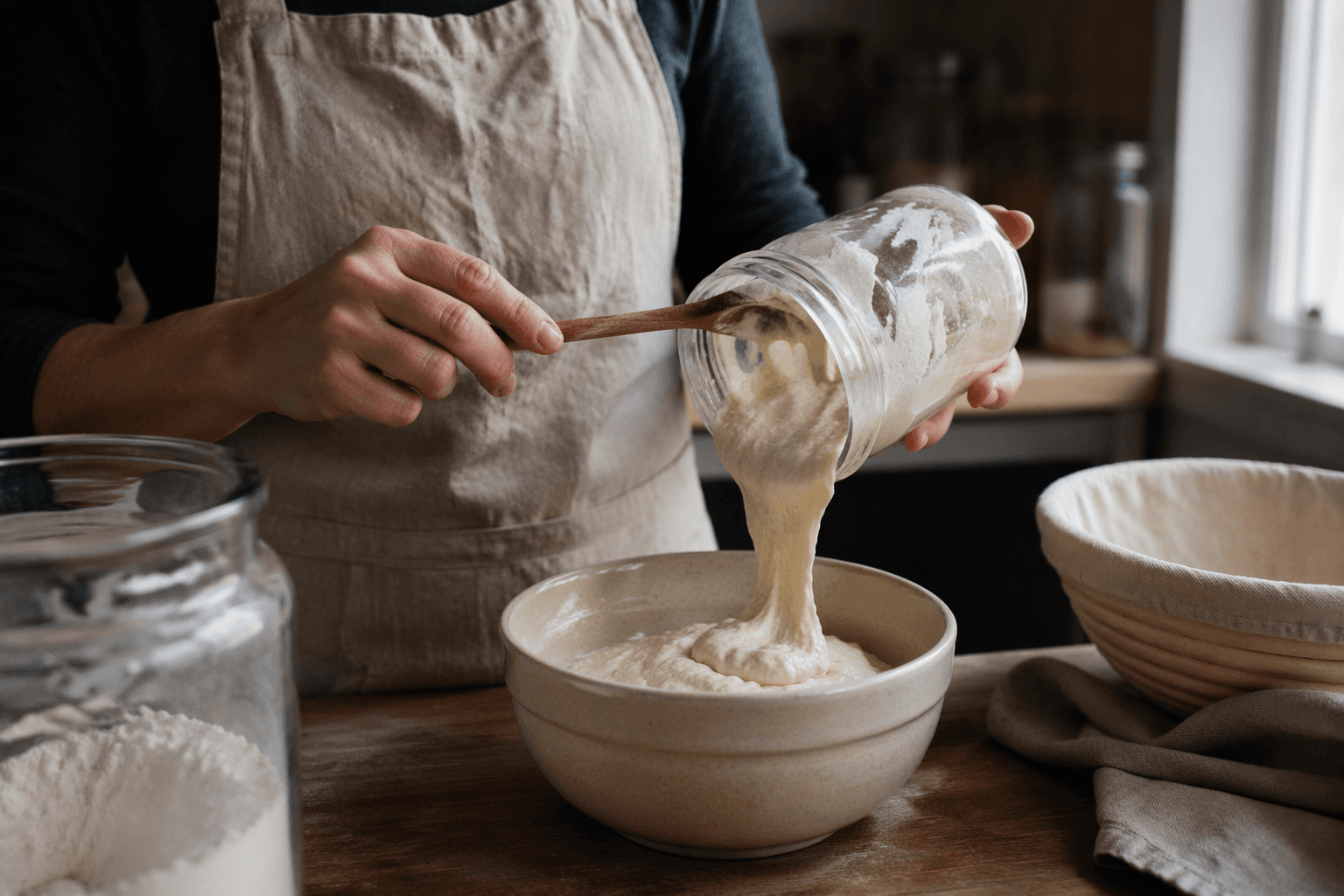
Discard is not dead starter. It is the portion you remove before feeding the jar, and that small scoop is what keeps sourdough from becoming a flour-guzzling project on the counter. Once you understand that the goal is to keep the culture balanced, not to toss something valuable, sourdough starts to feel like a routine you can actually live with.
What sourdough discard really is
King Arthur Baking defines sourdough discard as the portion of starter removed during routine maintenance. When you feed a starter, you have to make room for the fresh flour and water going in, so some of the old mixture comes out first. That removed portion is the discard, and it still contains flour, water, wild yeast, bacteria, and plenty of flavor.
That is why the word sounds harsher than the practice. The name suggests waste, but the material itself is still useful. In everyday baking terms, discard is simply starter that has not been refreshed yet, which means it can still bring tang, structure, and fermentation to other recipes.
Why bakers remove it
The reason bakers remove part of the starter is practical, not mysterious. If you never take any out, the jar keeps growing, and every feeding demands more flour and more water. What starts as a small kitchen pet turns into a much bigger maintenance job than most home bakers want to manage.
A common maintenance method keeps just 113g, about 1/2 cup, of starter and feeds it with 113g flour and 113g water. That one detail explains why discard builds up so quickly. You are keeping a manageable amount of culture alive while refreshing it with enough food to keep it active.
Refrigerator storage makes the routine even clearer. King Arthur Baking advises feeding starter about once a week, then letting it bubble for 1 to 2 hours before putting it back in the fridge. That schedule turns sourdough into a weekday habit, not a destination purchase or a fragile science experiment. You keep a small living culture going, then refresh it on a rhythm that fits real life.
What to do with discard instead of throwing it away
The easiest way to waste less is to treat discard as an ingredient waiting for its next job. King Arthur Baking’s discard recipe collection currently highlights 20 recipes, and the list shows how wide the possibilities run. Sourdough discard can go into pancakes, crackers, brownies, biscuits, muffins, pizza crust, cookies, pie crust, popovers, and more.
That flexibility is what makes discard so beginner-friendly. A spoonful can help with breakfast one day and dinner the next, which means the jar pays you back instead of only asking for flour. If you want a simple mental shortcut, think of discard as a flavor booster and a texture helper that happens to come from the same starter you feed for bread.
- Stir it into pancakes or waffles for a tangy breakfast batter.
- Bake crackers or biscuits when you want something quick and forgiving.
- Fold it into muffins, brownies, or cookies when you need an easy pantry bake.
- Use it in pizza crust, flatbread, tortillas, or pretzels when you want a more savory path.
- Save it for pie crust or popovers when you want to see how far one starter can stretch.
A few low-stakes ways to use it:
The point is not to find one perfect use. The point is to make the extra starter feel like part of the system. Once discard starts showing up in familiar recipes, feeding the jar stops feeling like a chore and starts feeling like prep for the next meal.
How to keep the routine simple
The cleanest discard routine is also the least dramatic. Keep a small amount of starter, remove what you do not need, feed what remains with equal parts flour and water by weight, and let it regain bubbles before storing it again. That keeps the culture manageable and gives you a predictable amount of discard to cook with or save for later.
For many bakers, that predictability is the real win. You know approximately how much starter you are keeping, you know roughly how much discard you will have, and you know where it can go next. Instead of building up a giant jar and wondering what to do with it, you are running a small, repeatable loop that fits into everyday baking.
Why the waste question matters beyond one jar
The broader food-waste angle is part of why this little sourdough habit resonates. The University of Minnesota Extension notes that wasted food is the single largest component going to landfills, and that many foods thrown out are still safe to eat. Discard fits neatly into that conversation because it asks bakers to see a usable ingredient instead of a byproduct headed for the trash.
That same extension also describes sourdough starter as a culture of yeast and bacteria that needs proper environmental management. In other words, the jar is alive, and it behaves better when you give it a system. A University of Minnesota Extension profile even mentions a baker experimenting with sourdough-based dog treats, which is a good reminder that discard can move beyond breakfast and into the kind of household creativity that makes a starter feel worth keeping.
The best part of sourdough discard is how ordinary it becomes once you know what it is. It is simply the part you remove so the starter can stay small, healthy, and ready for the next feeding. And once that small scoop starts landing in pancakes, crackers, muffins, or pizza dough instead of the trash, the whole sourdough routine feels less wasteful and much more usable.
This article was produced by Prism’s automated news system from verified source data, official records, and press releases, then run through automated quality and moderation checks before publishing. The system is built and supervised by the people who set the standards it runs under. Read our full AI policy.
Did this article answer your question?